
Building Zero-Click Digital Ecosystems: The Future of AI-Powered Customer Experiences
The digital landscape is undergoing its most significant transformation since the rise of search engines. Traditional keyword-focused SEO strategies that dominated the last two decades are rapidly evolving as AI-powered search platforms, conversational assistants, and intelligent recommendation engines reshape how users discover information online.
In 2026, customers no longer want to navigate through multiple pages, compare dozens of search results, or spend time searching for answers. They expect immediate, context-aware responses tailored to their needs. This shift has given rise to Zero-Click Digital Ecosystems, a new approach that combines advanced web development, Answer Engine Optimization (AEO), and hyper-personalized marketing experiences.
Businesses that adapt to this transformation will gain a significant competitive advantage, while those relying solely on traditional SEO tactics risk losing visibility in an increasingly AI-driven digital environment.
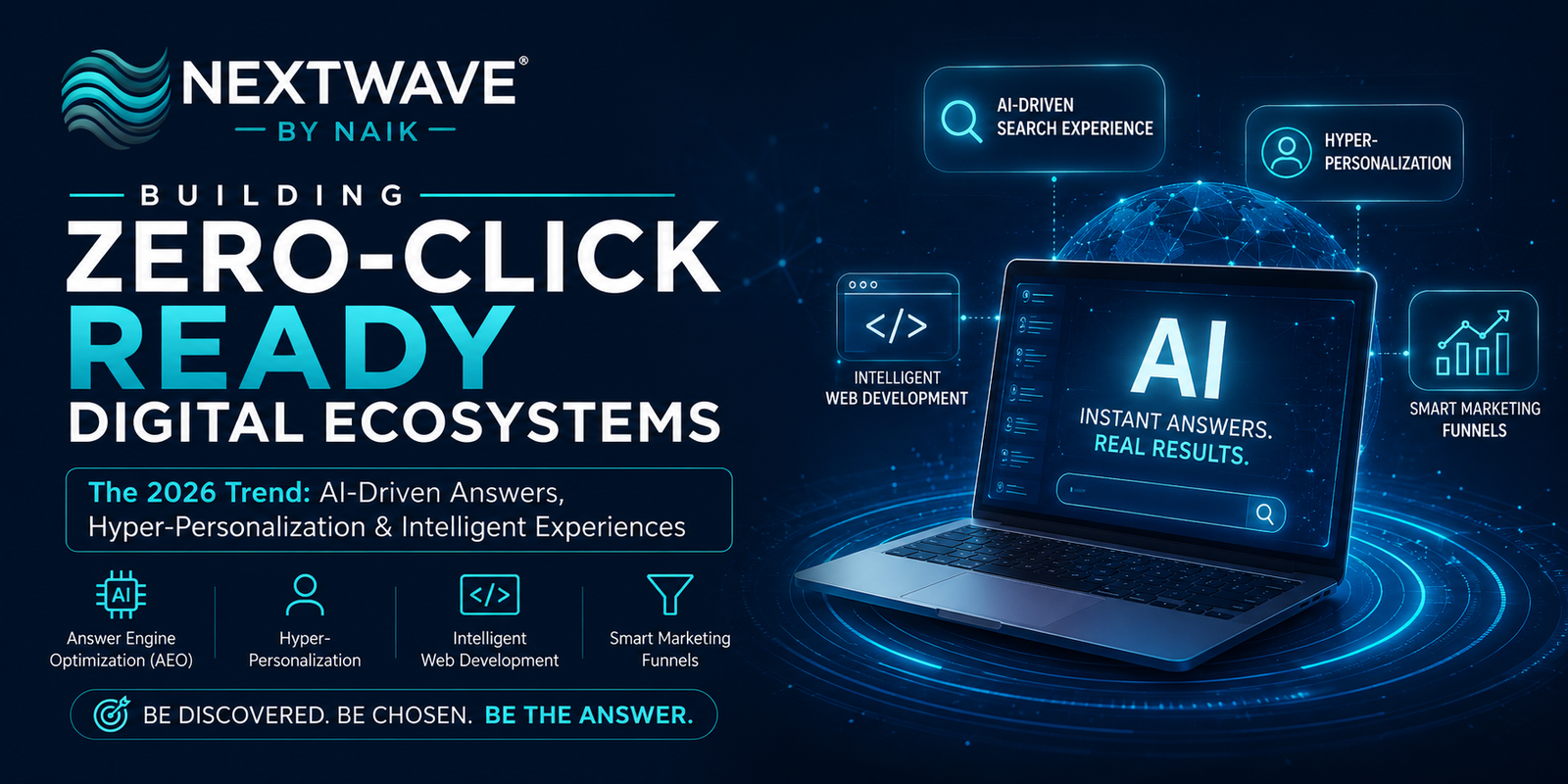
What Are Zero-Click Digital Ecosystems?
A Zero-Click Digital Ecosystem is a digital framework designed to provide users with instant answers, personalized experiences, and seamless interactions without requiring multiple clicks or extensive navigation.
Instead of directing users through a conventional five-page website journey, businesses create interconnected digital experiences powered by structured data, intelligent automation, AI search optimization, and personalized content delivery.
The goal is simple: deliver the right information to the right user at the exact moment they need it.
Modern consumers expect:
- Instant answers
- Personalized recommendations
- Context-aware interactions
- Seamless cross-platform experiences
- AI-powered assistance
Companies that build these capabilities into their digital infrastructure are better positioned to capture traffic, generate leads, and improve customer engagement.
The Decline of Traditional Keyword Search
For years, businesses optimized content around keyword rankings. While search engines remain important, AI-powered answer engines are changing how information is surfaced and consumed.
Users increasingly interact with:
- AI assistants
- Voice search platforms
- Conversational search engines
- Intelligent recommendation systems
- Automated customer support tools
These technologies prioritize direct answers rather than lists of blue links.
As a result, brands must move beyond traditional SEO and focus on creating content and systems that AI platforms can easily understand, process, and deliver as trusted answers.
This evolution is driving demand for Answer Engine Optimization (AEO), a strategy designed to improve visibility within AI-generated responses.
Why Answer Engine Optimization Matters
Answer Engine Optimization focuses on structuring content so AI systems can extract, interpret, and present information accurately.
Unlike traditional SEO, which primarily targets rankings, AEO aims to position businesses as authoritative answer sources.
Key components include:
Structured Data Implementation
Search engines and AI systems rely heavily on structured data to understand website content. Proper schema markup improves content discoverability and increases the likelihood of being featured in AI-generated answers.
Semantic Content Architecture
Modern AI systems analyze relationships between concepts rather than isolated keywords. Businesses must create content that addresses user intent comprehensively and naturally.
Entity-Based Optimization
AI platforms increasingly recognize entities such as brands, products, services, industries, and locations. Optimizing around these entities strengthens content relevance and authority.
Knowledge Graph Integration
Organizations that establish a strong digital presence across multiple platforms enhance their credibility and visibility within AI-powered search environments.
Hyper-Personalization Is Becoming the New Standard
Personalization is no longer optional. Customers expect websites and applications to understand their preferences, behaviors, and goals.
Hyper-personalization uses real-time data, artificial intelligence, and behavioral analytics to create tailored experiences for individual users.
Examples include:
- Dynamic website content
- Personalized product recommendations
- AI-powered chat experiences
- Customized email journeys
- Behavior-based marketing automation
When implemented correctly, hyper-personalization significantly improves engagement rates, conversion rates, and customer satisfaction.
Businesses that combine personalization with intelligent web infrastructure create experiences that feel less like websites and more like digital assistants.
The Role of Intelligent Web Development
The foundation of every successful Zero-Click Digital Ecosystem is intelligent web development.
Modern websites must function as data-driven platforms rather than static online brochures.
Essential development capabilities include:
API-First Architecture
API-driven systems enable seamless integration between marketing tools, CRM platforms, analytics solutions, and AI applications.
Structured Backend Frameworks
Well-organized backend systems make content easier for AI models to access, interpret, and distribute across multiple channels.
Fast Performance and Core Web Vitals
Speed remains critical for both user experience and search visibility. High-performance websites improve engagement and reduce abandonment rates.
Scalable Data Infrastructure
As businesses collect more customer data, scalable architectures become essential for delivering personalized experiences efficiently.
AI Integration
Embedding AI capabilities into websites enables automated customer support, predictive recommendations, intelligent search functionality, and advanced lead qualification.
Merging Development and Marketing for Sustainable Growth
One of the biggest mistakes organizations make is treating web development and digital marketing as separate functions.
In reality, successful digital ecosystems require both disciplines to work together.
Development teams create the technical infrastructure necessary for AI visibility, data collection, and personalization.
Marketing teams leverage that infrastructure to:
- Generate qualified traffic
- Build customer journeys
- Improve conversion rates
- Capture first-party data
- Enhance customer retention
This integrated approach allows businesses to attract users through AI-powered discovery channels while delivering highly relevant experiences that convert visitors into customers.
Capturing Traffic Beyond Traditional SEO
As AI-generated answers become more common, brands must diversify their digital visibility strategies.
Future-ready businesses focus on:
- Answer Engine Optimization
- Conversational search visibility
- Voice search readiness
- AI assistant compatibility
- First-party data collection
- Personalized user experiences
Rather than relying exclusively on keyword rankings, organizations create multiple pathways for customer discovery and engagement.
This approach ensures sustainable growth even as search behavior continues to evolve.
The Future Belongs to Zero-Click Experiences
The digital landscape of 2026 rewards businesses that deliver instant value. Users want answers, recommendations, and solutions without friction.
Organizations that invest in Zero-Click Digital Ecosystems gain a significant advantage by combining Answer Engine Optimization, intelligent web development, and hyper-personalized marketing strategies.
The future is not about attracting visitors to static websites. It is about building interconnected digital environments that understand user intent, provide immediate answers, and create meaningful customer experiences across every touchpoint.
Businesses that embrace this transformation today will be the brands that dominate tomorrow’s AI-driven digital economy.
Contact Us
Ready to build a Zero-Click Digital Ecosystem for your business?
Our team specializes in AI-ready web development, Answer Engine Optimization, intelligent automation, and hyper-personalized marketing solutions designed for the future of digital growth.
Contact us today to discover how your organization can stay ahead in the evolving AI-powered search landscape and create customer experiences that drive measurable results.
Ready to build a Zero-Click Digital Ecosystem for your business?
Our team specializes in AI-ready web development, Answer Engine Optimization, intelligent automation, and hyper-personalized marketing solutions designed for the future of digital growth.
Contact us today to discover how your organization can stay ahead in the evolving AI-powered search landscape and create customer experiences that drive measurable results.