
Website Trust Signals That Reduce Buyer Doubt Before the First Enquiry
In today’s digital-first market, your website often speaks to potential buyers before you do. Long before a prospect fills out a contact form, books a call, or sends a WhatsApp message, they are silently judging whether your business feels reliable, professional, and worth trusting.
That is where Website Trust Signals become essential.
A beautiful website may attract attention, but trust is what moves a visitor closer to enquiry. If your site does not clearly communicate credibility, people may leave with unanswered doubts—even if your service is exactly what they need. On the other hand, when your website includes the right trust-building elements, visitors feel more confident, safer, and more ready to take action.
This blog explores the most effective Website Trust Signals that help reduce buyer doubt before the first enquiry and strengthen business credibility online.
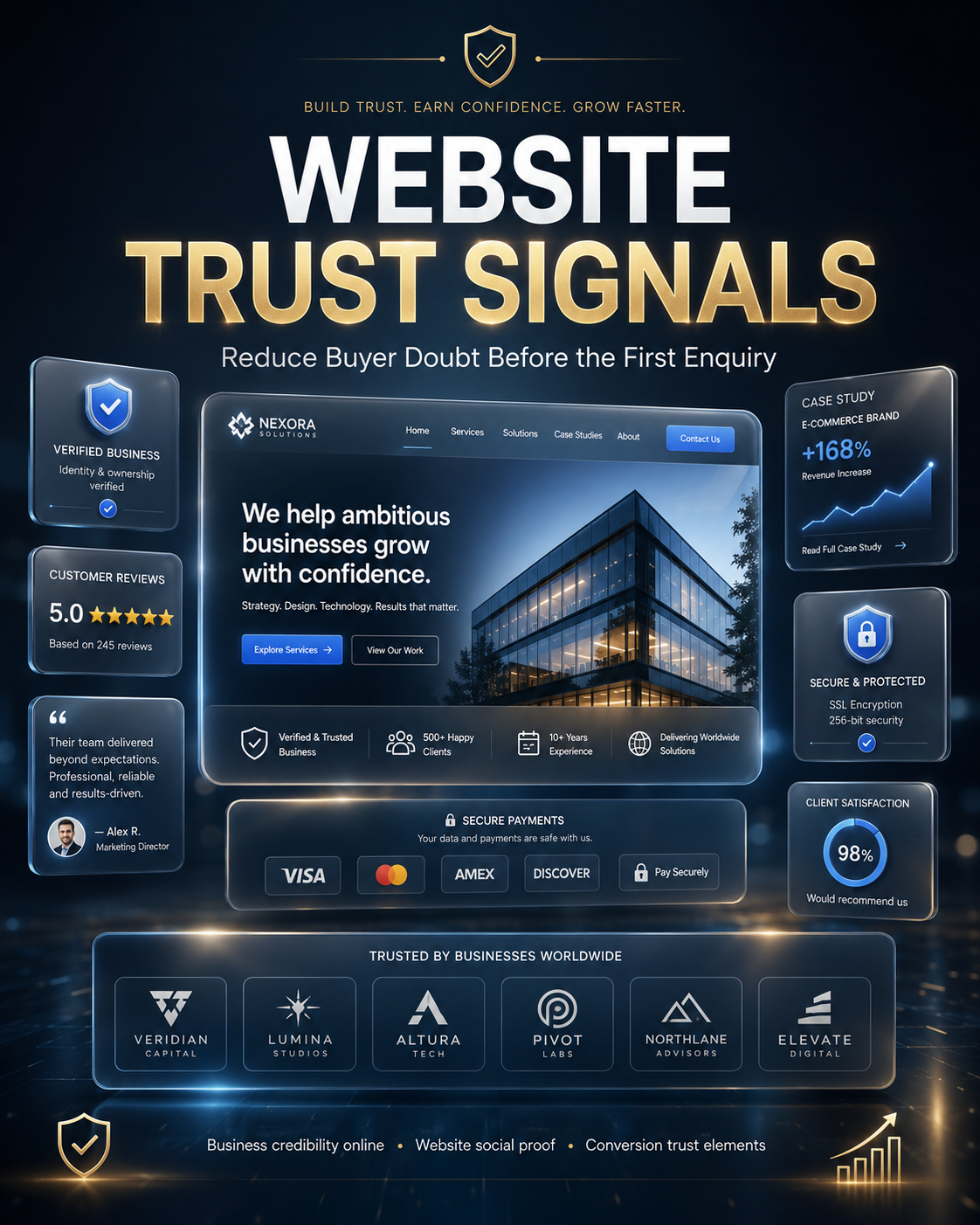
Why Trust Matters Before the First Enquiry
When a visitor lands on your website, they are asking silent questions:
- Is this business real?
- Can I trust them with my money or enquiry?
- Have they helped others before?
- Are they professional?
- Will they respond properly?
If your website answers these questions quickly and clearly, the visitor is more likely to stay, explore, and convert. If not, doubt takes over.
Trust is one of the biggest hidden drivers of conversion. Before pricing, before service quality, and even before communication, people first need to believe in your business. That is why conversion trust elements should never be treated as optional.
What Are Website Trust Signals?
Website Trust Signals are visual, written, and structural elements on a website that reassure visitors your business is legitimate, experienced, safe, and reliable.
They help turn uncertainty into confidence.
Trust signals can include:
- Customer reviews
- Client logos
- Case studies
- Contact information
- Security badges
- Testimonials
- Certifications
- Real team photos
- Clear policies
- Social proof and media mentions
Each one plays a role in reducing hesitation and improving your website social proof.
1. Real Customer Reviews and Testimonials
One of the strongest trust signals is hearing from satisfied customers. People trust people. When a visitor sees honest, specific testimonials from real clients, it becomes easier to believe your business can deliver what it promises.
Why it works:
Reviews act as social validation. They show that others have already taken the risk and had a positive experience.
Best practices:
- Use real names whenever possible
- Add profile photos if available
- Include the service used or result achieved
- Keep the language authentic, not overly polished
- Place testimonials on your homepage, service pages, and landing pages
Instead of a generic line like “Great service,” use something more meaningful such as:
“Their team redesigned our website and helped us generate better quality leads within weeks.”
That kind of detail improves business credibility online much more effectively.
2. Client Logos and Brand Associations
If you have worked with known businesses, displaying their logos can instantly strengthen trust. Even if the client is not a global brand, showing the names or logos of businesses you have served adds credibility.
Why it works:
Visitors often judge your business by the company you keep. Recognizable client logos reduce uncertainty and suggest that other businesses have already trusted you.
Best practices:
- Add a “Trusted By” or “Worked With” section
- Use clean, high-quality logo files
- Only display logos you have permission to use
- Avoid overcrowding the section
This is one of the most powerful Website Trust Signals for service-based businesses, agencies, consultants, SaaS brands, and B2B companies.
3. Case Studies That Show Real Results
A testimonial says a client was happy. A case study shows why.
Case studies give visitors evidence. They move your website from promise to proof. Instead of saying “We help businesses grow,” a case study demonstrates how you helped a business solve a real problem.
Why it works:
Case studies reduce doubt because they show process, expertise, and outcomes.
What to include:
- The client’s challenge
- Your solution
- The steps you took
- The result or transformation
- A quote from the client if possible
Even simple case studies can become strong conversion trust elements. They show visitors that your business understands real problems and delivers practical results.
4. Strong Website Social Proof
Website social proof is anything that shows your business is already being trusted, followed, used, or recommended by others.
Examples include:
- Number of clients served
- 5-star rating screenshots
- Social media followers
- Industry awards
- User-generated content
- Media mentions
- “As seen in” sections
Why it works:
People feel safer choosing a business that others already trust. Social proof reduces the fear of making a bad decision.
Use it wisely:
- Be honest and specific
- Avoid fake counters or exaggerated numbers
- Highlight quality over vanity metrics
For example:
- “500+ Projects Delivered”
- “Rated 4.9/5 by Clients”
- “Trusted by 120+ Businesses”
These are clear Website Trust Signals that reassure visitors quickly.
5. Clear Contact Information and Business Details
A website without visible contact details creates doubt immediately. If visitors cannot easily find your phone number, email, business address, or contact options, they may assume the business is unreliable.
Why it works:
Transparency makes a business feel real and accessible.
Include:
- Contact page
- Phone number
- Professional email address
- Business location or service area
- WhatsApp button if relevant
- Working hours
- Google Maps embed if useful
A website that openly shares business details sends a simple message: “We are real, and you can reach us.”
This is a foundational part of business credibility online.
6. Professional Design and Consistent Branding
Trust is not only built through words—it is also built visually. A cluttered, outdated, or poorly designed website can make even a good business look unprofessional.
Why it works:
Visitors often judge credibility in seconds. Clean design, readable layouts, and consistent branding create confidence.
Trust-building design factors:
- Mobile-friendly layout
- Fast loading speed
- High-quality images
- Clear navigation
- Consistent fonts and colors
- No broken links or obvious errors
A polished website makes your brand appear established and dependable. Design itself becomes one of the silent but powerful Website Trust Signals.
7. Security Badges and Privacy Assurance
If your website asks visitors to submit personal information, book online, or make payments, security matters a lot.
Why it works:
People want to know their data is safe. Visible reassurance helps reduce anxiety before taking action.
Add trust through:
- SSL certificate (HTTPS)
- Secure payment badges
- Privacy policy
- Terms and conditions
- Cookie notice if applicable
- Form messaging like “Your information is safe with us”
These details matter especially for e-commerce websites, healthcare sites, education websites, and lead-generation landing pages.
Security-related conversion trust elements can be the difference between a visitor leaving and a visitor submitting an enquiry.
8. Real Team Photos and About Us Content
People trust people more than faceless businesses. A clear and honest “About Us” section can humanize your brand and create a stronger connection.
Why it works:
Visitors want to know who is behind the business. Real team photos and authentic brand stories make the company feel more approachable.
What helps:
- Founder message
- Team introductions
- Behind-the-scenes photos
- Mission and values
- Why the business was started
Avoid generic stock-heavy About pages with no personality. Even a few genuine details can greatly improve business credibility online.
9. Certifications, Accreditations, and Industry Memberships
If your business holds any professional certifications, licenses, training credentials, or industry memberships, display them clearly.
Why it works:
These elements show that your business meets recognized standards.
Examples:
- Certified partner badges
- Professional association memberships
- ISO certifications
- Licensed practitioner status
- Training certificates
- Verified agency badges
These can become high-impact Website Trust Signals, especially in industries where expertise and compliance matter, such as finance, legal, healthcare, education, and digital marketing.
10. Transparent Pricing, Process, or FAQs
Buyer doubt increases when the path forward feels unclear. Visitors want to understand what happens next. Even if you do not list exact pricing, explaining your process can help reduce uncertainty.
Why it works:
Clarity builds confidence. Confusion creates hesitation.
Helpful trust-building content:
- “How It Works” sections
- Service process steps
- Starting price ranges
- Delivery timelines
- Frequently asked questions
- What happens after enquiry
This kind of content functions as practical conversion trust elements because it removes friction and makes the business feel easier to engage with.
11. Fresh Content and Active Website Maintenance
An outdated website can quietly damage trust. If your latest blog is from three years ago, your copyright is old, or key pages feel neglected, visitors may wonder whether the business is still active.
Why it works:
Fresh content suggests your business is current, responsive, and operational.
Keep updated:
- Blog posts
- Portfolio items
- Testimonials
- Contact details
- Copyright year
- Team info
- Service pages
Regular updates support stronger website social proof and show that your business is alive and evolving.
12. Strong Calls to Action That Feel Safe
Trust also affects how people respond to your call to action. If your CTA feels too aggressive, too vague, or too risky, people may hesitate.
Better CTAs include:
- Book a Free Consultation
- Request a Callback
- Get a Free Quote
- Talk to Our Team
- See Our Work
- Start with a Discovery Call
Pair these with reassuring microcopy such as:
- “No obligation”
- “We respond within 24 hours”
- “Your details remain private”
This helps visitors feel safe enough to take the first step.
How to Use Website Trust Signals Strategically
The best approach is not to place all trust elements in one section and hope for the best. Trust should be layered across the website.
A strong homepage might include:
- Hero section with clear value proposition
- Client logos
- Testimonials
- Case study preview
- Security or credibility badges
- Strong CTA
A strong service page might include:
- Service benefits
- Process explanation
- Relevant testimonials
- FAQs
- Contact CTA
A strong contact page might include:
- Real contact details
- Google reviews
- Map or location
- Response-time expectation
When used thoughtfully, Website Trust Signals work together to reduce friction throughout the buyer journey.
Final Thoughts
A visitor may like your service, appreciate your design, and still leave your website if doubt remains. That is why Website Trust Signals are so important. They help answer the silent concerns every buyer has before reaching out.
From testimonials and website social proof to case studies, contact details, secure payment elements, and brand transparency, trust-building features can significantly improve business credibility online and strengthen your conversion trust elements.
If you want more enquiries from your website, do not focus only on design or traffic. Focus on trust.
Because before a buyer contacts you, they first need to believe you.
Conclusion
A high-converting website is not just informative—it is reassuring. The right Website Trust Signals reduce buyer doubt, increase confidence, and encourage visitors to take action sooner. If your website currently feels too basic, too anonymous, or too light on proof, improving these trust elements could have a direct impact on enquiries and conversions.
Your website should not just look good. It should make people feel safe saying yes.
Ready to turn blogging into a powerful SEO growth engine for your business?
At NextWave By Naik, we specialize in creating data-driven blogging strategies that improve rankings, attract organic traffic, and build long-term authority. From keyword research to content creation and optimization, we handle everything—so you can focus on growing your business.