
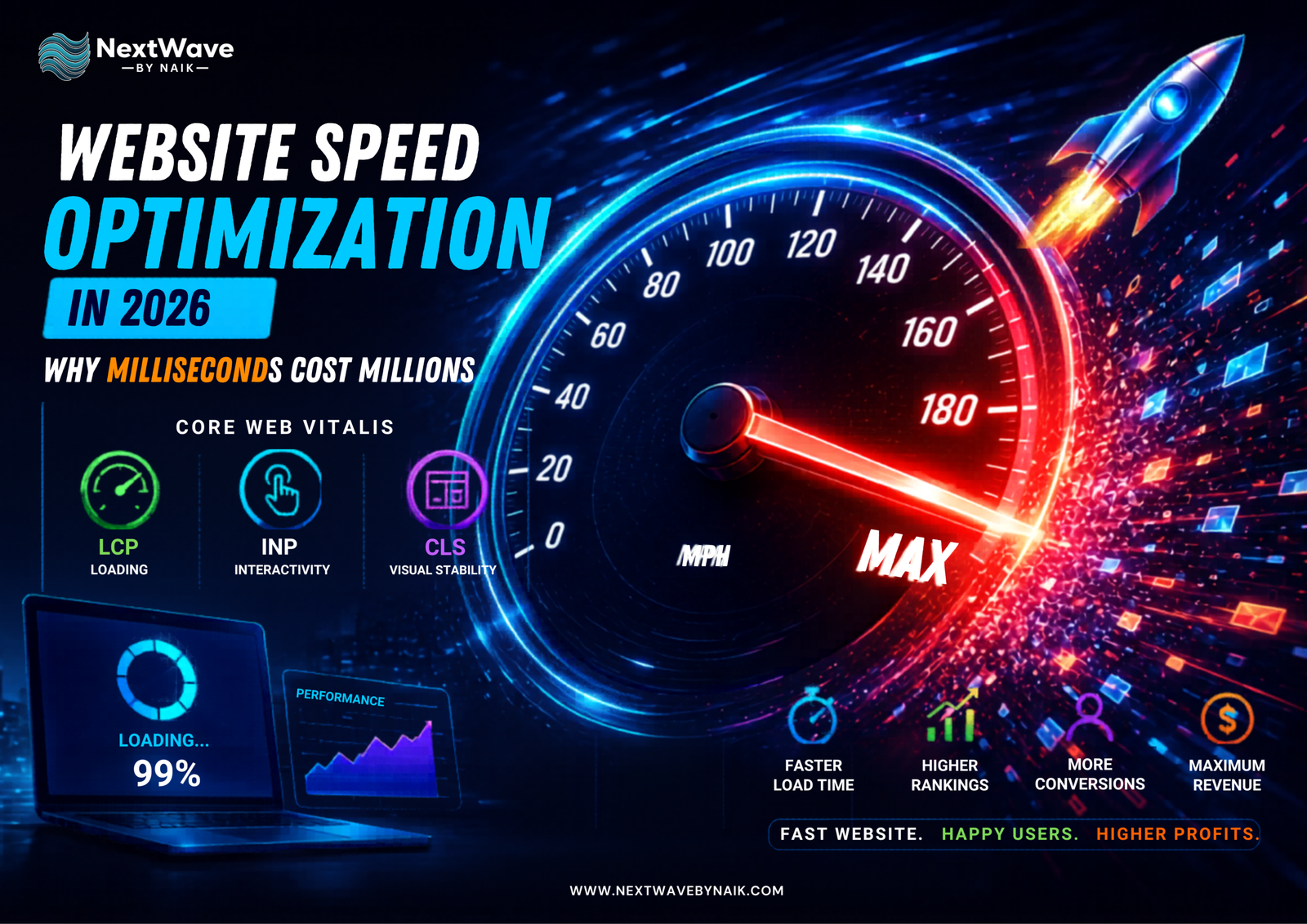
Website Speed Optimization in 2026: Why Milliseconds Cost Millions
Introduction
In the digital economy of 2026, speed is no longer just a technical feature — it is a business growth factor. Modern users expect websites to load instantly, respond smoothly, and deliver seamless experiences across all devices. Even a delay of a few milliseconds can increase bounce rates, reduce conversions, and negatively impact search engine rankings. This is why Website Speed Optimization has become one of the most critical priorities for businesses investing in online growth.
Search engines now place stronger emphasis on user experience metrics, particularly Core Web Vitals, to evaluate website quality. Companies with slow-loading websites risk losing both customers and visibility. A high-performing website not only improves SEO performance but also enhances engagement, trust, and revenue generation.
As competition becomes more aggressive online, businesses that prioritize performance gain a measurable advantage. In this guide, we will explore why milliseconds matter in 2026, how Core Web Vitals influence rankings, and the best strategies for improving website speed and technical performance.
Why Website Speed Optimization Matters in 2026x
The modern internet user expects instant digital experiences. Studies consistently show that users abandon websites when loading times exceed just a few seconds. Slow websites create frustration, reduce engagement, and directly impact customer retention.
Website Speed Optimization helps businesses deliver faster and more reliable browsing experiences. Faster websites improve navigation, reduce bounce rates, and encourage users to explore more pages. This leads to higher conversion rates and stronger customer satisfaction.
From an SEO perspective, search engines reward fast websites because they create better user experiences. Websites with optimized performance often rank higher in search results, especially in competitive industries where technical performance becomes a deciding factor.
In 2026, performance optimization is no longer optional. It is a core business requirement for brands that want to remain competitive in search visibility and online sales.
Understanding Core Web Vitals
Core Web Vitals are performance metrics introduced to measure real-world user experience on websites. These metrics focus on loading speed, visual stability, and responsiveness.
The three major Core Web Vitals include:
Largest Contentful Paint (LCP)
LCP measures how quickly the main content of a page becomes visible. A fast LCP improves perceived loading speed and user satisfaction.
Interaction to Next Paint (INP)
INP evaluates how responsive a website feels when users interact with buttons, menus, or forms. Faster interactions improve engagement and usability.
Cumulative Layout Shift (CLS)
CLS measures visual stability. Unexpected layout movements create poor experiences and reduce trust in website quality.
Businesses investing in Website Speed Optimization often see major improvements in these performance metrics, which positively affects both SEO rankings and user retention.
The SEO Impact of Core Web Vitals
Search engines increasingly prioritize user-centric experiences. Websites with strong Core Web Vitals signals are more likely to rank higher because they provide smoother interactions and faster access to information.
A proper Technical SEO Audit helps identify performance bottlenecks affecting Core Web Vitals scores. Issues such as unoptimized images, excessive JavaScript, poor server response times, and render-blocking resources can significantly slow down a website.
Improving technical performance helps search engines crawl and index pages more efficiently. Faster websites also experience lower bounce rates, which sends positive engagement signals to search engines.
In highly competitive markets, even small performance improvements can create meaningful SEO advantages. Businesses that ignore optimization often struggle to maintain rankings against faster competitors.
How Milliseconds Affect Revenue
Milliseconds directly influence customer behavior. Research shows that slow websites reduce conversion rates and increase cart abandonment in eCommerce environments.
For example:
- A one-second delay can reduce conversions significantly.
- Slow mobile experiences increase bounce rates.
- Delayed interactions negatively impact customer trust.
- Poor performance reduces ad campaign effectiveness.
This is why global brands invest heavily in Website Speed Optimization strategies. Faster websites generate more engagement, better lead generation, and improved online revenue.
In 2026, users have countless alternatives available instantly. If one website performs poorly, users simply move to a competitor. Performance therefore becomes a direct revenue factor.
Essential Website Speed Optimization Strategies
Optimize Images and Media
Large image files are one of the biggest causes of slow websites. Modern image compression formats and responsive media delivery improve loading performance significantly.
Reduce JavaScript Execution
Excessive scripts increase page rendering time. Removing unnecessary code improves responsiveness and Core Web Vitals scores.
Use Advanced Caching
Caching stores website resources efficiently, reducing repeated server requests and improving load speed for returning visitors.
Improve Server Performance
Fast hosting infrastructure and optimized servers reduce latency and enhance website responsiveness.
Implement Content Delivery Networks (CDNs)
CDNs distribute website content across multiple global servers, helping users access pages faster regardless of their location.
Conduct a Technical SEO Audit
A detailed Technical SEO Audit identifies hidden performance problems affecting both SEO and user experience. Regular audits help maintain long-term optimization.
Mobile Performance Is More Important Than Ever
Most internet traffic now comes from mobile devices. Search engines primarily evaluate mobile performance when determining rankings.
A High-Performance Website must deliver fast experiences across smartphones, tablets, and desktops. Mobile optimization includes responsive layouts, lightweight assets, touch-friendly navigation, and efficient coding practices.
Businesses that fail to optimize mobile speed often lose visibility and customer engagement. Mobile-first performance is now a critical part of modern SEO strategy.
The Future of Website Performance
Artificial intelligence, predictive loading, edge computing, and next-generation hosting technologies are reshaping performance optimization in 2026.
Modern businesses are increasingly adopting automation tools that continuously monitor Core Web Vitals and detect speed issues before they impact users.
Future-ready brands understand that Website Speed Optimization is not a one-time task. It requires ongoing monitoring, testing, and technical refinement to maintain competitive performance standards.
As user expectations continue rising, websites that prioritize speed, responsiveness, and stability will dominate both search rankings and customer experience.
Conclusion
In 2026, every millisecond matters. Slow websites reduce visibility, damage customer trust, and lower revenue potential. Businesses that invest in Website Speed Optimization gain significant advantages in SEO rankings, conversion rates, and overall digital performance.
Core Web Vitals have become essential indicators of website quality, making technical optimization more important than ever. Through proper performance strategies, regular Technical SEO Audit processes, and continuous improvement, businesses can build faster and more engaging digital experiences.
A high-performing website is no longer just a technical achievement — it is a competitive business asset. Brands that optimize for speed today will lead the digital market tomorrow.