
Voice Search Optimization: 7 Smart Strategies to Dominate the Next Wave of Search Queries
The way people search online is evolving rapidly. Instead of typing short phrases into search engines, users are increasingly speaking naturally to digital assistants and smart devices. From smartphones and voice-enabled cars to smart speakers and virtual assistants, voice technology is changing how consumers discover information online. This shift has made Voice Search Optimization an essential component of modern SEO strategies.
Businesses that adapt to voice-based search behavior can gain a significant competitive advantage. As search engines become more sophisticated in understanding natural language, optimizing content for spoken queries is no longer optional. Companies that invest in voice search strategies today position themselves for greater visibility, improved user engagement, and stronger search rankings in the future.
Understanding Voice Search Optimization
Voice Search Optimization refers to the process of enhancing website content and technical SEO elements to improve visibility in voice-generated search results. Unlike traditional text searches, voice queries are typically longer, more conversational, and often framed as complete questions.
For example, a user may type “best SEO agency Bangalore” into a search engine. However, when using voice search, the same user might ask, “Which is the best SEO agency in Bangalore for small businesses?”
This difference highlights the growing importance of conversational keywords and natural language content structures.
Search engines utilize advanced artificial intelligence and NLP in SEO to understand user intent, context, and meaning behind spoken queries. Therefore, businesses must create content that aligns with how real people naturally communicate.
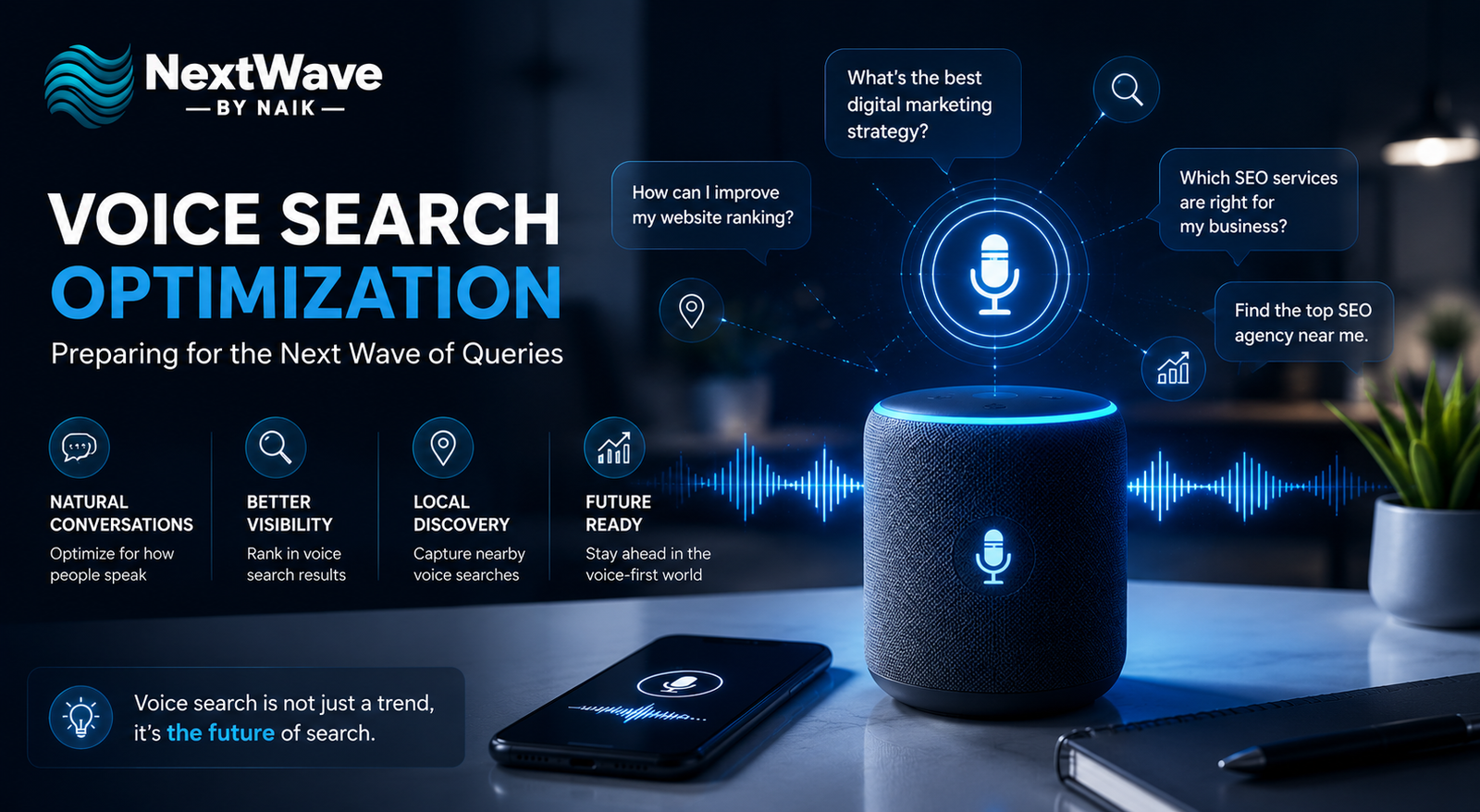
Why Voice Search Is Growing Rapidly
Several factors are driving the adoption of voice-enabled search technologies worldwide:
Increased Smartphone Usage
Modern smartphones come equipped with powerful voice assistants, making voice searches more convenient than typing.
Growth of Smart Devices
The popularity of smart speaker search has surged as consumers use voice-enabled devices for daily tasks, information gathering, and online shopping.
Faster User Experience
Voice search provides instant answers, reducing the effort required to find information online.
Advances in Artificial Intelligence
Improved machine learning algorithms and NLP in SEO allow search engines to better understand natural speech patterns and deliver highly relevant results.
As these technologies continue evolving, voice search will become a dominant search method across multiple industries.
How Voice Search Changes SEO
Traditional SEO often focuses on short-tail keywords and exact-match search phrases. Voice search introduces a different approach.
Users tend to ask questions in a conversational format, such as:
- What is the best digital marketing strategy for startups?
- How can I improve my website ranking quickly?
- Which SEO techniques work best for local businesses?
These longer phrases require businesses to target conversational keywords rather than relying solely on conventional keyword strategies.
A strong Voice Search Optimization plan focuses on understanding intent and providing clear, concise answers that match spoken user queries.
7 Effective Voice Search Optimization Strategies
1. Focus on Conversational Keywords
Voice searches closely resemble everyday conversations. Instead of targeting isolated phrases, create content around complete questions and natural language patterns.
Including conversational keywords helps search engines connect your content with real-world spoken queries.
2. Optimize for Featured Snippets
Voice assistants often read answers directly from featured snippets.
Structure content using:
- Clear headings
- Numbered lists
- Bullet points
- Direct answers
This increases your chances of being selected as the preferred voice search result.
3. Strengthen Local SEO
Many voice searches are location-based.
Examples include:
- Restaurants near me
- Best dentist nearby
- Local SEO services in Bangalore
Optimizing local business listings, maps, and location-specific content supports stronger Voice Search Optimization performance.
4. Improve Website Speed
Voice search users expect immediate answers.
A fast-loading website improves user experience and supports better search rankings. Compress images, optimize code, and utilize caching technologies to enhance performance.
5. Create FAQ Sections
Frequently Asked Questions naturally align with voice search behavior.
Users often phrase voice searches as direct questions, making FAQ pages valuable assets for Voice Search Optimization.
Examples include:
- What is voice search optimization?
- Why is voice search important for SEO?
- How does NLP improve search accuracy?
These formats help search engines quickly identify relevant answers.
6. Use Structured Data Markup
Schema markup helps search engines understand content context.
Implementing structured data can improve search visibility and increase the likelihood of appearing in rich results and voice responses.
This technical enhancement strengthens your overall Voice Search SEO Strategy.
7. Develop Mobile-First Content
Most voice searches occur on mobile devices.
Ensure your website:
- Uses responsive design
- Loads quickly
- Provides easy navigation
- Delivers readable content
A mobile-first approach significantly improves the effectiveness of Voice Search Optimization efforts.
The Role of NLP in SEO
One of the most important technologies behind voice search is NLP in SEO.
Natural Language Processing enables search engines to understand:
- User intent
- Contextual meaning
- Sentiment
- Conversational language
Instead of matching exact keywords, modern search engines analyze entire phrases and determine what users actually mean.
As a result, content creators must prioritize relevance, clarity, and user intent rather than keyword stuffing.
Businesses that leverage NLP in SEO gain a stronger ability to align content with evolving search algorithms.
Smart Speaker Search and Consumer Behavior
The rise of smart speaker search is reshaping how consumers interact with digital content.
Users increasingly rely on voice assistants for:
- Product research
- Local business discovery
- News updates
- Shopping recommendations
- Service inquiries
Since smart speakers often provide a single answer instead of multiple search results, ranking in top positions becomes even more valuable.
Organizations that implement advanced Voice Search Optimization techniques can capture this growing audience and strengthen their digital presence.
Future Trends in Voice Search
Voice technology will continue evolving through advancements in artificial intelligence, machine learning, and semantic search capabilities.
Future developments are expected to include:
- More personalized voice results
- Enhanced multilingual support
- Better contextual understanding
- Greater integration with IoT devices
- Improved conversational AI experiences
As these trends accelerate, businesses that invest in Voice Search Optimization today will be better prepared to compete in tomorrow’s search landscape.
Conclusion
The future of search is increasingly voice-driven. Consumers now expect fast, natural, and conversational interactions with search engines and digital assistants. Implementing a comprehensive Voice Search Optimization strategy helps businesses stay ahead of changing search behaviors while improving visibility and engagement.
By focusing on NLP in SEO, targeting conversational keywords, optimizing for smart speaker search, and adopting a strong Voice Search SEO Strategy, organizations can position themselves for long-term digital success. As voice technology continues to reshape online discovery, businesses that adapt early will gain a significant advantage in the evolving search ecosystem.