
The SEO Marathon: Understanding the SEO Results Timeline and Your Path to Ranking on Page 1
The SEO Marathon: What to Expect in the First 6 Months
When businesses invest in search engine optimization, the first question they ask is about the SEO Results Timeline. How long does it take to see traffic? When will we start ranking on Page 1? Is organic growth really worth the wait?
Understanding the SEO Results Timeline is critical because SEO is not a sprint—it’s a marathon built on strategy, patience, and consistency. Unlike paid ads that deliver instant clicks, SEO builds authority over time through structured optimization and content relevance.
The truth is, the SEO Results Timeline is not a straight line. It’s a progressive journey shaped by competition, industry trends, keyword difficulty, and Google algorithm updates. Let’s break down what you can realistically expect in the first six months.
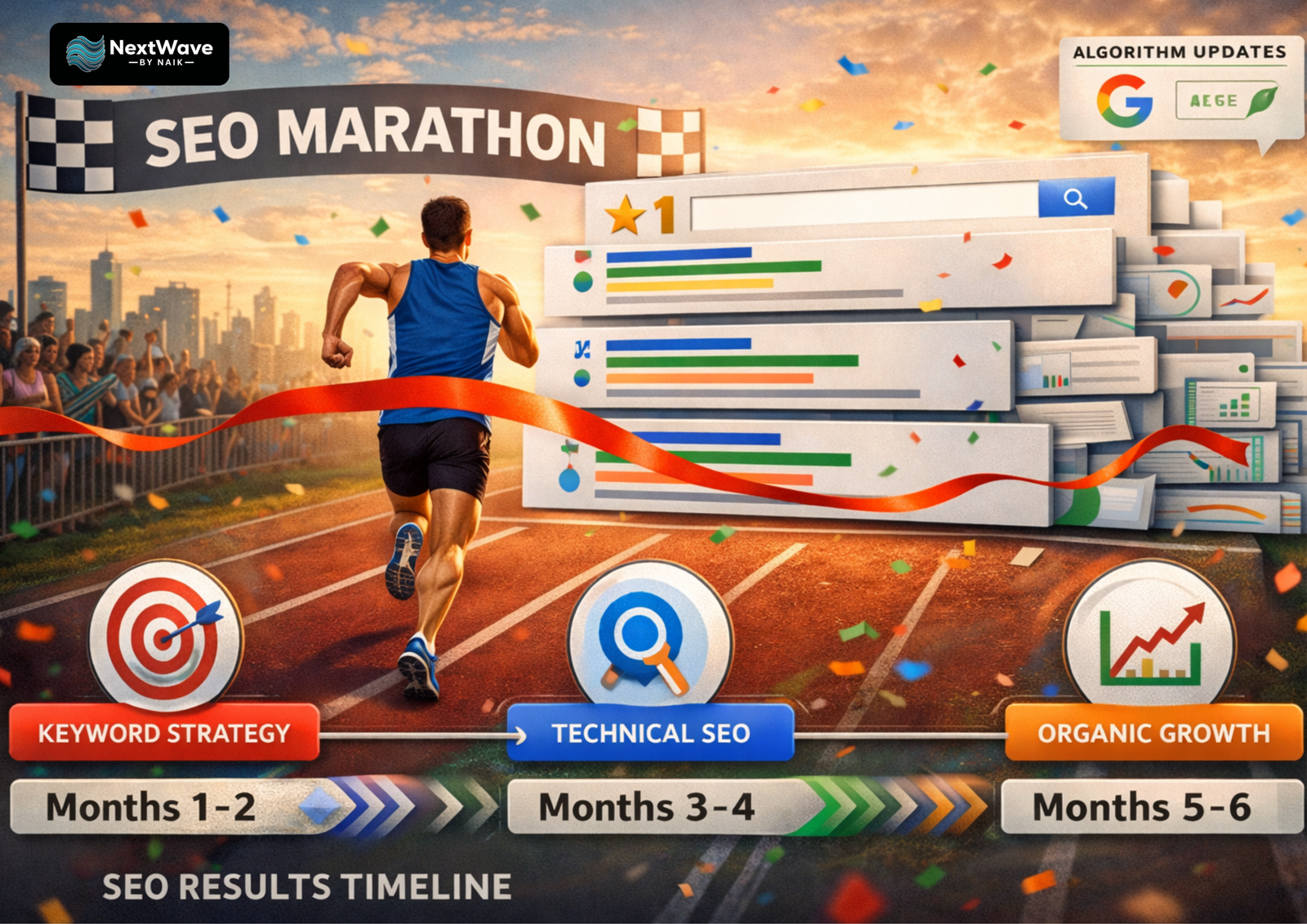
Breaking Down the SEO Results Timeline: Months 1–2
The first two months focus on building a strong foundation. During this phase, your SEO team typically works on:
Website audit and technical fixes
Keyword strategy development
Competitor research
On-page optimization
Content planning
This stage is often invisible to business owners because you may not see immediate traffic spikes. However, this groundwork determines how effectively your site will compete later.
Search engines need time to crawl and re-index your updated website. Technical improvements like faster loading speed, mobile responsiveness, and proper metadata setup help establish trust. Although you may see slight movement in impressions, significant ranking shifts are rare during this stage of the SEO Results Timeline.
Think of it as planting seeds before expecting harvest.
Months 3–4: Momentum Builds in the SEO Results Timeline
By the third month, you may start noticing measurable improvements. Keyword rankings begin climbing gradually, especially for low-competition search terms. This is when organic growth starts becoming visible.
During months three and four, the focus shifts to:
Publishing high-quality optimized content
Strengthening internal linking
Building backlinks
Improving user engagement metrics
Search engines begin recognizing your consistency. Some keywords may move from page 4 to page 2. While you may not yet achieve ranking on Page 1 for competitive terms, traffic growth often becomes noticeable.
At this point, patience is crucial. SEO success compounds over time. The more optimized content you publish, the stronger your authority becomes within your niche.
Months 5–6: Moving Closer to Ranking on Page 1 in the SEO Results Timeline
Months five and six are often the turning point in the SEO Results Timeline. If your strategy has been consistent, you’ll likely see stronger keyword positioning and higher click-through rates.
At this stage of the SEO Results Timeline, several important things happen:
Competitive keywords move toward Page 1
Domain authority strengthens
Organic growth becomes steady
Lead generation improves
Some businesses may achieve ranking on Page 1 for selected keywords within this timeframe. However, highly competitive industries may require additional months of authority building.
This period proves why SEO is a long-term investment. The visibility gained here is more sustainable than paid campaigns because organic rankings build credibility and user trust.
Why the SEO Results Timeline Varies for Every Business
Not all websites progress at the same pace. The SEO Results Timeline varies depending on multiple factors:
1. Industry Competition
If you’re competing in saturated markets like finance, healthcare, or digital marketing, ranking takes longer due to strong domain authority competitors.
2. Website Age and Authority
New domains typically require more time to build trust compared to established websites.
3. Keyword Strategy
Targeting high-volume keywords immediately can slow results. A smart keyword strategy balances short-tail and long-tail keywords to accelerate early wins.
4. Content Consistency
Publishing optimized, valuable content regularly significantly improves organic growth speed.
5. Google Algorithm Updates
Frequent Google algorithm updates can influence ranking patterns. Websites that follow ethical SEO practices adapt better and maintain steady progress.
Because of these variables, the SEO Results Timeline should be viewed as flexible rather than fixed.
How to Accelerate Your SEO Results Timeline Without Risk
While you cannot skip stages in the SEO Results Timeline, you can optimize your approach to improve efficiency.
Focus on Search Intent
Understanding what users truly want ensures your content aligns with search behavior.
Invest in Technical SEO
Site speed, structured data, and clean architecture improve crawlability and user experience.
Build High-Quality Backlinks
Authoritative backlinks act as trust signals and strengthen domain credibility.
Prioritize Content Quality Over Quantity
Search engines reward relevance and depth. Educational, problem-solving content performs best for sustainable organic growth.
Track and Optimize
Use analytics tools to monitor keyword performance and refine your strategy regularly.
By implementing these methods consistently, businesses can maximize results within the natural framework of SEO.
The Reality of Organic Growth in the First Six Months
SEO is often misunderstood because expectations are unrealistic. Many businesses expect instant ranking on Page 1 within weeks. However, organic growth follows a layered process:
Technical optimization
Content indexing
Authority building
Trust establishment
Ranking improvements
The beauty of this approach lies in sustainability. Once rankings improve, traffic continues flowing without daily ad spend.
Ultimately, the SEO Results Timeline rewards consistency, patience, and data-driven strategy. Businesses that commit to long-term optimization outperform competitors who chase shortcuts.
If you commit to the process and respect the SEO Results Timeline, the first six months will lay a powerful foundation for lasting digital success. Instead of focusing only on quick wins, focus on building authority, relevance, and trust. That’s how brands achieve stable ranking on Page 1 and long-term organic growth.
Final Takeaway
SEO is not about overnight success. It’s about strategic progress. The first six months define your trajectory. With the right keyword strategy, consistent optimization, and adaptability to Google algorithm updates, your website will steadily climb search rankings.
Stay patient, stay consistent, and treat SEO like the marathon it truly is.
Let’s create content that ranks, converts, and builds authority.