
SEO Content Pruning: 9 Proven Ways to Remove Old Pages and Boost Organic Rankings
Introduction
SEO Content Pruning is becoming one of the most effective strategies for improving website performance in today’s competitive search landscape. While many businesses focus on publishing new content, they often overlook the value of maintaining existing pages. Over time, websites accumulate outdated articles, duplicate pages, thin content, and obsolete information that no longer serves users or search engines.
Rather than helping your rankings, low-quality pages can reduce your website’s authority, waste crawl budget, and dilute topical relevance. This is where SEO Content Pruning becomes essential. By removing, updating, consolidating, or redirecting underperforming content, websites can improve overall quality and provide a better user experience.
A structured website content audit combined with an effective outdated content cleanup process can significantly contribute to organic traffic recovery, stronger keyword rankings, and improved website authority.
What Is SEO Content Pruning?
SEO Content Pruning is the process of evaluating existing website content and deciding whether each page should be:
- Updated
- Merged with another page
- Redirected
- Archived
- Removed completely
The goal isn’t to delete content randomly. Instead, it focuses on improving the overall quality of your website by keeping only valuable, relevant, and high-performing pages.
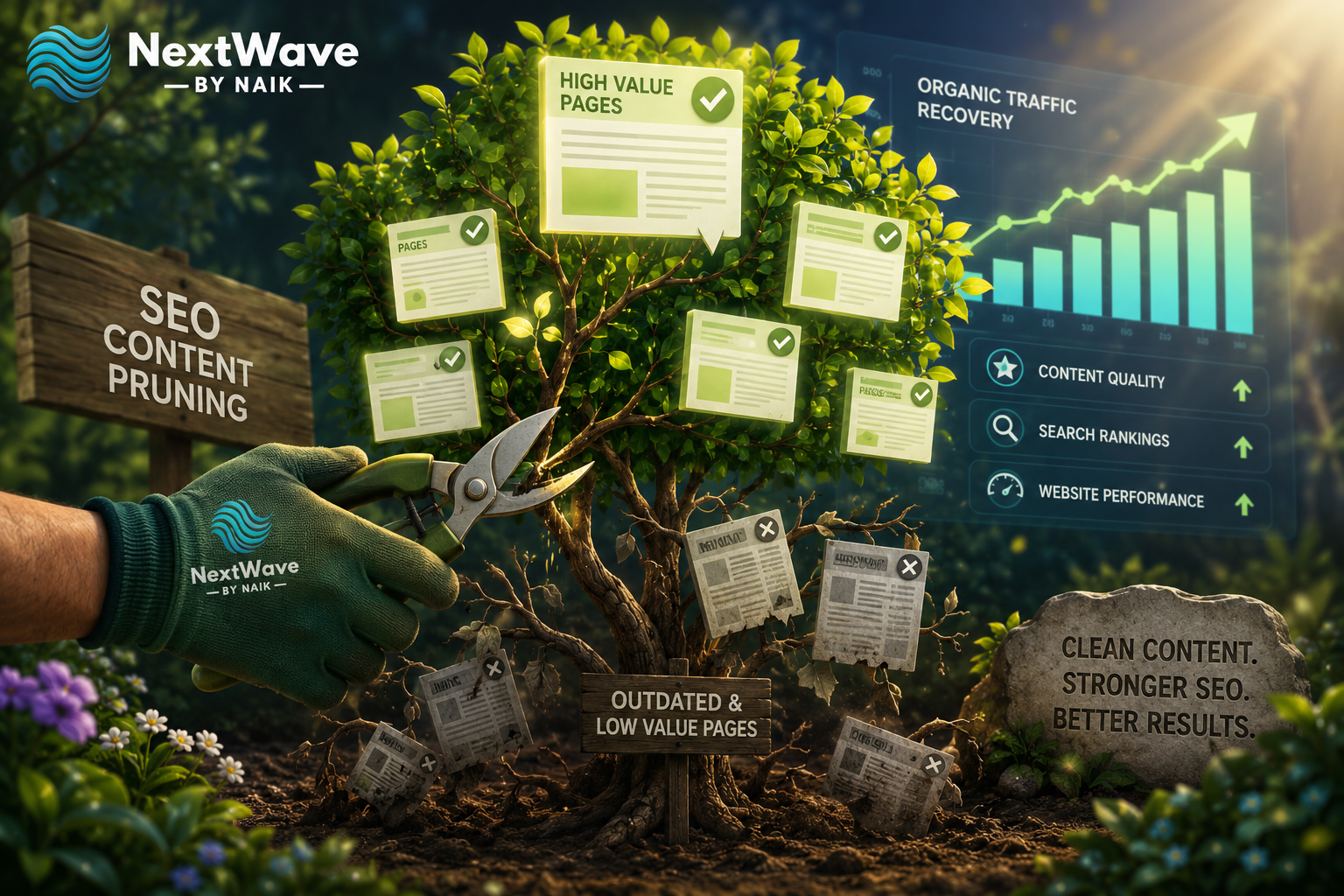
Think of it like pruning a tree. Removing weak branches helps the healthy ones grow stronger. Similarly, SEO Content Pruning allows your best content to receive greater visibility and authority.
Why Old Content Can Hurt SEO
Many websites publish hundreds of blog posts over several years. Without regular maintenance, these pages may become outdated due to:
- Old statistics
- Broken links
- Expired products
- Algorithm changes
- Duplicate topics
- Thin content
- Poor search intent alignment
These outdated pages confuse search engines and users alike. An effective outdated content cleanup removes these issues while improving overall website quality.
Signs Your Website Needs SEO Content Pruning
A detailed website content audit can reveal pages that require attention. Common warning signs include:
1. Declining Organic Traffic
Pages that once performed well but now receive very little traffic may need updating or consolidation.
2. Low Search Rankings
Content stuck beyond page two or three of Google may no longer satisfy current search intent.
3. Duplicate Topics
Publishing multiple blogs targeting the same keyword creates keyword cannibalization.
4. Outdated Information
Old pricing, discontinued services, or obsolete industry information reduce credibility.
5. Thin Content
Very short pages with limited value often struggle to rank and weaken overall site quality.
Benefits of SEO Content Pruning
Implementing SEO Content Pruning provides multiple long-term advantages.
Improved Search Rankings
Removing weak pages allows search engines to focus on your strongest content.
Better User Experience
Visitors find updated, accurate, and relevant information instead of outdated articles.
Higher Website Authority
A well-maintained website demonstrates expertise and trustworthiness.
Faster Crawling
Search engines spend more time indexing valuable pages rather than unnecessary content.
Organic Traffic Recovery
One of the biggest advantages of SEO Content Pruning is achieving organic traffic recovery after improving overall content quality.
How to Perform a Website Content Audit
A complete website content audit helps identify which pages deserve improvement.
Analyze Traffic
Review pages with declining visitors using website analytics.
Evaluate Rankings
Check keyword positions for every important page.
Review Content Quality
Determine whether information remains accurate and valuable.
Check Engagement Metrics
High bounce rates and low engagement often indicate weak content.
Identify Duplicate Content
Merge similar articles covering the same topic whenever possible.
Best Practices for Outdated Content Cleanup
Successful outdated content cleanup involves thoughtful decision-making rather than deleting pages immediately.
Update Valuable Articles
Refresh statistics, examples, screenshots, and internal links.
Merge Similar Content
Combine overlapping articles into one comprehensive guide.
Redirect Removed Pages
Use 301 redirects to preserve existing SEO value.
Delete Low-Value Pages
Remove pages that provide little or no benefit to users.
Improve Internal Linking
Connect refreshed articles with other relevant content to strengthen topical authority.
Common Mistakes to Avoid
Many businesses make mistakes during SEO Content Pruning that negatively impact rankings.
Avoid:
- Deleting pages without checking backlinks
- Removing high-performing content
- Ignoring redirect implementation
- Forgetting to update internal links
- Pruning solely based on page age
Every decision should be based on performance data rather than assumptions.
Tools That Support SEO Content Pruning
Several SEO tools simplify the pruning process.
- Google Search Console
- Google Analytics
- Screaming Frog
- Ahrefs
- SEMrush
These platforms help identify pages experiencing declining performance and support data-driven website content audit decisions.
Building a Long-Term Content Optimization Strategy
Rather than treating SEO Content Pruning as a one-time project, successful websites integrate it into an ongoing content optimization strategy.
Recommended schedule:
- Monthly performance reviews
- Quarterly content updates
- Semi-annual pruning sessions
- Annual comprehensive website audit
This continuous improvement process ensures your website stays competitive as search algorithms evolve.
Final Thoughts
Publishing more content isn’t always the best SEO strategy. Sometimes, improving what already exists delivers better results. SEO Content Pruning helps eliminate outdated pages, strengthen topical authority, improve user experience, and support sustainable growth.
A regular website content audit, combined with careful outdated content cleanup, creates a healthier website that search engines can crawl more efficiently. Businesses looking for consistent organic traffic recovery should view content maintenance as an essential part of their long-term SEO strategy.
Instead of allowing old content to accumulate, evaluate your existing pages, update valuable information, merge overlapping articles, and remove content that no longer serves your audience. With a structured content optimization strategy, your website will remain relevant, authoritative, and better positioned for higher search rankings.