
SEO Content Pruning: The Smart Strategy to Improve Website Performance and Organic Rankings
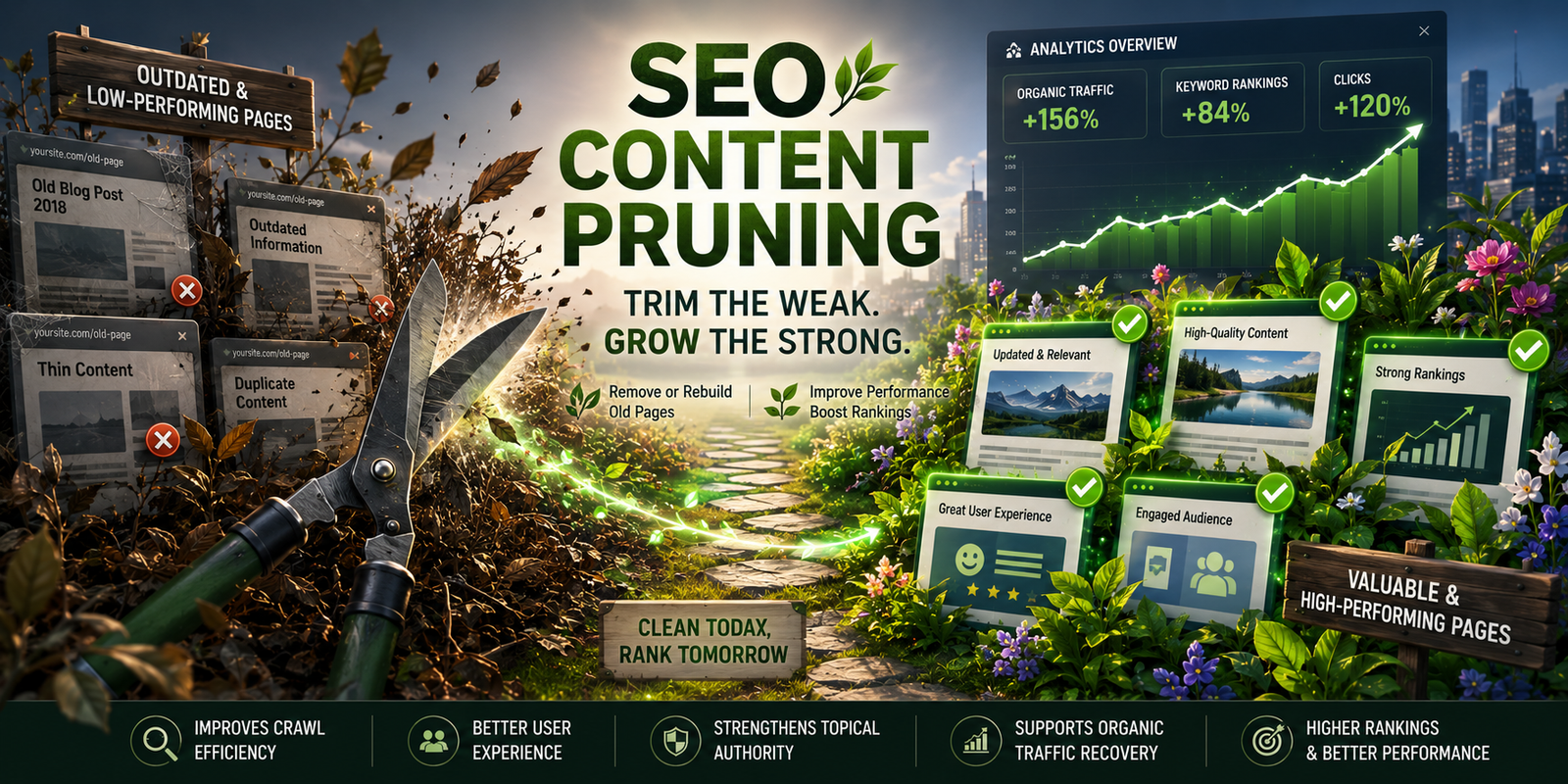
If your website has hundreds of pages but your search rankings continue to decline, the problem may not be a lack of content—it could be too much outdated content. SEO Content Pruning is an advanced SEO strategy that focuses on improving the overall quality of your website by updating, merging, redirecting, or removing underperforming pages.
Many businesses believe publishing more content automatically improves rankings. However, search engines prioritize quality over quantity. Old blog posts, duplicate articles, outdated information, and thin pages can reduce your site’s authority and negatively impact user experience. A well-planned SEO Content Pruning strategy helps search engines better understand your website while guiding users to valuable, relevant information.
Whether you’re managing a business website, eCommerce store, or blog, implementing SEO Content Pruning can lead to better rankings, improved crawl efficiency, and long-term organic traffic recovery.
What Is SEO Content Pruning?
SEO Content Pruning is the process of reviewing existing website pages and deciding whether they should be updated, merged, redirected, or removed based on their performance and relevance.
Instead of allowing outdated pages to remain indexed indefinitely, content pruning ensures every page contributes value to your website. This approach creates a cleaner site structure, improves user satisfaction, and strengthens your SEO performance.
A successful content pruning strategy starts with a detailed website content audit, allowing you to identify pages that no longer support your business goals.
Why SEO Content Pruning Matters
Google continuously updates its algorithms to reward websites that provide useful, accurate, and high-quality content. If your website contains obsolete or low-value pages, it may struggle to compete against websites with stronger content quality.
Here are the biggest advantages of SEO Content Pruning:
1. Improves Search Engine Crawl Efficiency
Search engines allocate a limited crawl budget to every website. Removing unnecessary pages allows search engines to spend more time crawling your important pages.
2. Boosts User Experience
Visitors prefer current, informative, and accurate content. Updating or removing outdated information creates a better browsing experience.
3. Strengthens Website Authority
Eliminating duplicate or weak pages helps search engines recognize your website as an authoritative source within your industry.
4. Supports Organic Traffic Recovery
Many websites experience declining traffic because old content loses relevance over time. Strategic updates and outdated content cleanup often restore rankings and increase organic visibility.
Signs Your Website Needs SEO Content Pruning
Your website may benefit from SEO Content Pruning if you notice:
- Pages receiving little or no organic traffic
- Declining keyword rankings
- Duplicate blog topics
- Thin articles with limited information
- Broken internal or external links
- Outdated statistics or references
- Expired service or product pages
- High bounce rates on older content
Regular monitoring helps prevent these issues from affecting your overall SEO performance.
How to Perform a Website Content Audit
A comprehensive website content audit is the foundation of every successful content pruning strategy.
During your audit, evaluate each page based on:
- Organic traffic performance
- Keyword rankings
- User engagement metrics
- Backlink profile
- Conversion rate
- Content accuracy
- Internal linking structure
- Content freshness
Once you gather this information, categorize pages into four groups:
- Update
- Merge
- Redirect
- Remove
This structured process ensures every page serves a meaningful purpose.
Best Practices for Outdated Content Cleanup
Successful outdated content cleanup requires more than simply deleting old pages.
Update Valuable Content
Refresh articles with:
- Current statistics
- New images
- Updated keywords
- Better formatting
- Improved readability
- Recent industry examples
Updated content often performs better than creating entirely new articles.
Merge Similar Articles
If multiple pages cover nearly identical topics, combine them into one comprehensive guide. This strengthens keyword relevance and prevents keyword cannibalization.
Redirect Removed Pages
If a deleted page has backlinks or traffic, create a 301 redirect to the most relevant page instead of allowing visitors to encounter a 404 error.
Remove Low-Value Pages
Delete pages that provide no SEO value, receive no traffic, and have no backlinks. This improves overall site quality.
Common Content That Should Be Pruned
Not every page deserves to remain on your website forever.
Examples include:
- Outdated news articles
- Expired promotional pages
- Duplicate category pages
- Thin blog posts
- Obsolete product pages
- Broken landing pages
- Old event pages
- Low-performing tag pages
Removing unnecessary content creates a stronger website architecture.
Mistakes to Avoid During SEO Content Pruning
Many website owners make costly mistakes when pruning content.
Avoid these common errors:
- Deleting pages without checking backlinks
- Ignoring internal links after removing pages
- Removing pages that still generate conversions
- Updating only the publication date
- Forgetting to submit updated pages for indexing
- Pruning too aggressively without reviewing analytics
Every decision should be based on data, not assumptions.
How Often Should You Perform SEO Content Pruning?
SEO experts recommend conducting a website content audit every six to twelve months.
High-content websites should review pages quarterly, while smaller websites may only need an annual audit.
Regular maintenance keeps your website competitive and prevents outdated content from accumulating.
SEO Tips for Better Content Performance
To maximize the benefits of SEO Content Pruning, follow these optimization techniques:
- Keep content updated with current information.
- Improve page loading speed.
- Add relevant internal links.
- Optimize headings with target keywords.
- Refresh title tags and meta descriptions.
- Use structured data where appropriate.
- Replace outdated visuals with modern graphics.
- Monitor ranking improvements using SEO tools.
Consistent optimization ensures long-term growth in search visibility.
Conclusion
Publishing new content is important, but maintaining existing content is equally essential. SEO Content Pruning helps businesses improve website quality by removing, updating, merging, or redirecting outdated pages that no longer provide value.
A well-executed website content audit, strategic outdated content cleanup, and ongoing optimization can significantly improve search rankings, enhance user experience, and support lasting organic traffic recovery. Instead of focusing solely on producing more content, invest time in strengthening what you already have. A cleaner, more relevant website will always perform better in search engines and provide greater value to your audience.
Ready to turn blogging into a powerful SEO growth engine for your business?
At NextWave By Naik, we specialize in creating data-driven blogging strategies that improve rankings, attract organic traffic, and build long-term authority. From keyword research to content creation and optimization, we handle everything—so you can focus on growing your business.