
Predictive Analytics in Advertising: The Smart Strategy Transforming Digital Campaign Performance
Digital advertising has evolved far beyond basic audience segmentation and demographic targeting. Today, businesses have access to vast amounts of customer data, and the challenge is no longer collecting information but using it effectively. This is where Predictive Analytics in Advertising becomes a game-changing solution.
By leveraging advanced data modeling, machine learning, and behavioral analysis, predictive analytics enables marketers to anticipate customer actions before they happen. Instead of reacting to trends after they emerge, businesses can proactively optimize campaigns, improve audience engagement, and maximize return on investment.
As competition in digital marketing continues to increase, organizations that embrace predictive technologies gain a significant advantage in understanding customer behavior and delivering highly personalized advertising experiences.
What Is Predictive Analytics in Advertising?
Predictive Analytics in Advertising refers to the use of historical data, statistical modeling, artificial intelligence, and machine learning to forecast future customer behaviors and campaign outcomes.
Rather than relying solely on past performance reports, predictive analytics identifies patterns within customer interactions, purchasing behavior, browsing habits, and engagement metrics to determine what actions users are likely to take next.
This predictive capability helps advertisers answer critical questions such as:
- Which audiences are most likely to convert?
- What type of content will generate higher engagement?
- Which advertising channels will deliver the best results?
- When should ads be displayed for maximum effectiveness?
- How can advertising budgets be allocated more efficiently?
By providing actionable insights before campaigns launch, predictive analytics allows marketers to make smarter decisions and improve overall performance.
How Predictive Analytics Works in Digital Advertising
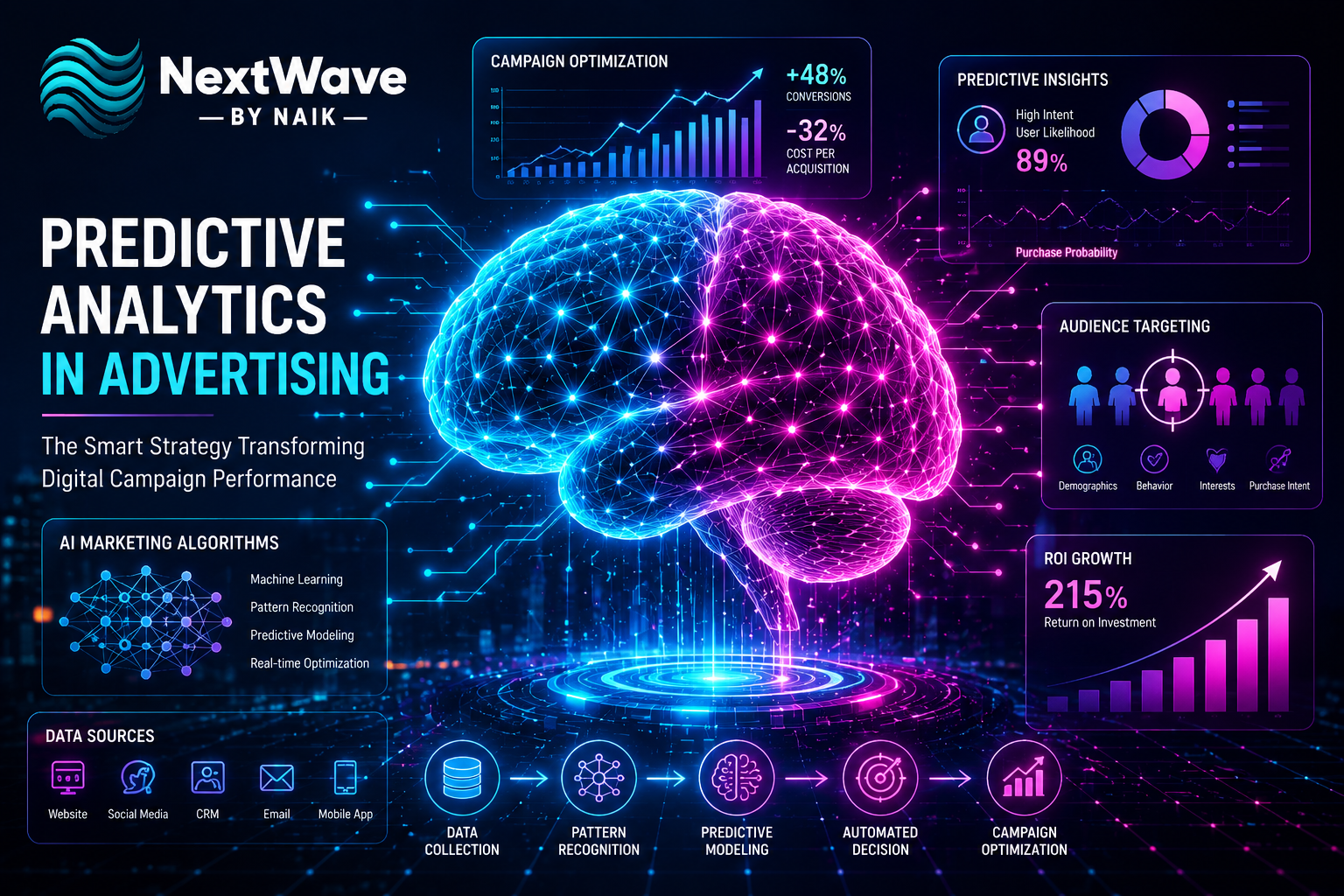
Modern advertising platforms collect enormous amounts of data from multiple sources, including:
- Website interactions
- Social media engagement
- Purchase history
- Email marketing campaigns
- Mobile applications
- Customer relationship management systems
Advanced AI marketing algorithms analyze this information to identify trends and behavioral patterns that may not be visible through traditional reporting methods.
The process generally involves:
1. Data Collection
Relevant customer and campaign data is gathered from various digital channels.
2. Pattern Recognition
Machine learning models identify recurring behaviors and correlations among users.
3. Predictive Modeling
Algorithms forecast future actions based on historical trends and real-time interactions.
4. Automated Decision-Making
Advertising platforms automatically adjust bids, placements, and audience selections based on predicted outcomes.
This continuous optimization process allows campaigns to become more efficient over time.
Benefits of Predictive Analytics in Advertising
Enhanced Audience Understanding
One of the most valuable advantages of Predictive Analytics in Advertising is the ability to gain deeper insights into audience behavior.
Instead of targeting broad customer segments, advertisers can identify high-intent users who are most likely to engage with specific products or services. This precision improves campaign effectiveness while reducing wasted ad spend.
Improved Ad Targeting
Effective ad targeting is critical for maximizing advertising performance.
Predictive models analyze customer behaviors and preferences to determine which users are most likely to respond positively to a campaign. This enables marketers to deliver relevant messages to the right audience at the right time.
The result is higher engagement, improved click-through rates, and increased conversion opportunities.
Better Budget Allocation
Marketing budgets are often limited, making efficient spending essential.
Predictive analytics helps businesses determine which campaigns, channels, and audience segments are likely to produce the strongest results. By focusing resources on high-performing opportunities, advertisers can significantly improve return on investment.
Higher Conversion Rates
Predictive models identify users who are closer to making purchasing decisions.
By targeting these high-intent prospects with personalized messaging, businesses can improve conversion rates and generate more qualified leads without increasing advertising costs.
Continuous Campaign Optimization
Successful digital marketing requires constant refinement.
Through automated campaign optimization, predictive systems monitor performance in real time and recommend adjustments that improve efficiency. These optimizations may include audience refinements, bidding changes, creative modifications, and channel reallocations.
The Role of AI Marketing Algorithms
Artificial intelligence has become the driving force behind modern predictive advertising strategies.
Advanced AI marketing algorithms can process massive datasets within seconds, uncovering relationships that human analysts might overlook. These systems continuously learn from new data, improving prediction accuracy over time.
AI-powered predictive analytics enables businesses to:
- Forecast customer lifetime value
- Predict purchase intent
- Identify churn risks
- Optimize advertising spend
- Personalize customer experiences
- Improve lead scoring accuracy
As AI technologies continue to advance, predictive advertising capabilities will become even more sophisticated and accessible.
Real-World Applications of Predictive Analytics
Businesses across industries are using Predictive Analytics in Advertising to improve marketing outcomes.
E-Commerce
Online retailers predict which products customers are likely to purchase and deliver personalized product recommendations through advertising campaigns.
SaaS Companies
Software providers use predictive analytics to identify prospects with high conversion potential and tailor messaging accordingly.
Financial Services
Banks and financial institutions forecast customer needs and deliver targeted promotional offers based on predicted behavior.
Healthcare Marketing
Healthcare organizations use predictive insights to reach relevant audiences with educational content and service recommendations.
Retail Brands
Retail businesses improve seasonal promotions by forecasting purchasing trends and consumer demand patterns.
Best Practices for Implementing Predictive Analytics
To maximize the value of predictive advertising, businesses should follow several key practices:
Maintain High-Quality Data
Accurate predictions require reliable and up-to-date information. Poor data quality can significantly reduce model effectiveness.
Integrate Multiple Data Sources
Combining customer, sales, website, and advertising data creates a more comprehensive understanding of audience behavior.
Focus on Clear Objectives
Define measurable goals before implementing predictive models. Objectives may include increasing conversions, reducing acquisition costs, or improving customer retention.
Continuously Monitor Performance
Predictive models should be reviewed regularly to ensure they remain accurate as market conditions and customer behaviors evolve.
Combine Human Expertise with AI
While automation delivers valuable insights, human marketers remain essential for strategy development, creative execution, and decision-making.
The Future of Predictive Analytics in Advertising
As artificial intelligence, machine learning, and automation technologies continue to mature, Predictive Analytics in Advertising will become a core component of digital marketing success.
Future advancements will enable even greater personalization, real-time optimization, and predictive customer engagement. Businesses that adopt these technologies early will be better positioned to outperform competitors, improve customer experiences, and achieve sustainable growth.
Conclusion
Predictive Analytics in Advertising is transforming how businesses approach digital marketing. By leveraging customer data, machine learning, and advanced forecasting models, organizations can improve ad targeting, enhance campaign optimization, and maximize advertising performance.
With the support of powerful AI marketing algorithms and data-driven advertising strategies, marketers can make smarter decisions, reduce wasted spending, and deliver more relevant customer experiences. As digital competition continues to intensify, predictive analytics will remain a critical tool for achieving measurable and long-term advertising success.