
Omnichannel Customer Journey Map: 9 Proven Steps to Increase Customer Engagement and Sales
Introduction
An Omnichannel Customer Journey Map has become one of the most valuable strategic tools for businesses aiming to deliver seamless customer experiences. Modern customers no longer interact with brands through a single platform. Instead, they move between websites, social media platforms, WhatsApp conversations, email campaigns, online advertisements, and direct communication with sales teams before making a purchase decision.
Without a clear understanding of these interactions, businesses often lose potential customers because of disconnected messaging, inconsistent follow-ups, and poor communication between departments. An effective Omnichannel Customer Journey Map helps organizations visualize every customer interaction, identify opportunities for improvement, and ensure every touchpoint contributes to a smooth buying experience.
Whether you’re a startup, an eCommerce business, or a service provider, building an integrated customer journey can significantly improve lead generation, conversion rates, and customer satisfaction.
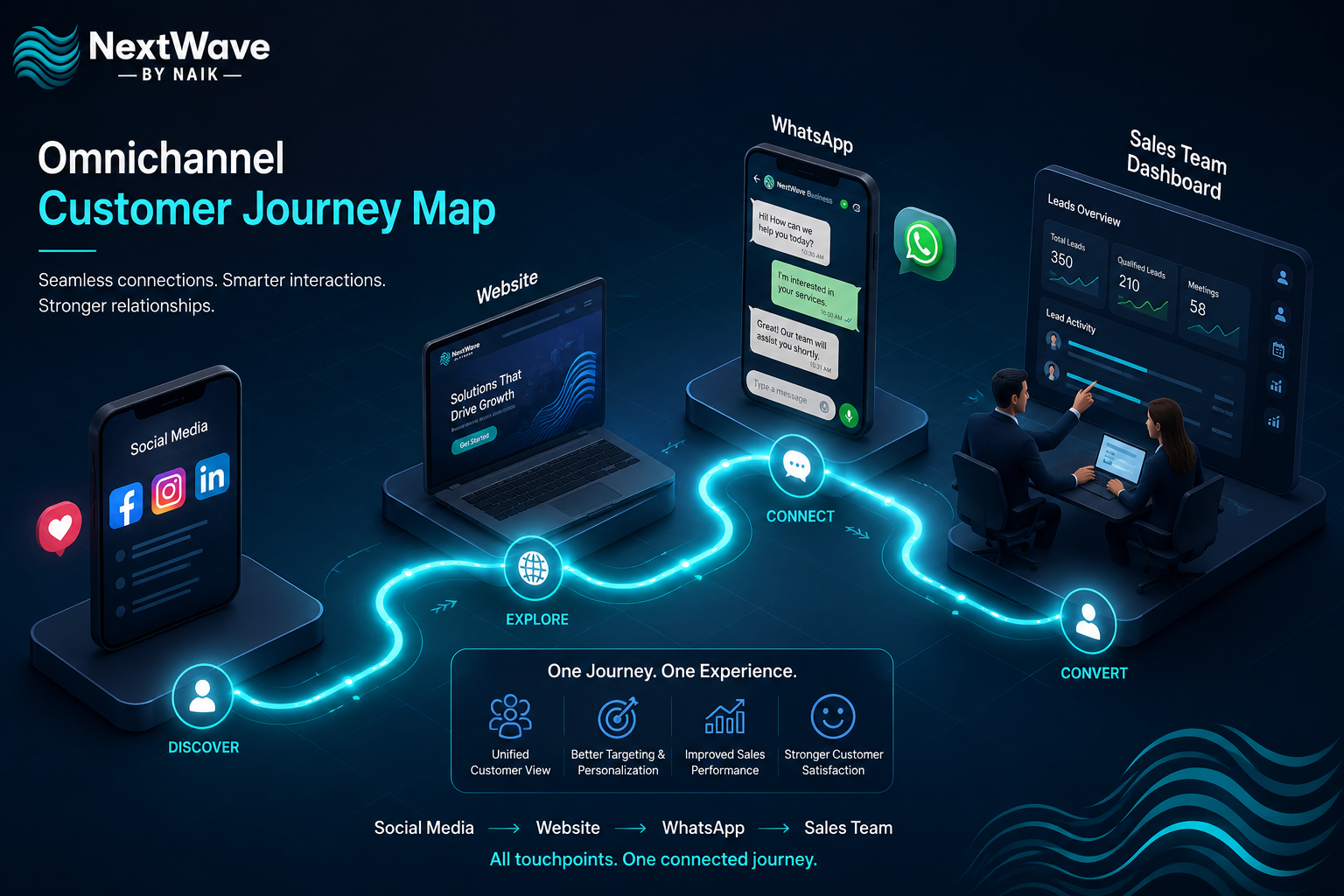
What Is an Omnichannel Customer Journey Map?
An Omnichannel Customer Journey Map is a visual representation of every interaction a customer has with your business across multiple channels. Rather than viewing each platform independently, it combines every touchpoint into one connected journey.
The map typically includes:
- Website visits
- Google search
- Social media engagement
- WhatsApp conversations
- Email communication
- Sales calls
- Product demonstrations
- Purchase process
- Customer support
- Repeat purchases
The objective is to create a unified experience regardless of where customers engage with your business.
Why Businesses Need an Omnichannel Customer Journey Map
Today’s customers expect businesses to remember previous interactions across channels. If someone fills out a website form, messages on WhatsApp, and later speaks with a sales representative, they expect a continuous conversation—not repetitive questions.
A well-designed Omnichannel Customer Journey Map helps businesses:
- Deliver consistent messaging
- Improve customer satisfaction
- Reduce lead leakage
- Increase conversion rates
- Strengthen marketing and sales alignment
- Personalize customer interactions
- Build long-term customer relationships
When every department understands the customer journey, collaboration becomes more effective.
Step 1: Identify Every Customer Touchpoint
The first stage of creating an Omnichannel Customer Journey Map is identifying where customers interact with your business.
These touchpoints may include:
- Google Search
- Website landing pages
- Blog articles
- WhatsApp Business
- Email newsletters
- Phone calls
- Sales meetings
- Customer support
This process is known as Digital Touchpoint Mapping, ensuring no interaction is overlooked.
Step 2: Understand Customer Intent
Different customers have different goals at each stage of their buying journey.
For example:
Awareness Stage
- Reading blogs
- Watching videos
- Searching Google
Consideration Stage
- Comparing products
- Downloading brochures
- Sending WhatsApp inquiries
Decision Stage
- Speaking with sales
- Requesting quotations
- Scheduling demonstrations
Understanding intent helps businesses create an effective Lead Journey Strategy that guides prospects toward conversion.
Step 3: Align Marketing and Sales Teams
One of the biggest challenges businesses face is poor communication between marketing and sales.
Marketing generates leads.
Sales closes them.
Without proper Marketing and Sales Alignment, valuable information is often lost.
A successful Omnichannel Customer Journey Map ensures:
- Shared CRM systems
- Common customer data
- Consistent messaging
- Faster lead response
- Better follow-ups
- Higher conversion rates
When both teams work together, customer experiences improve dramatically.
Step 4: Personalize Every Interaction
Modern customers expect personalized experiences.
Instead of generic communication, businesses should use customer behavior to tailor messaging.
Examples include:
- Personalized emails
- Customized website recommendations
- WhatsApp follow-ups
- Product suggestions
- Retargeting advertisements
Personalization increases engagement and builds stronger customer relationships.
Step 5: Integrate WhatsApp into the Customer Journey
WhatsApp has become one of the fastest-growing business communication platforms.
Instead of treating WhatsApp separately, integrate it directly into your Omnichannel Customer Journey Map.
Businesses can use WhatsApp for:
- Instant inquiries
- Lead qualification
- Product catalogs
- Appointment scheduling
- Customer support
- Order updates
- Feedback collection
Fast responses often lead to higher customer satisfaction.
Step 6: Track Customer Behavior
Every customer interaction provides valuable insights.
Businesses should monitor:
- Website visits
- Time on pages
- Form submissions
- Social media engagement
- WhatsApp response rates
- Email opens
- Sales conversion rates
Analyzing these metrics supports better Customer Experience Optimization and identifies areas requiring improvement.
Step 7: Remove Friction Points
Many businesses unknowingly create obstacles that discourage potential customers.
Common friction points include:
- Slow-loading websites
- Complicated forms
- Delayed responses
- Inconsistent messaging
- Poor mobile experiences
- Multiple follow-up requests
An Omnichannel Customer Journey Map helps identify and eliminate these barriers before they affect conversions.
Step 8: Automate Routine Tasks
Automation improves efficiency while maintaining personalized experiences.
Businesses can automate:
- Welcome emails
- WhatsApp greetings
- Lead assignments
- Appointment reminders
- Follow-up sequences
- CRM updates
Automation allows sales teams to focus on high-value conversations instead of repetitive administrative tasks.
Step 9: Continuously Improve the Journey
Customer expectations constantly evolve.
An Omnichannel Customer Journey Map should never remain static.
Regularly review:
- Customer feedback
- Conversion rates
- Bounce rates
- Sales performance
- Marketing campaigns
- Customer retention
- Support interactions
Continuous optimization ensures your customer journey remains competitive and effective.
Best Practices for Building an Effective Omnichannel Customer Journey Map
To maximize results:
- Keep messaging consistent across every platform.
- Use Digital Touchpoint Mapping to monitor customer interactions.
- Build a structured Lead Journey Strategy for every buyer stage.
- Strengthen Marketing and Sales Alignment through shared data and communication.
- Focus on Customer Experience Optimization to increase loyalty and repeat business.
- Measure performance using analytics and customer feedback.
- Update the journey regularly as customer behavior changes.
Following these best practices helps businesses create a seamless experience that drives engagement and revenue.
Conclusion
An Omnichannel Customer Journey Map is no longer optional for businesses competing in today’s digital landscape. Customers interact with brands across websites, social media, WhatsApp, email, and sales conversations, expecting a consistent and personalized experience at every stage.
By combining Digital Touchpoint Mapping, a clear Lead Journey Strategy, strong Marketing and Sales Alignment, and continuous Customer Experience Optimization, businesses can eliminate friction, improve customer satisfaction, and generate higher conversions.
Investing time in mapping the complete customer journey creates stronger relationships, increases sales efficiency, and positions your business for long-term growth in an increasingly connected digital world.
Ready to turn blogging into a powerful SEO growth engine for your business?
At NextWave By Naik, we specialize in creating data-driven blogging strategies that improve rankings, attract organic traffic, and build long-term authority. From keyword research to content creation and optimization, we handle everything—so you can focus on growing your business.