
Multi-Touch Attribution Mastery: 7 Powerful Ways to Improve Marketing ROI Tracking
Introduction
Modern digital marketing no longer follows a simple customer journey. Buyers interact with brands through search engines, social media, email campaigns, paid advertisements, webinars, and direct website visits before making a purchase decision. Because of this complex behavior, businesses need a smarter way to identify which marketing efforts truly drive conversions.
This is where Multi-Touch Attribution becomes essential.
Traditional attribution models often give full credit to a single interaction, such as the first click or last click. However, today’s marketing ecosystem requires deeper visibility into every customer touchpoint. By implementing advanced attribution systems, companies can improve campaign optimization, increase revenue efficiency, and strengthen overall marketing performance.
Organizations using effective Marketing ROI Tracking strategies gain clearer insights into customer behavior, advertising effectiveness, and channel performance. With accurate attribution analytics, businesses can confidently allocate budgets toward campaigns generating the highest returns.
In this blog, we will explore seven powerful ways Multi-Touch Attribution enhances cross-channel marketing analytics and helps businesses make data-driven decisions.
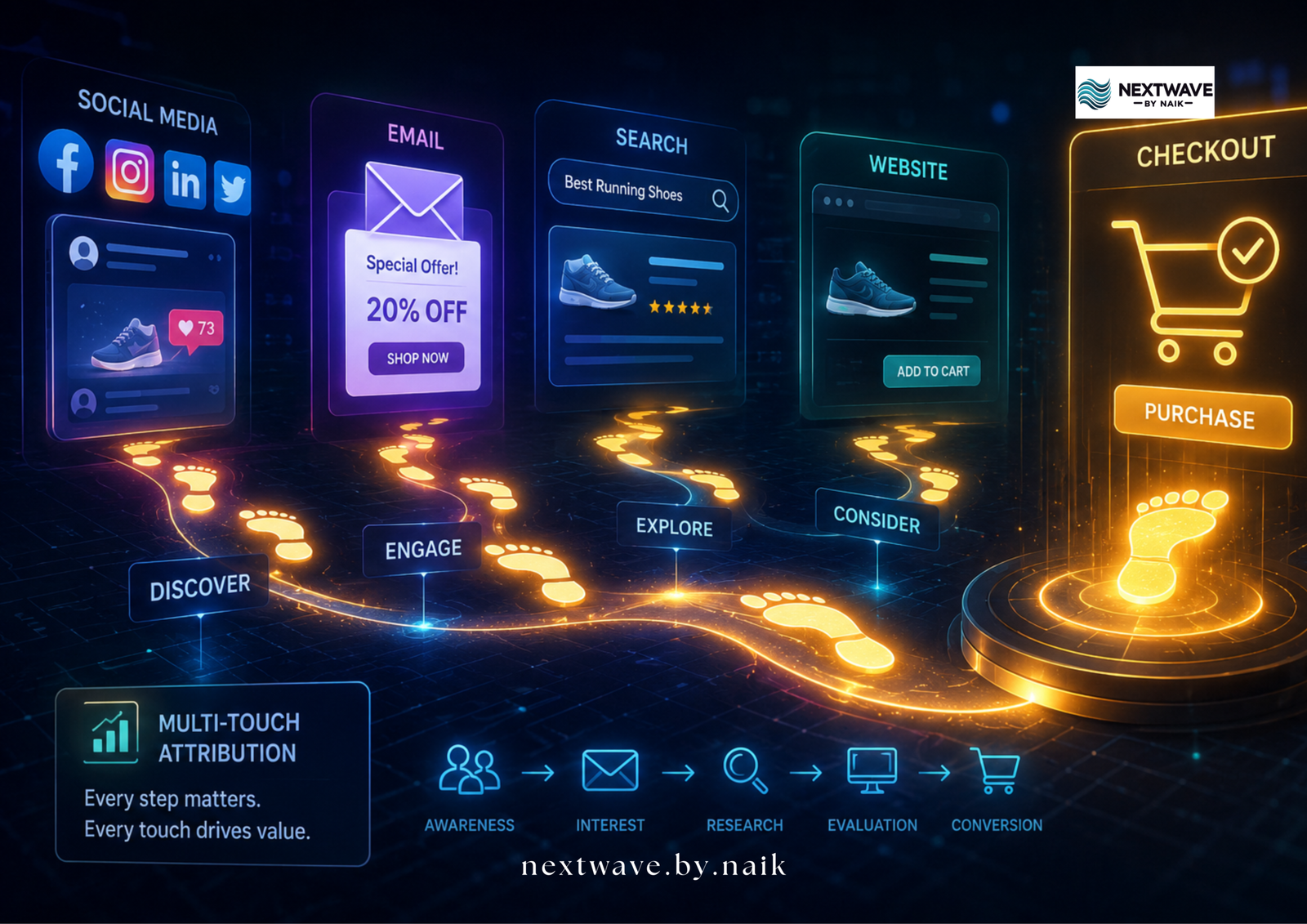
What Is Multi-Touch Attribution?
Multi-Touch Attribution is a marketing analytics method that assigns conversion credit across multiple customer interactions during the buyer journey. Instead of rewarding only one touchpoint, this model evaluates the influence of every engagement that contributes to a sale or conversion.
For example, a customer may:
- Discover a brand through Google Ads
- Visit the website through organic search
- Subscribe to an email newsletter
- Return through a LinkedIn campaign
- Convert after a retargeting advertisement
Without proper attribution, marketers may incorrectly assume the final ad generated the entire conversion. Multi-Touch Attribution provides a more accurate picture of marketing effectiveness.
Why Cross-Channel Attribution Matters
Consumers interact with brands across multiple devices and platforms. Businesses that fail to track these interactions often waste advertising budgets on channels that appear successful but contribute little to actual conversions.
Advanced Cross-Channel Marketing Analytics allows organizations to:
- Understand customer journey behavior
- Optimize advertising spend
- Improve campaign targeting
- Increase conversion rates
- Strengthen lead generation strategies
- Enhance customer experience
- Improve long-term marketing scalability
When properly implemented, attribution analytics becomes one of the most valuable tools in modern digital marketing.
1. Improves Marketing ROI Tracking Accuracy
One of the biggest advantages of Multi-Touch Attribution is improved visibility into campaign performance. Businesses can accurately determine which channels contribute most to conversions instead of relying on assumptions.
This improves overall Marketing ROI Tracking because marketers can:
- Reduce wasted ad spend
- Prioritize high-performing campaigns
- Eliminate underperforming channels
- Allocate resources strategically
Accurate attribution data creates stronger financial accountability across marketing departments.
2. Enhances Customer Journey Analytics
Modern customers rarely convert after a single interaction. Understanding the full customer journey helps marketers create better engagement strategies and personalized experiences.
Using Customer Journey Analytics, businesses can identify:
- High-converting touchpoints
- Content that drives engagement
- Conversion bottlenecks
- Drop-off points in the sales funnel
- Effective nurturing strategies
This data enables organizations to create more targeted campaigns that align with customer behavior patterns.
3. Supports Better Budget Allocation
Marketing budgets must be distributed carefully to maximize profitability. Without accurate attribution, companies often overspend on channels that generate visibility but not conversions.
With Multi-Touch Attribution, marketers can confidently invest in campaigns producing measurable business outcomes.
This helps organizations:
- Improve advertising efficiency
- Reduce acquisition costs
- Increase lead quality
- Maximize return on investment
- Scale profitable campaigns faster
Better financial visibility directly improves long-term marketing sustainability.
4. Strengthens Cross-Channel Campaign Optimization
Modern marketing requires seamless coordination across multiple channels. Attribution analytics reveals how channels work together instead of analyzing them independently.
For example:
- Social media may generate awareness
- Email marketing may build engagement
- Paid search may drive final conversions
By understanding these relationships, businesses can optimize complete marketing ecosystems rather than individual campaigns alone.
This integrated strategy significantly improves Cross-Channel Marketing Analytics performance.
5. Increases Conversion Rate Optimization
Attribution insights help businesses understand which touchpoints influence purchasing decisions most effectively.
Marketers can use this data to improve:
- Landing pages
- Call-to-action placement
- Email sequences
- Retargeting strategies
- Ad creatives
- Audience segmentation
As a result, businesses improve user experiences while increasing conversion rates across marketing campaigns.
This data-driven approach creates stronger alignment between customer intent and marketing messaging.
6. Enables Smarter Attribution Modeling Software Decisions
Choosing the right Attribution Modeling Software is critical for scalable analytics performance. Advanced platforms provide detailed reporting, AI-powered analysis, and predictive insights.
Popular attribution models include:
- First-touch attribution
- Last-touch attribution
- Linear attribution
- Time-decay attribution
- Position-based attribution
- Data-driven attribution
Each model serves different business objectives depending on customer behavior complexity and campaign structure.
Selecting the right attribution system improves reporting accuracy and supports better decision-making across marketing teams.
7. Helps Businesses Scale with Data-Driven Marketing
Data-driven companies outperform competitors because they make strategic decisions based on measurable insights rather than assumptions.
By implementing Multi-Touch Attribution, businesses can:
- Scale high-performing campaigns
- Improve lead nurturing strategies
- Enhance customer retention
- Increase revenue predictability
- Strengthen competitive positioning
Organizations using advanced analytics frameworks gain a significant advantage in today’s highly competitive digital landscape.
Common Challenges in Multi-Touch Attribution
Although attribution provides powerful insights, implementation can be complex. Common challenges include:
Data Fragmentation
Customer interactions often occur across multiple platforms and devices, making data integration difficult.
Tracking Limitations
Privacy regulations and cookie restrictions may reduce tracking accuracy.
Attribution Complexity
Different attribution models produce different results, requiring careful analysis.
Technology Integration
Businesses must connect CRM systems, advertising platforms, analytics tools, and automation software effectively.
Despite these challenges, modern analytics platforms continue improving attribution capabilities through AI-driven automation and predictive analytics.
Best Practices for Successful Attribution Strategy
To maximize attribution success, businesses should follow several important practices:
Define Clear Conversion Goals
Identify measurable KPIs before implementing attribution systems.
Integrate Marketing Platforms
Connect analytics tools, CRM systems, and advertising channels for unified reporting.
Use Data-Driven Attribution Models
AI-powered models often provide more accurate insights than basic first-click or last-click approaches.
Monitor Performance Continuously
Customer behavior evolves constantly, requiring ongoing optimization.
Align Marketing and Sales Teams
Shared attribution visibility improves collaboration and lead management.
The Future of Multi-Touch Attribution
As digital marketing becomes increasingly data-focused, attribution analytics will continue evolving rapidly.
Future trends include:
- AI-powered predictive attribution
- Privacy-focused analytics solutions
- Real-time customer journey tracking
- Advanced machine learning models
- Cookieless attribution technologies
- Enhanced omnichannel analytics
Businesses investing early in advanced attribution systems will gain stronger competitive advantages in performance marketing and customer acquisition.
Conclusion
In today’s competitive digital environment, understanding the true source of conversions is essential for sustainable growth. Multi-Touch Attribution gives businesses the visibility needed to optimize campaigns, improve customer experiences, and maximize marketing profitability.
By strengthening Marketing ROI Tracking, enhancing customer journey analytics, and improving cross-channel optimization, attribution analytics empowers organizations to make smarter strategic decisions.
Companies that embrace advanced attribution strategies today will be better prepared for the future of data-driven marketing tomorrow.