
How to Optimize Your Google Ads Campaign Like a Pro
Running a Google Ads campaign can be one of the most effective ways to grow your business online — but without proper Google Ads Optimization, your budget can vanish fast without delivering meaningful results. Whether you’re a small business owner or a marketing professional, mastering optimization is the key to maximizing ROI, attracting quality leads, and scaling your campaigns efficiently.
In this guide, you’ll learn step-by-step how to optimize your Google Ads campaign like a pro using proven techniques that blend smart strategy, data analysis, and continuous improvement.
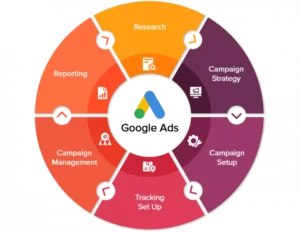
1. Start with a Solid Google Ads Strategy
Before diving into technical tweaks, your Google Ads strategy should be crystal clear. Every successful campaign begins with understanding your target audience, goals, and value proposition.
Ask yourself:
What problem am I solving for my audience?
What search intent do I want to target?
What’s the measurable goal — more sales, leads, or website traffic?
Once you define these, create campaigns around tightly themed ad groups. This structure makes Google Ads Optimization far easier because it ensures your ads match search intent and deliver a consistent message.
2. Perform Smart Keyword Research
Keyword research is the heart of PPC campaign management. Use tools like Google Keyword Planner, Ahrefs, or SEMrush to identify high-intent keywords that match your business goals.
Don’t just chase high search volume — focus on relevance and user intent. Long-tail keywords often bring better conversions at lower costs.
For example, instead of targeting “digital marketing,” try “affordable digital marketing agency near me.” This improves click-through rates (CTR) and drives more qualified leads.
3. Optimize Ad Copy for Clicks and Conversions
Your ad copy is your first impression. To master Google Ads Optimization, you need persuasive, relevant, and engaging ads that attract the right clicks.
Best practices include:
Include your focus keyword naturally in the headline and description.
Add clear calls to action (CTAs) like “Get a Free Quote” or “Book a Demo Today.”
Use emotional triggers and benefits-driven language.
Testing different variations (A/B testing) of headlines, descriptions, and CTAs is an essential part of ad performance tracking. Over time, you’ll see what resonates best with your audience.
4. Improve Your Landing Page Experience
Even the best ads fail without a great landing page. For effective Google Ads Optimization, make sure your landing pages are fast, relevant, and conversion-focused.
Here’s how:
Match the ad message with the landing page headline.
Keep forms short and simple.
Use strong visual cues and trust signals (like testimonials or certifications).
Ensure your website loads within 2 seconds — speed affects Quality Score and ad ranking.
Optimized landing pages are vital for conversion rate optimization, helping you turn more visitors into paying customers.
5. Use Negative Keywords to Save Budget
Many advertisers overlook this step, but adding negative keywords can dramatically improve your Google Ads strategy. These are terms you don’t want your ads to show for, preventing irrelevant clicks that waste money.
For example, if you sell premium products, exclude terms like “cheap” or “free.” Regularly review your search term reports to refine your keyword list — this small adjustment can greatly improve ad efficiency.
6. Monitor and Adjust with Ad Performance Tracking
Ongoing ad performance tracking is what separates amateurs from pros. Google Ads provides detailed data — impressions, clicks, CTR, cost per conversion — that tells you what’s working and what’s not.
Set up conversion tracking to measure actual results, not just clicks. Evaluate performance weekly and make data-driven changes. This continuous feedback loop is the essence of professional Google Ads Optimization.
7. Leverage Ad Extensions for Higher Visibility
Ad extensions increase your ad space and help users find key information instantly.
Types of Ad Extensions:
Sitelink Extensions: Link to pages like Pricing or Contact Us.
Call Extensions: Add a click-to-call button.
Location Extensions: Show your address and map.
Callout Extensions: Highlight offers like “Free Shipping.”
Extensions improve visibility and Ad Rank, often boosting CTR by 10–15%.
8. Focus on Quality Score Improvement
Your Quality Score affects both your ad rank and cost per click (CPC).
Google calculates it based on:
Expected CTR
Ad relevance
Landing page experience
To improve your Quality Score:
Write relevant, keyword-aligned ads.
Maintain message consistency between ads and landing pages.
Provide a great user experience with fast load times and clear CTAs.
A better Quality Score = lower costs + better ad placement.
9. Utilize Smart Bidding Strategies
Smart Bidding uses Google’s machine learning to automatically adjust bids for each auction.
Popular Smart Bidding options:
Maximize Conversions – Best for volume.
Target CPA (Cost per Acquisition) – Best for stable acquisition costs.
Target ROAS (Return on Ad Spend) – Great for eCommerce profit focus.
Maximize Clicks – Ideal for awareness campaigns.
Start with manual CPC bidding if you’re new, and switch to smart bidding once you have solid conversion data.
10. Use Audience Targeting and Remarketing
Combine keyword targeting with audience segmentation to reach users based on demographics, interests, or behaviors.
Remarketing campaigns target users who visited your site but didn’t convert — keeping your brand top-of-mind and boosting ROI.
Pro Tip: Use Dynamic Remarketing to automatically show users products they viewed earlier.
11. Analyze Competitors and Market Trends
Stay ahead by monitoring competitors with tools like SpyFu, AdBeat, or SEMrush.
Identify what’s working for them — ad copy, offers, or keywords — and find opportunities they missed.
Also, keep up with Google Ads updates and industry trends to adapt your strategy effectively.
12. Continuously Test, Learn, and Scale
Optimization never ends. Keep experimenting with:
New ad variations
Different landing pages
Keyword expansions
Bid adjustments
Review your data, learn from it, and scale what works best.
Gradual scaling ensures consistent performance without overspending.
Conclusion
Mastering Google Ads Optimization is all about strategy, analysis, and persistence.
When you combine data-driven insights with smart testing, you’ll maximize ROI, attract high-quality leads, and confidently scale your advertising success.
Keep testing, keep learning — and soon, you’ll be running Google Ads like a pro.