
The Unified Front: Full-Stack Digital Solutions for Marketing & Development Success
🚀 Introduction
In today’s hyper-competitive digital world, businesses can no longer afford disconnected strategies. Marketing teams focus on generating leads, while developers build platforms—but when these two operate in silos, growth stalls. This is where Full-Stack Digital Solutions become essential.
A unified approach that combines marketing and development ensures not just visibility, but performance. From user experience to conversion tracking, everything works seamlessly when both teams align. Brands that adopt this approach see faster scaling, improved ROI, and stronger digital presence.
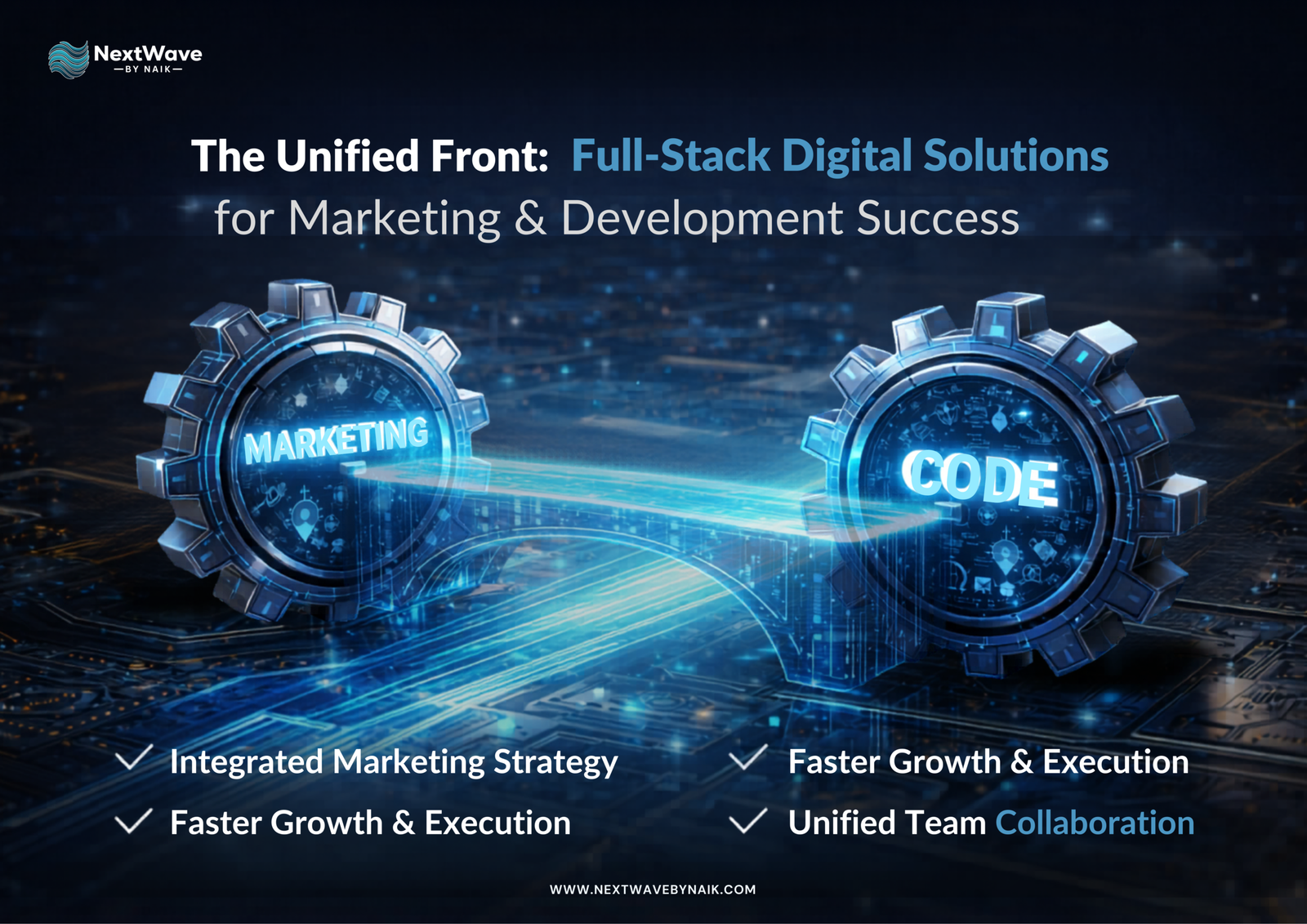
🔗 The Gap Between Marketing and Development
Traditionally, marketing and development have worked independently. Marketing teams create campaigns, while developers execute technical tasks. However, this separation often leads to:
- Broken user journeys
- Slow website performance
- Poor conversion tracking
- Misaligned goals
Without Full-Stack Digital Solutions, businesses struggle to connect strategy with execution. Marketing may drive traffic, but if the website isn’t optimized, conversions drop. Similarly, developers may build robust platforms, but without marketing insights, they lack direction.
⚙️ What Are Full-Stack Digital Solutions?
Full-Stack Digital Solutions refer to a holistic approach where marketing strategy, design, and development work together as one integrated system.
This includes:
- UX/UI design aligned with marketing goals
- SEO-driven website architecture
- Conversion-focused development
- Data tracking and analytics integration
Instead of isolated efforts, everything is built with a shared objective—growth.
📈 Why Integration Drives Better Results
When businesses adopt an Integrated Marketing Strategy, the results are significantly stronger. Here’s why:
1. Seamless User Experience
Marketing attracts users, but development ensures they stay. A well-integrated system creates smooth navigation, faster load times, and intuitive design.
2. Higher Conversion Rates
With Full-Stack Digital Solutions, landing pages are designed with both technical precision and marketing psychology, leading to better conversions.
3. Data-Driven Decisions
When tracking tools are built into development from the start, marketing teams gain accurate insights to refine campaigns.
4. Faster Execution
Aligned teams reduce back-and-forth communication, speeding up campaign launches and updates.
🧩 The Role of NextWave Web Dev
Modern agencies like NextWave Web Dev focus on bridging this gap by offering Full-Stack Digital Solutions that combine creativity with technical expertise.
Their approach includes:
- Building scalable websites optimized for SEO
- Integrating marketing tools like CRMs and analytics
- Creating interactive elements like ROI calculators and AI bots
- Ensuring performance optimization for better rankings
This unified model ensures that every digital asset contributes directly to business growth.
📊 Real Impact on Business Growth
Businesses that adopt Full-Stack Digital Solutions experience measurable improvements:
- Increased organic traffic due to SEO-friendly development
- Better lead generation through optimized funnels
- Reduced bounce rates with improved UX
- Higher ROI from marketing campaigns
A strong Digital Growth Strategy is no longer about isolated tactics—it’s about integration.
🔍 SEO Benefits of Unified Strategy
Search engines like Google prioritize websites that offer both relevance and performance. By implementing Full-Stack Digital Solutions, businesses gain:
- Faster page speeds (a ranking factor)
- Mobile optimization
- Structured data implementation
- Better internal linking
These technical improvements, combined with strategic content, create a powerful SEO advantage.
🤝 How to Align Your Teams
To truly leverage Full-Stack Digital Solutions, businesses must break internal silos. Here’s how:
✔️ Shared Goals
Ensure both marketing and development teams work toward the same KPIs—traffic, conversions, and revenue.
✔️ Collaborative Planning
Involve developers in marketing discussions and marketers in technical planning.
✔️ Unified Tools
Use integrated platforms for analytics, CRM, and project management.
✔️ Continuous Feedback
Regular communication ensures strategies evolve based on real-time performance.
🌐 The Future Is Integrated
The digital landscape is evolving rapidly. Businesses that rely on fragmented strategies will struggle to compete. The future belongs to brands that adopt Full-Stack Digital Solutions and embrace collaboration.
An Integrated Marketing Strategy ensures that every click, scroll, and interaction is intentional and optimized. It transforms websites from static platforms into dynamic growth engines.
🏁 Conclusion
The divide between marketing and development is no longer sustainable. To achieve scalable growth, businesses must adopt Full-Stack Digital Solutions that unify strategy, execution, and performance.
By aligning teams, leveraging technology, and focusing on user experience, brands can unlock their true digital potential. Whether you’re a startup or an established business, the key to success lies in integration.
Let’s create content that ranks, converts, and builds authority.