
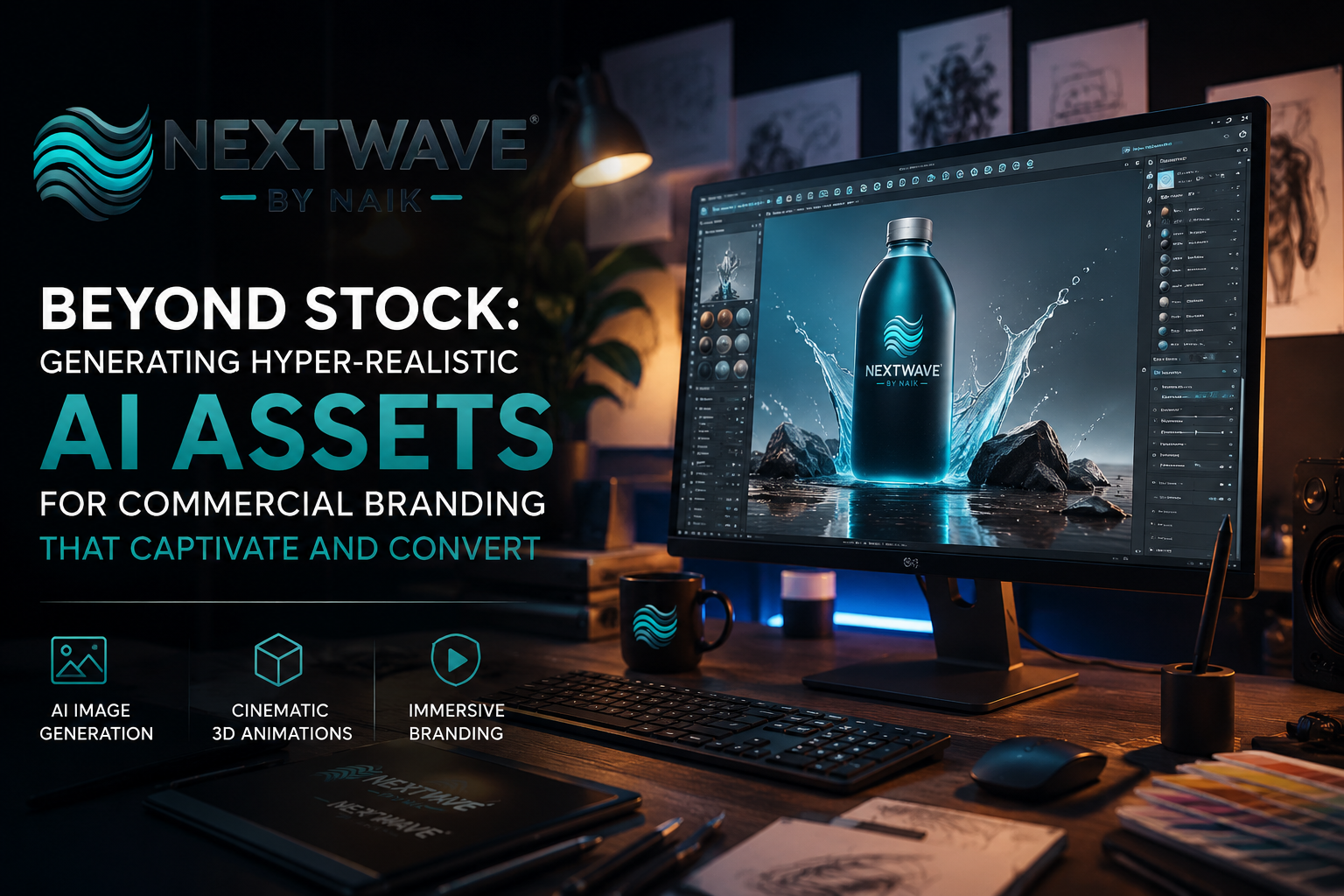
Beyond Stock: Generating Hyper-Realistic AI Assets for Commercial Branding That Captivate and Convert
In today’s competitive digital landscape, visual storytelling has become one of the strongest drivers of customer engagement. Brands are no longer relying solely on traditional photography and design workflows to stand out. Instead, they are embracing AI Assets for Branding to create stunning campaigns that capture attention, strengthen recognition, and accelerate production timelines.
From product visualizations to immersive promotional videos, artificial intelligence is redefining how brands build compelling visual experiences. Businesses of every size now use AI image generation, cinematic 3D animations, and intelligent creative tools to elevate their brand identity while reducing costs and improving efficiency.
The Rise of AI in Commercial Branding
Consumers expect brands to deliver visually rich experiences across websites, social media platforms, advertisements, and digital campaigns. Meeting these expectations through traditional production methods often requires significant budgets, extensive planning, and long development cycles.
This is where AI Assets for Branding provide a competitive advantage.
Artificial intelligence enables marketers and creative teams to produce hyper-realistic visuals that rival professional studio productions. Instead of weeks of photoshoots and rendering processes, brands can generate polished assets within hours while maintaining creative consistency.
These capabilities have made AI an essential component of modern commercial branding strategies.
What Are AI Assets for Branding?
AI Assets for Branding refer to visual and multimedia materials created or enhanced using artificial intelligence technologies. These assets support marketing initiatives while preserving a consistent brand image.
Examples include:
- Product mockups generated through AI.
- Lifestyle imagery created using AI image generation tools.
- Personalized campaign visuals.
- Virtual brand mascots.
- Dynamic social media creatives.
- Interactive experiences powered by cinematic 3D animations.
- Promotional videos and motion graphics.
The versatility of these assets allows businesses to adapt quickly to changing market trends without sacrificing quality.
How AI Image Generation Enhances Brand Creativity
One of the most transformative innovations in branding is AI image generation. Creative teams can input descriptive prompts and receive highly detailed visuals tailored to campaign objectives.
The benefits include:
Faster Content Production
Brands can rapidly generate multiple creative concepts without organizing costly photoshoots.
Enhanced Personalization
Visual assets can be customized for different audiences, demographics, and geographic markets.
Consistent Visual Language
Using carefully crafted prompts ensures that every asset aligns with the desired brand identity.
Cost Efficiency
Companies significantly reduce expenses associated with location rentals, photographers, models, and post-production editing.
By integrating AI Assets for Branding into their workflows, organizations gain both agility and scalability.
The Impact of Cinematic 3D Animations
Static visuals remain valuable, but motion captures attention more effectively across digital channels. This is why cinematic 3D animations have become increasingly important in branding campaigns.
AI-assisted animation tools enable brands to produce:
- Product reveal videos.
- Explainer animations.
- Immersive launch campaigns.
- Interactive website experiences.
- Social media advertisements.
- Branded storytelling sequences.
Hyper-realistic movement and lighting create emotional connections that strengthen consumer trust and engagement.
When combined with AI Assets for Branding, these animations help transform ordinary marketing materials into memorable experiences.
Strengthening Brand Identity Through AI
A recognizable brand identity goes beyond logos and color palettes. It encompasses the emotions, values, and experiences customers associate with a business.
AI contributes to this consistency by helping teams establish visual guidelines that remain uniform across all touchpoints.
Key advantages include:
Visual Consistency
AI systems replicate preferred styles, compositions, and aesthetic elements across campaigns.
Audience Alignment
Data-driven insights inform asset creation based on audience preferences.
Scalable Creativity
Brands can expand into new markets without reinventing their visual systems.
Continuous Optimization
Performance data helps refine assets for improved engagement and conversion.
The result is a stronger and more cohesive brand identity that resonates with consumers.
Best Practices for Creating AI Assets for Branding
To maximize the effectiveness of AI Assets for Branding, businesses should adopt a strategic approach.
Define Clear Brand Guidelines
Document typography, color schemes, tone, imagery styles, and messaging frameworks.
Craft Detailed Prompts
Specific instructions generate more accurate and commercially relevant outputs.
Combine Human Expertise with AI
Creative professionals should review, refine, and enhance AI-generated materials to ensure authenticity.
Prioritize Ethical Usage
Use licensed tools and verify ownership rights for commercial applications.
Test and Optimize
Monitor performance metrics to identify which assets drive stronger engagement and conversions.
These practices help organizations unlock the full potential of AI-powered creativity.
The Future of Commercial Branding
The evolution of artificial intelligence suggests that hyper-realistic content will become the standard rather than the exception.
Future developments may include:
- Real-time personalized campaigns.
- AI-powered virtual influencers.
- Interactive shopping experiences.
- Automated video localization.
- Advanced cinematic 3D animations generated from simple text prompts.
- Adaptive content responding to consumer behavior.
Brands that adopt AI Assets for Branding early position themselves to lead in innovation and customer engagement.
Conclusion
The creative landscape is undergoing a profound transformation. Businesses no longer need massive production budgets to deliver visually stunning campaigns. Through AI image generation, intelligent automation, and cinematic 3D animations, organizations can develop scalable assets that reinforce a compelling brand identity.
As consumer expectations continue to rise, investing in AI Assets for Branding is becoming a strategic necessity rather than an experimental trend. Companies that embrace these technologies thoughtfully will not only improve operational efficiency but also create richer, more memorable brand experiences that drive long-term growth.
By blending human creativity with artificial intelligence, the future of commercial branding becomes more innovative, accessible, and impactful than ever before.