
AI Website Personalization: 9 Smart Ways to Deliver the Right Message to Every Visitor
Introduction
Modern websites attract visitors from different locations, devices, interests, and buying stages. Yet many businesses still present the same homepage, offers, and messaging to everyone. This one-size-fits-all approach often results in lower engagement and missed conversion opportunities.
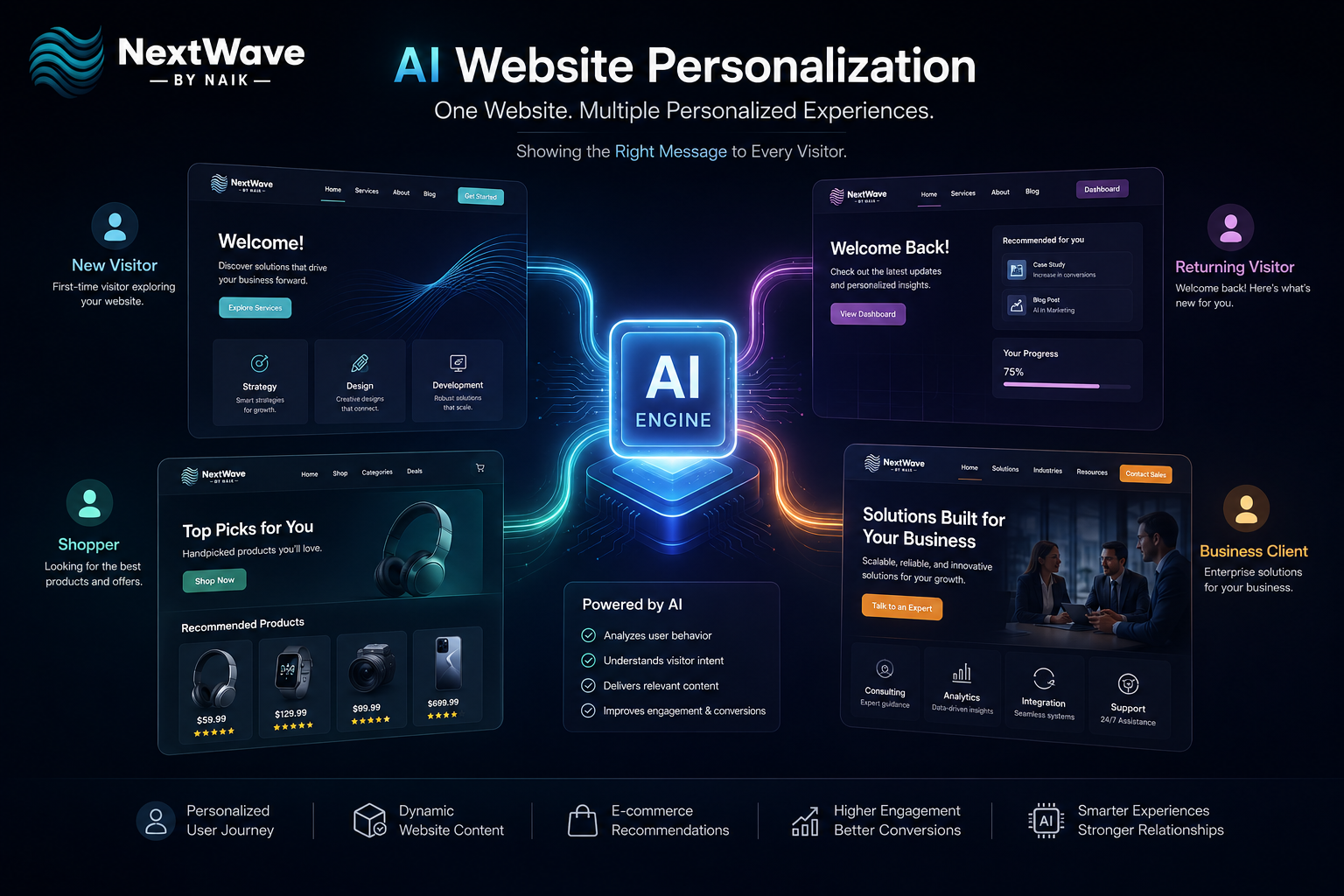
AI Website Personalization is transforming how businesses interact with visitors. Instead of displaying identical content, artificial intelligence analyzes user behavior, preferences, demographics, browsing history, and real-time interactions to deliver the most relevant experience to each visitor.
Whether you’re running an online store, a SaaS platform, or a service-based business, implementing AI Website Personalization can significantly improve engagement, increase conversions, and build stronger customer relationships. In this guide, we’ll explore how AI-powered personalization works and why it’s becoming essential for modern digital marketing.
What Is AI Website Personalization?
AI Website Personalization uses artificial intelligence and machine learning to customize website experiences for individual visitors. Rather than relying on static pages, AI continuously analyzes visitor data to display the most relevant content, products, promotions, and calls-to-action.
The technology processes information such as:
- Browsing history
- Geographic location
- Device type
- Previous purchases
- Search behavior
- Time spent on pages
- User interests
- Referral source
Using these insights, websites automatically create a personalized user journey that increases engagement and encourages visitors to take action.
Why AI Website Personalization Matters
Today’s customers expect websites to understand their needs. Personalized experiences make visitors feel valued while reducing the effort required to find relevant information.
Businesses implementing AI Website Personalization often experience:
- Higher conversion rates
- Longer session durations
- Lower bounce rates
- Increased customer satisfaction
- Better lead generation
- Improved repeat purchases
Instead of forcing visitors to search manually, AI delivers the right information exactly when they need it.
1. Dynamic Website Content Improves Engagement
One of the biggest advantages of AI Website Personalization is the ability to deliver dynamic website content.
Instead of displaying identical banners for every visitor, AI can show:
- Industry-specific messaging
- Location-based offers
- Personalized headlines
- Relevant testimonials
- Customized CTAs
- Seasonal promotions
Dynamic content keeps websites fresh while making every visitor feel like the website was built specifically for them.
2. Personalized Product Recommendations Increase Sales
Online retailers have widely adopted e-commerce recommendations powered by AI.
Instead of displaying random products, AI suggests items based on:
- Previous purchases
- Browsing history
- Similar customer behavior
- Frequently bought together products
- Trending categories
These personalized recommendations increase average order value while helping customers discover products they actually want.
For many online businesses, intelligent recommendations generate a significant percentage of total revenue.
3. AI Creates a Personalized User Journey
Every visitor enters a website with different goals.
Some are researching.
Others are comparing solutions.
Some are ready to buy immediately.
Using behavioral analysis, AI Website Personalization adapts the personalized user journey by displaying relevant information at each stage of the customer journey.
Examples include:
- Educational blogs for first-time visitors
- Product comparisons for returning users
- Discount offers for abandoned carts
- Free consultations for high-intent visitors
This reduces friction and increases conversions naturally.
4. Personalized Landing Pages Improve Conversion Rates
Marketing campaigns become much more effective when landing pages adapt to each audience.
AI can customize:
- Headlines
- Images
- Benefits
- Testimonials
- Product collections
- Call-to-action buttons
Visitors arriving from Google Ads may see different messaging than visitors from LinkedIn or Instagram.
This creates message consistency while increasing trust.
5. Real-Time Behavioral Targeting
One of the strongest features of AI Website Personalization is real-time decision making.
As visitors browse the website, AI continuously updates recommendations based on actions such as:
- Pages visited
- Scroll depth
- Time on page
- Click behavior
- Products viewed
Instead of waiting until the next visit, AI instantly modifies the website experience to improve engagement.
6. Personalized Email and Website Integration
Modern AI platforms connect websites with CRM and email marketing systems.
For example:
A returning customer clicking an email promotion may instantly see:
- Previously viewed products
- Personalized discounts
- Loyalty rewards
- Exclusive offers
This seamless integration creates a consistent customer experience across multiple channels.
7. AI Chatbots Deliver Smarter Conversations
Traditional chatbots often frustrate users because they provide generic responses.
AI-powered chatbots enhance AI Website Personalization by understanding visitor intent and conversation history.
Benefits include:
- Personalized product recommendations
- Instant customer support
- Lead qualification
- Appointment scheduling
- Order tracking
- Customized FAQs
These intelligent conversations improve satisfaction while reducing support costs.
8. Better Customer Segmentation
AI automatically groups visitors into meaningful audience segments.
Instead of creating manual marketing lists, AI identifies patterns such as:
- New visitors
- Returning customers
- High-value buyers
- Cart abandoners
- Frequent readers
- Business decision-makers
Each audience receives relevant messaging, improving engagement while maximizing marketing ROI.
9. Continuous Learning Improves Results
Unlike traditional personalization tools, AI Website Personalization continuously learns from new visitor behavior.
Machine learning models become smarter by analyzing:
- Successful conversions
- User interactions
- Purchase patterns
- Click-through rates
- Content engagement
As more visitors use the website, personalization becomes increasingly accurate without requiring constant manual adjustments.
Best Practices for AI Website Personalization
To maximize results, businesses should follow several proven strategies:
- Collect ethical first-party customer data.
- Keep personalization relevant rather than intrusive.
- Test different content variations regularly.
- Optimize website loading speed.
- Combine AI insights with human marketing expertise.
- Respect user privacy and comply with data regulations.
- Continuously monitor analytics and conversion metrics.
Successful personalization always focuses on improving the visitor experience rather than simply increasing sales.
The Future of AI Website Personalization
Artificial intelligence is evolving rapidly.
Future personalization will include:
- Predictive customer journeys
- Voice-assisted browsing experiences
- Hyper-personalized shopping
- AI-generated landing pages
- Advanced customer intent prediction
- Emotion-aware user experiences
- Cross-device personalization
Businesses adopting these innovations early will create stronger customer relationships while gaining a competitive advantage.
Conclusion
AI Website Personalization has become a powerful strategy for businesses that want to improve user engagement, increase conversions, and deliver exceptional digital experiences. By leveraging dynamic website content, creating a personalized user journey, offering intelligent e-commerce recommendations, and enhancing the overall AI customer experience, organizations can present the right message to the right visitor at the right time.
As customer expectations continue to rise, personalized experiences are no longer optional—they are a competitive necessity. Businesses that invest in AI-driven personalization today will be better positioned to build trust, increase customer loyalty, and achieve sustainable online growth.