
First-Party Data Marketing in 2026: 9 Proven Strategies to Build Smarter Campaigns Without Cookies
Digital marketing is entering a new era where customer privacy, transparency, and trust are more important than ever. As third-party cookies continue to disappear across major browsers, businesses are shifting toward First-Party Data Marketing to build stronger customer relationships while maintaining effective advertising performance.
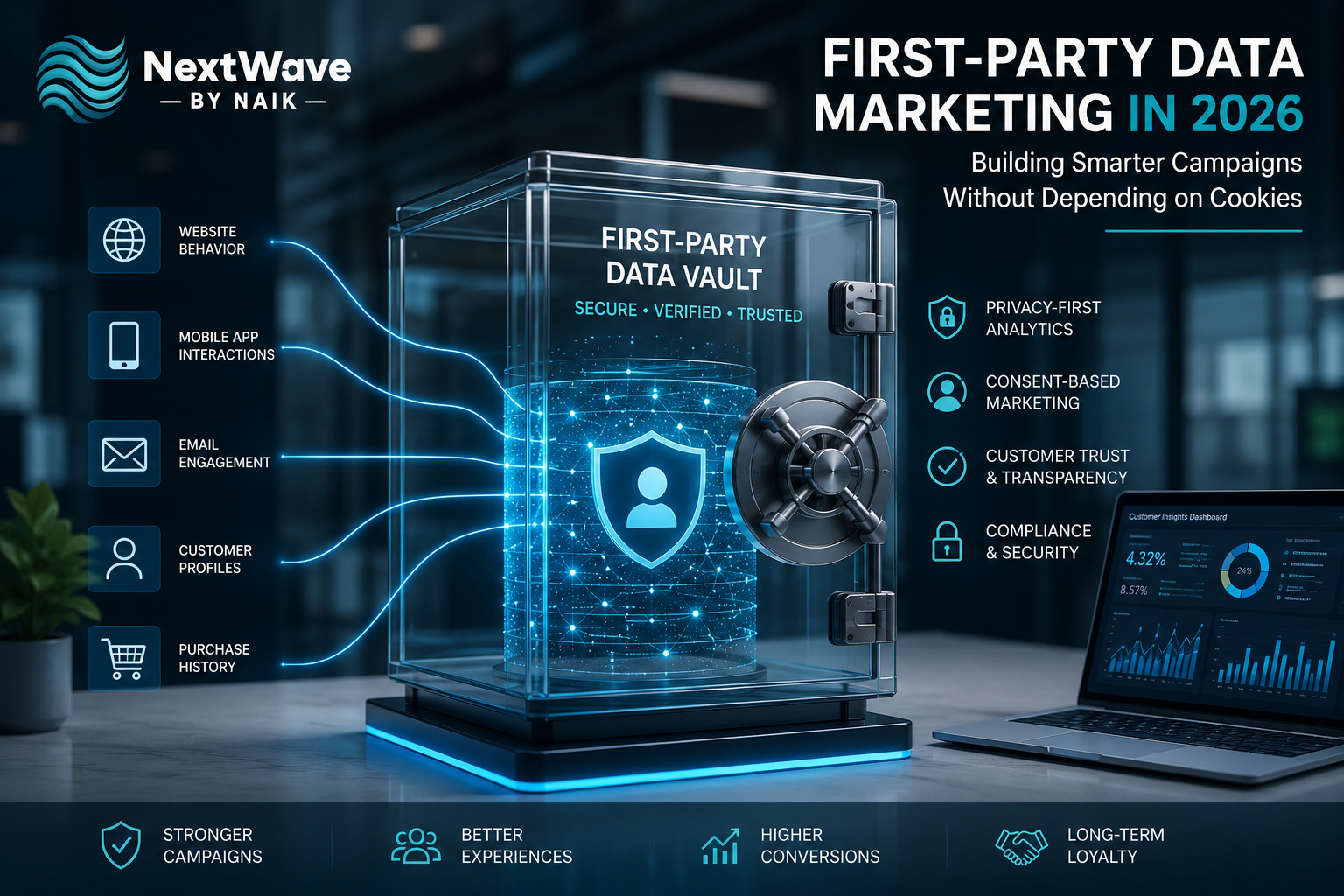
Instead of relying on external tracking methods, brands now focus on collecting data directly from their audiences through websites, mobile applications, email subscriptions, loyalty programs, and customer interactions. This approach not only ensures better compliance with global privacy regulations but also delivers higher-quality insights for personalized marketing.
In 2026, successful businesses are no longer asking how to replace cookies—they are learning how to maximize their own customer data. By combining privacy-first analytics, a strong customer data strategy, and consent-based marketing, companies can create campaigns that perform better while respecting user privacy.
Why First-Party Data Marketing Matters in 2026
The digital landscape has changed significantly over the last few years. Consumers are becoming more aware of how their personal information is collected and used. Governments have introduced stricter privacy regulations, and technology companies have reduced support for third-party tracking.
This makes First-Party Data Marketing one of the most valuable assets for modern businesses.
Unlike third-party data, first-party data comes directly from your audience. It includes information such as:
- Website activity
- Product purchases
- Customer preferences
- Email engagement
- Form submissions
- Customer service interactions
- Loyalty program participation
Since this information is collected directly from customers who interact with your brand, it is generally more accurate, relevant, and trustworthy.
Benefits of First-Party Data Marketing
Businesses investing in First-Party Data Marketing enjoy several competitive advantages.
Higher Customer Trust
Consumers appreciate transparency. When brands explain why data is collected and how it improves their experience, customers are more willing to share information.
Trust leads to stronger relationships and increased long-term loyalty.
Better Campaign Performance
Because the data comes directly from existing customers and interested visitors, marketing campaigns become more personalized.
Relevant messaging often results in:
- Higher email open rates
- Better conversion rates
- Improved customer retention
- Increased return on advertising spend
Improved Privacy Compliance
Using consent-based marketing ensures businesses collect data ethically while complying with privacy regulations like GDPR, CCPA, and emerging international standards.
This reduces legal risks while improving brand reputation.
Building a Strong Customer Data Strategy
An effective customer data strategy starts with identifying every customer touchpoint.
Instead of collecting unnecessary information, businesses should focus on meaningful interactions that improve customer experiences.
Examples include:
- Newsletter subscriptions
- Account registrations
- Product wishlists
- Customer surveys
- Downloadable resources
- Webinar registrations
- Purchase history
Centralizing this information inside a Customer Relationship Management (CRM) system helps marketing teams create personalized campaigns based on actual customer behavior.
The Role of Privacy-First Analytics
Traditional analytics often relied heavily on tracking technologies that are becoming less reliable.
Today, privacy-first analytics focuses on collecting valuable insights while respecting user consent.
Instead of tracking every online activity, businesses analyze:
- User journeys
- Landing page performance
- Conversion paths
- Engagement metrics
- Revenue attribution
Modern analytics platforms provide actionable insights without compromising customer privacy.
This approach creates sustainable long-term marketing success while maintaining customer confidence.
Personalization Without Cookies
One common misconception is that personalization disappears with third-party cookies.
In reality, First-Party Data Marketing enables even better personalization because it relies on actual customer interactions.
Businesses can personalize:
- Product recommendations
- Email campaigns
- Website experiences
- Promotional offers
- Educational content
- Customer support
For example, if a customer regularly purchases skincare products, future campaigns can recommend complementary items instead of generic advertisements.
This increases relevance while improving customer satisfaction.
Best Practices for Consent-Based Marketing
Transparency has become one of the biggest competitive advantages in digital marketing.
Successful consent-based marketing includes several important practices:
Clearly Explain Data Collection
Customers should understand:
- What data is collected
- Why it is collected
- How it benefits them
- How they can manage preferences
Offer Preference Centers
Allow customers to choose:
- Email frequency
- Marketing interests
- Communication channels
- Privacy settings
Giving users control builds confidence and improves long-term engagement.
Maintain Secure Data Storage
Protecting customer information should always remain a priority.
Businesses should regularly update security systems, encrypt sensitive information, and limit unnecessary access to customer records.
Tools Supporting First-Party Data Marketing
Many modern marketing platforms now prioritize first-party data collection.
Popular solutions include:
- CRM platforms
- Customer Data Platforms (CDPs)
- Email marketing automation
- Marketing automation software
- Analytics platforms
- Loyalty management systems
When integrated correctly, these tools create a complete customer profile that helps marketers deliver highly personalized experiences.
Future Trends in First-Party Data Marketing
The future of digital marketing will continue moving toward privacy-focused customer engagement.
Emerging trends include:
- AI-powered audience segmentation
- Predictive customer insights
- Server-side tracking
- Zero-party data collection
- Advanced customer journey mapping
- Machine learning personalization
Businesses adopting these innovations early will gain stronger competitive advantages while maintaining customer trust.
Common Mistakes to Avoid
Even with the advantages of First-Party Data Marketing, some organizations make avoidable mistakes.
Common challenges include:
- Collecting excessive customer information
- Ignoring consent requirements
- Poor data organization
- Using outdated CRM systems
- Failing to personalize campaigns
- Weak data security practices
Avoiding these issues ensures long-term success while improving campaign performance.
Conclusion
First-Party Data Marketing is no longer simply an alternative to third-party cookies—it has become the foundation of successful digital marketing in 2026. Businesses that prioritize privacy-first analytics, develop a comprehensive customer data strategy, and implement consent-based marketing will create stronger customer relationships while achieving higher campaign performance.
As privacy expectations continue to evolve, organizations that invest in ethical data collection, intelligent personalization, and transparent communication will outperform competitors relying on outdated tracking methods. By embracing First-Party Data Marketing, brands can future-proof their marketing efforts, improve customer loyalty, and build sustainable growth in a cookieless digital world.