
Digital Marketing Reporting: The Ultimate Guide to Mastering B2B Client Reporting and Strategy Pitches
In today’s competitive digital landscape, agencies are expected to deliver more than campaigns—they must demonstrate measurable business impact. This is where Digital Marketing Reporting becomes a vital part of every successful B2B marketing strategy. Well-structured reports help businesses understand campaign performance, build trust, and make data-driven decisions.
Whether you’re managing SEO campaigns, PPC advertising, social media, or content marketing, effective Digital Marketing Reporting transforms raw data into actionable insights. More importantly, it enables agencies to present results confidently during client meetings and strategy discussions.
In this guide, you’ll learn how to create professional reports, deliver persuasive client presentations, and showcase marketing ROI using meaningful SEO analytics and business-focused metrics.
Why Digital Marketing Reporting Matters
Every marketing campaign generates valuable data, but numbers alone don’t convince clients. Businesses want clear explanations of performance, growth opportunities, and return on investment.
Effective Digital Marketing Reporting helps agencies:
- Build long-term client trust
- Demonstrate campaign success
- Highlight measurable business growth
- Improve transparency
- Support strategic decision-making
- Increase client retention
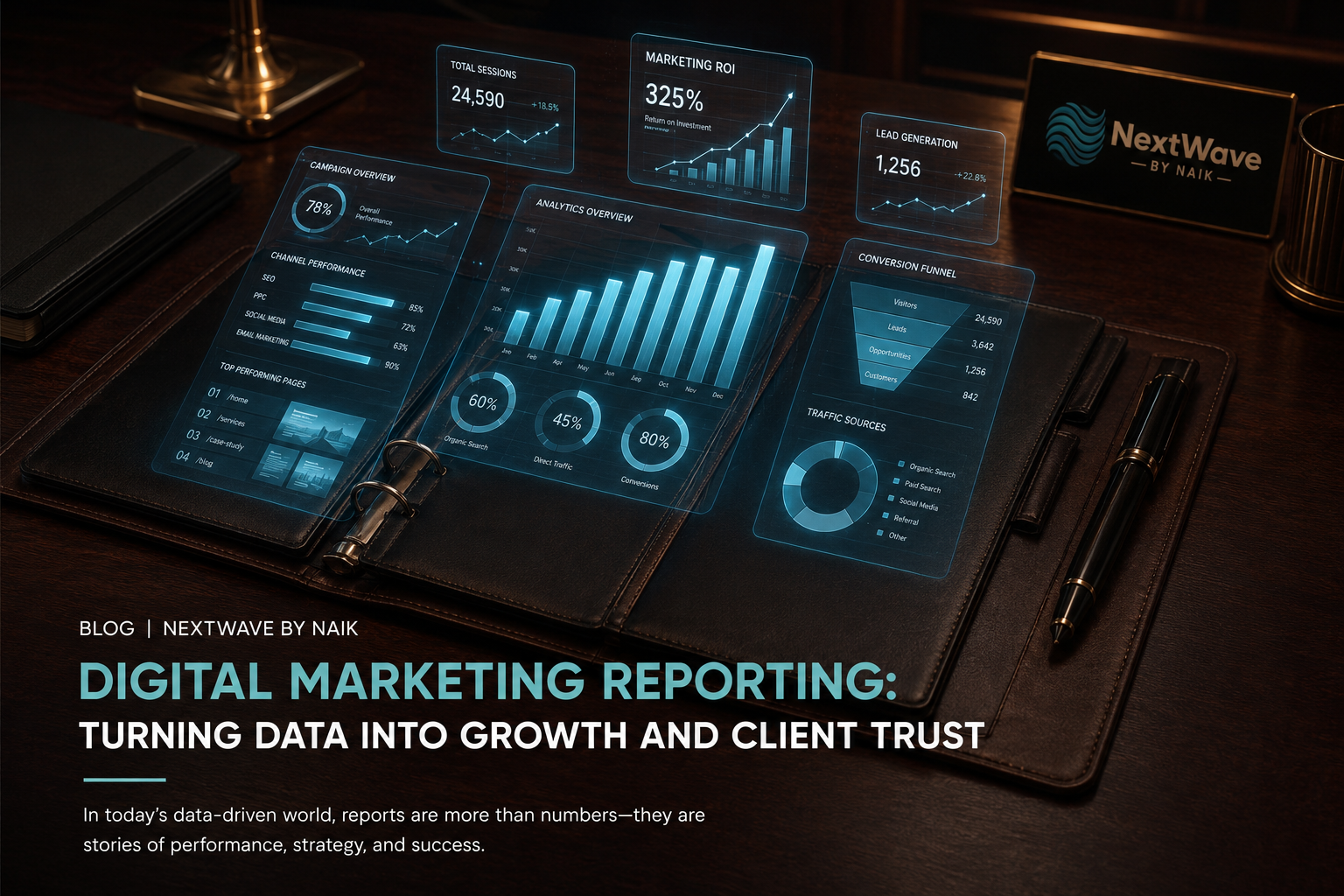
Rather than overwhelming clients with spreadsheets, successful agencies convert complex metrics into simple, visual stories that explain campaign performance.
Key Components of Effective Digital Marketing Reporting
A professional report should focus on business objectives instead of vanity metrics. Every report should answer one question:
“How did our marketing efforts contribute to business growth?”
1. Executive Summary
Start every report with a concise overview.
Include:
- Overall campaign performance
- Major achievements
- Key challenges
- Next month’s priorities
Busy decision-makers often read only this section before reviewing detailed metrics.
2. SEO Analytics
SEO analytics provide valuable insights into website visibility and search performance.
Include metrics such as:
- Organic traffic growth
- Keyword rankings
- Click-through rate (CTR)
- Impressions
- Bounce rate
- Top-performing landing pages
- Backlink growth
- Conversion rate
Instead of listing numbers, explain why changes occurred and how they impact future performance.
Example:
Organic traffic increased by 28% after optimizing product pages and improving internal linking, resulting in higher lead generation.
3. Marketing ROI
Every client wants to understand their return on investment.
Essential marketing ROI metrics include:
- Cost per Lead (CPL)
- Customer Acquisition Cost (CAC)
- Revenue generated
- Return on Ad Spend (ROAS)
- Conversion rate
- Lead quality
- Sales attributed to marketing
When presenting ROI, compare current performance with previous reporting periods to demonstrate progress.
4. Website Performance
Your report should include website engagement metrics, including:
- Page speed improvements
- User engagement
- Average session duration
- Pages per session
- Goal completions
- Conversion funnels
These insights show whether marketing efforts are improving user experience and business outcomes.
Creating Powerful Client Presentations
Even the best report loses value if it isn’t presented effectively.
Professional client presentations should focus on storytelling rather than statistics.
Start With Business Goals
Begin by revisiting the client’s objectives.
Examples include:
- Increase qualified leads
- Improve search visibility
- Generate online sales
- Build brand awareness
Connecting results to business goals keeps presentations relevant.
Use Visual Data
Charts, graphs, and dashboards simplify complex information.
Visual reporting helps clients quickly understand:
- Traffic trends
- Keyword improvements
- Revenue growth
- Lead generation
- Campaign performance
Avoid cluttered slides filled with unnecessary data.
Explain Insights
Clients don’t just want data.
They want answers.
Instead of saying:
“Traffic increased by 30%.”
Explain:
“Traffic increased by 30% because of improved keyword targeting and optimized content strategy, resulting in more qualified visitors.”
This creates value beyond reporting.
Best Practices for Digital Marketing Reporting
To maximize effectiveness, follow these proven practices:
Keep Reports Goal-Oriented
Every metric should support business objectives.
Remove unnecessary statistics that don’t influence decision-making.
Customize Every Report
Different industries require different KPIs.
For example:
- E-commerce focuses on revenue.
- SaaS companies prioritize lead generation.
- Local businesses emphasize calls and location visits.
Personalized reporting demonstrates expertise.
Use Automated Dashboards
Automation saves time while maintaining reporting accuracy.
Popular reporting platforms include:
- Google Looker Studio
- Google Analytics 4
- Google Search Console
- SEMrush
- Ahrefs
These tools provide real-time performance insights.
Include Recommendations
Never end a report with data alone.
Provide actionable next steps such as:
- Improve technical SEO
- Expand content marketing
- Increase high-performing ad budgets
- Optimize landing pages
- Build quality backlinks
Clients appreciate proactive recommendations.
Common Reporting Mistakes
Many agencies unintentionally reduce report effectiveness.
Avoid these common mistakes:
- Using excessive technical jargon
- Reporting vanity metrics only
- Ignoring business objectives
- Overloading reports with unnecessary charts
- Failing to explain performance changes
- Omitting future strategy recommendations
Simple, insightful reports always outperform overly complicated ones.
Measuring Long-Term Marketing Success
Successful Digital Marketing Reporting isn’t about one month’s performance.
It tracks long-term growth through consistent measurement.
Monitor:
- Organic traffic trends
- Lead quality
- Customer acquisition
- Revenue growth
- Conversion optimization
- Customer retention
- Brand visibility
Long-term reporting helps clients recognize sustainable business growth rather than temporary campaign fluctuations.
Frequently Asked Questions (FAQs)
Digital Marketing Reporting is the process of collecting, analyzing, and presenting marketing performance data to measure campaign success and support business decisions.
It helps businesses evaluate campaign effectiveness, improve transparency, measure marketing ROI, and make informed strategic decisions.
Key metrics include organic traffic, conversions, keyword rankings, marketing ROI, lead generation, website engagement, and customer acquisition costs.
Most B2B agencies provide monthly reports, while weekly dashboards can be useful for active campaigns or high-budget accounts.
Clear client presentations turn complex data into actionable insights, helping clients understand results, align on strategy, and make confident business decisions.
Conclusion
Modern agencies must go beyond delivering campaigns—they must communicate measurable value. Effective Digital Marketing Reporting enables businesses to understand campaign performance, improve decision-making, and strengthen long-term partnerships.
By combining meaningful SEO analytics, compelling client presentations, and clear marketing ROI reporting, agencies can transform raw data into actionable business insights. When reports focus on goals, provide strategic recommendations, and highlight measurable outcomes, they become powerful tools for client retention and business growth.
Investing time in professional reporting not only showcases your expertise but also builds confidence, transparency, and stronger relationships with every B2B client.