
B2B Lead Generation: Data-Driven Strategies That Turn Prospects into High-Value Clients
In today’s highly competitive business environment, B2B Lead Generation has evolved far beyond cold outreach and generic email campaigns. Modern organizations rely on data, automation, and customer insights to identify prospects, nurture relationships, and convert opportunities into long-term business partnerships.
Companies that leverage data-driven marketing strategies achieve higher conversion rates, improved customer targeting, and stronger sales performance. By understanding customer behavior and optimizing every stage of the buying journey, businesses can create predictable revenue streams and sustainable growth.
This guide explores the most effective B2B Lead Generation tactics that help organizations improve client acquisition, strengthen digital marketing funnels, and accelerate B2B sales performance.
Why B2B Lead Generation Matters
Successful businesses understand that generating qualified leads is the foundation of consistent growth. Unlike B2C transactions, B2B purchasing decisions involve multiple stakeholders, longer sales cycles, and detailed evaluations.
Effective B2B Lead Generation helps companies:
- Identify high-intent prospects
- Reduce customer acquisition costs
- Improve sales efficiency
- Increase conversion rates
- Strengthen long-term client relationships
- Create predictable revenue opportunities
Without a structured lead generation strategy, businesses often waste resources targeting unqualified prospects that are unlikely to convert.
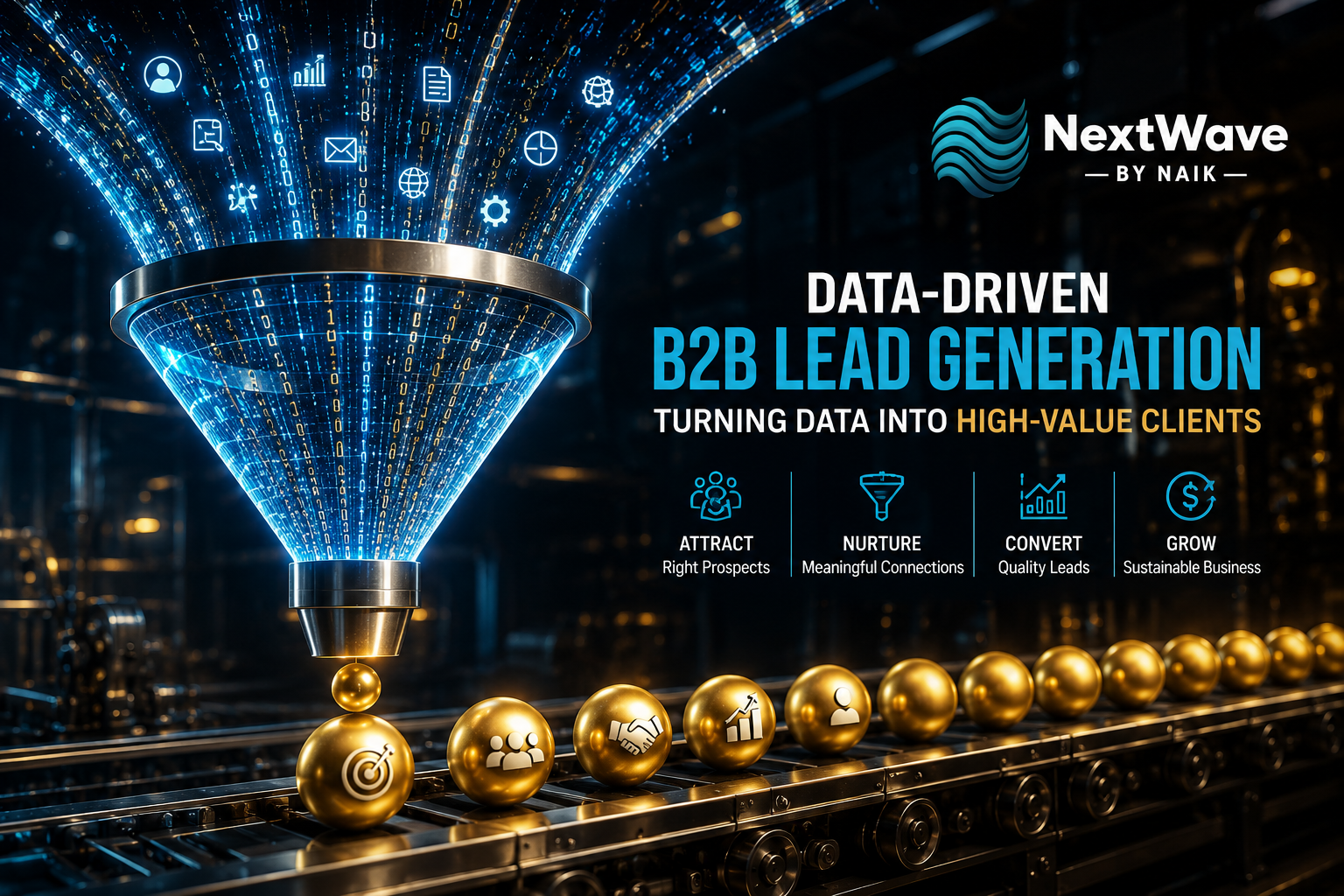
Understanding Data-Driven Lead Generation
Data-driven marketing focuses on using analytics and customer insights to make informed decisions. Instead of relying on assumptions, businesses analyze customer interactions, engagement patterns, and purchasing behavior.
A successful B2B Lead Generation strategy uses data to:
- Segment audiences accurately
- Personalize marketing campaigns
- Predict customer needs
- Improve lead scoring models
- Optimize marketing performance
When businesses understand what motivates prospects, they can deliver relevant content and offers that move buyers through the decision-making process.
Build Detailed Buyer Personas
One of the most important steps in B2B Lead Generation is creating comprehensive buyer personas.
A buyer persona should include:
Demographic Information
- Industry
- Company size
- Revenue range
- Geographic location
Professional Information
- Job title
- Responsibilities
- Decision-making authority
Business Challenges
- Pain points
- Goals
- Operational obstacles
Buying Behavior
- Preferred communication channels
- Content preferences
- Research habits
Accurate personas enable marketing teams to create highly targeted campaigns that resonate with potential clients.
Optimize Digital Marketing Funnels
Strong digital marketing funnels guide prospects from awareness to conversion.
Top of Funnel (TOFU)
At this stage, prospects are identifying challenges and seeking information.
Effective content includes:
- Educational blog posts
- Industry reports
- Infographics
- Videos
- Social media content
The objective is to attract relevant traffic and establish credibility.
Middle of Funnel (MOFU)
Prospects are evaluating solutions and comparing providers.
Recommended assets include:
- Case studies
- Whitepapers
- Webinars
- Product comparisons
- Expert guides
This stage helps nurture leads and build trust.
Bottom of Funnel (BOFU)
Prospects are ready to make purchasing decisions.
High-converting assets include:
- Free consultations
- Product demonstrations
- Custom proposals
- ROI calculators
- Customer testimonials
Optimized digital marketing funnels ensure prospects receive the right information at the right time.
Leverage Marketing Automation
Automation platforms help businesses streamline repetitive marketing activities while maintaining personalization.
Automation can support:
- Email nurturing campaigns
- Lead scoring
- CRM synchronization
- Behavioral tracking
- Follow-up sequences
For effective B2B Lead Generation, automated workflows should be triggered based on user behavior, such as website visits, content downloads, or webinar registrations.
This ensures prospects receive relevant communications that encourage further engagement.
Use Intent Data for Better Targeting
Intent data reveals which companies are actively researching products or services related to your offerings.
Sources of intent data include:
- Website behavior
- Search activity
- Content engagement
- Third-party intent platforms
By identifying buying signals early, businesses can engage prospects before competitors and improve client acquisition results.
Intent-based marketing enables organizations to focus on accounts with higher purchase likelihood.
Personalize Outreach Campaigns
Generic messaging rarely performs well in modern B2B environments.
Personalized campaigns should include:
- Industry-specific insights
- Company-specific challenges
- Relevant case studies
- Customized recommendations
Personalization improves engagement rates and strengthens trust throughout the buying process.
Businesses that personalize their B2B Lead Generation campaigns often experience higher response rates and stronger sales outcomes.
Create High-Value Content Assets
Content remains one of the most powerful lead generation tools.
Top-performing content formats include:
Whitepapers
Provide detailed industry insights and attract decision-makers.
Case Studies
Demonstrate measurable business results and build credibility.
Webinars
Offer educational value while generating qualified leads.
Research Reports
Position organizations as industry authorities.
Interactive Tools
Calculators, assessments, and quizzes encourage engagement while collecting valuable prospect data.
High-quality content fuels every stage of B2B Lead Generation and supports long-term relationship building.
Measure and Optimize Performance
Data-driven lead generation requires continuous improvement.
Monitor key metrics such as:
- Cost per lead (CPL)
- Conversion rate
- Marketing qualified leads (MQLs)
- Sales qualified leads (SQLs)
- Customer acquisition cost (CAC)
- Customer lifetime value (CLV)
Regular performance analysis helps identify bottlenecks and opportunities for optimization.
Marketing and sales teams should collaborate closely to refine targeting, messaging, and funnel performance.
Align Sales and Marketing Teams
One of the biggest barriers to successful B2B Lead Generation is poor alignment between marketing and sales departments.
Alignment can be improved through:
- Shared performance goals
- Consistent lead qualification criteria
- CRM integration
- Regular strategy meetings
- Closed-loop reporting
When both teams work together, lead quality improves, conversion rates increase, and revenue growth accelerates.
Future Trends in B2B Lead Generation
Emerging technologies continue to transform lead generation strategies.
Key trends include:
- Artificial intelligence-driven targeting
- Predictive analytics
- Conversational marketing
- Account-based marketing (ABM)
- Advanced customer journey mapping
Organizations that embrace these innovations will gain a competitive advantage in attracting and converting high-value prospects.
Conclusion
Modern B2B Lead Generation is driven by data, personalization, and strategic automation. Businesses that understand their audience, optimize digital marketing funnels, leverage analytics, and align sales with marketing can consistently improve client acquisition and increase B2B sales performance.
By implementing data-driven lead generation tactics, organizations can identify high-intent prospects, nurture stronger relationships, and create scalable growth opportunities. As buyer expectations continue to evolve, investing in advanced lead generation strategies will remain essential for long-term business success.