
Developing Accessible Websites with AI-Powered Inclusivity
In today’s digital world, businesses are expected to create platforms that everyone can use comfortably. Developing Accessible Websites is no longer only about compliance. It is now an essential strategy for improving user experience, increasing audience reach, and building inclusive online environments. As artificial intelligence continues to transform web development, organizations can now use advanced tools to simplify accessibility implementation and achieve better digital inclusivity.
Modern users interact with websites through different devices, screen readers, voice assistants, and adaptive technologies. This growing diversity means developers must focus on Accessible Web Design practices that remove barriers and create seamless experiences for all visitors. AI-powered accessibility solutions are helping businesses automate tasks, identify usability gaps, and align with WCAG Compliance 2026 standards more efficiently than ever before
Why Developing Accessible Websites Matters
Developing Accessible Websites ensures that people with visual, auditory, cognitive, or motor impairments can navigate digital platforms without difficulty. Accessibility is directly connected to usability, customer satisfaction, and search engine optimization. Search engines reward websites that provide structured content, alternative text, mobile responsiveness, and user-friendly navigation.
An accessible website improves readability, simplifies navigation, and enhances performance across all devices. These improvements not only help users with disabilities but also support elderly users, mobile users, and visitors with slower internet connections.
Businesses investing in Inclusive Digital Development gain stronger brand trust and wider audience engagement. Accessibility demonstrates social responsibility while helping organizations meet global digital standards.
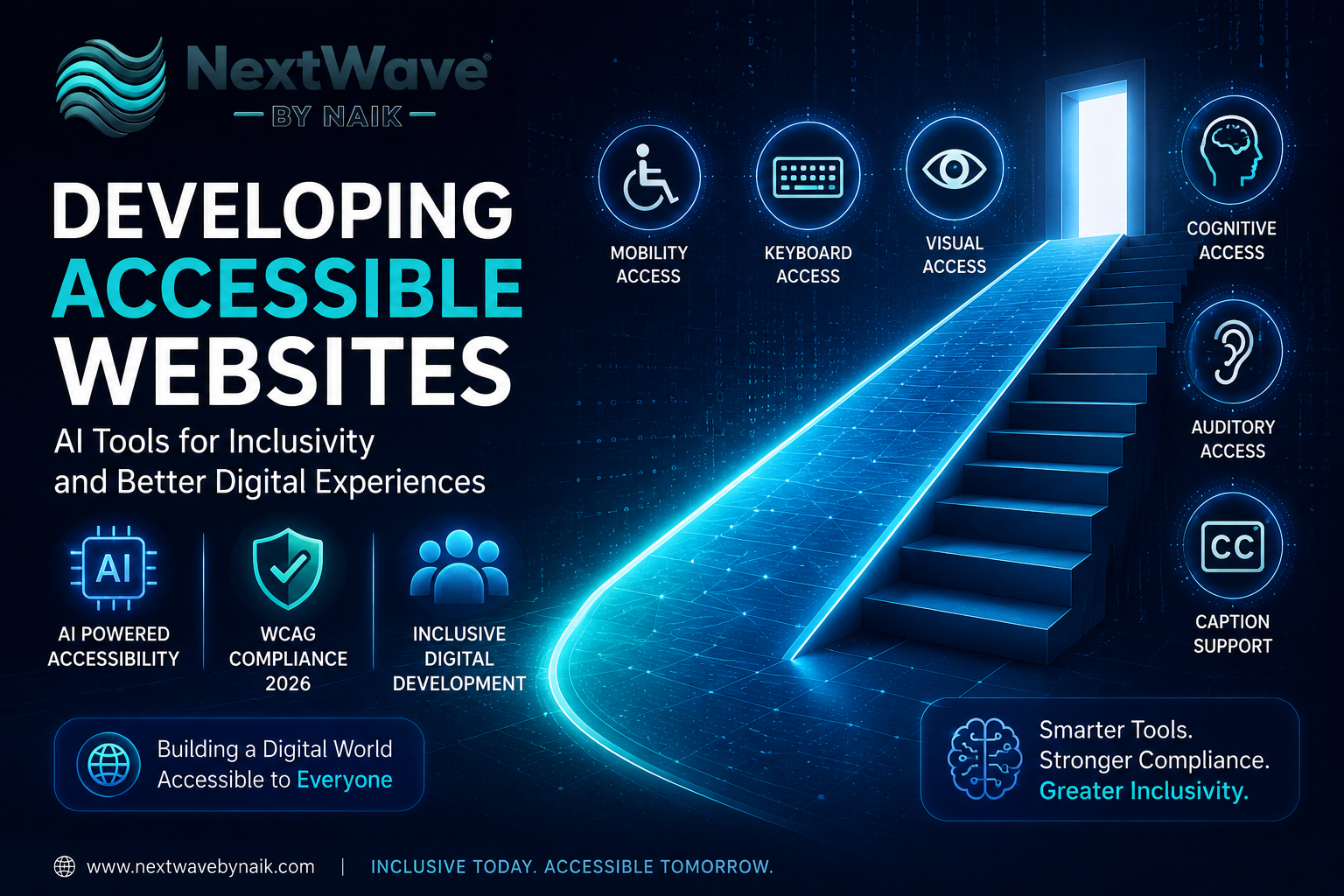
The Role of AI in Accessible Web Design
Artificial intelligence has become a major innovation in Accessible Web Design. AI tools can scan websites, identify accessibility issues, and recommend improvements within minutes. Instead of relying only on manual audits, developers can now automate repetitive accessibility tasks and reduce development time.
AI accessibility tools help with:
- Automated image alt-text generation
- Voice navigation integration
- Real-time contrast analysis
- Screen reader optimization
- Keyboard navigation testing
- Caption and transcription generation
- Accessibility compliance monitoring
These capabilities support faster and more accurate Developing Accessible Websites strategies for businesses of all sizes.
AI Tools Supporting WCAG Compliance 2026
As digital regulations evolve, WCAG Compliance 2026 is becoming a key focus for developers and organizations worldwide. The latest accessibility expectations emphasize usability, readability, adaptability, and inclusive interaction.
AI-powered accessibility platforms help businesses stay aligned with updated compliance standards by continuously monitoring website performance. These systems can detect accessibility violations and suggest improvements before they affect user experience.
Some common AI-supported compliance features include:
Intelligent Accessibility Audits
AI systems can automatically review page structure, headings, links, forms, and navigation elements to identify issues affecting accessibility.
Smart Content Optimization
AI tools analyze readability levels and recommend simpler language structures for better comprehension across diverse audiences.
Automated Captioning
Video content accessibility has become essential for WCAG Compliance 2026. AI-generated captions and transcripts improve usability for hearing-impaired users.
Adaptive User Experiences
Modern AI systems personalize interfaces based on user behavior and accessibility preferences, improving Inclusive Digital Development strategies.
Benefits of Inclusive Digital Development
Inclusive Digital Development creates equal digital opportunities for all users. Businesses that prioritize accessibility often experience stronger engagement, improved conversions, and better customer retention.
Enhanced SEO Performance
Search engines favor websites with accessible structures. Features such as optimized headings, descriptive links, and alternative text improve indexing and ranking potential.
Wider Audience Reach
Accessible websites connect with millions of users who depend on assistive technologies for browsing and communication.
Better User Experience
Accessibility improvements make websites easier to navigate, increasing overall visitor satisfaction.
Legal and Compliance Protection
Meeting WCAG Compliance 2026 standards helps organizations reduce legal risks associated with accessibility violations.
Stronger Brand Reputation
Companies that support Inclusive Digital Development demonstrate ethical leadership and customer care.
Key Features Every Accessible Website Should Include
When Developing Accessible Websites, developers should focus on several essential features to create inclusive experiences.
Clear Navigation Structure
Logical menus and structured page layouts improve usability for screen readers and keyboard navigation users.
Optimized Color Contrast
Proper contrast between text and background enhances readability for visually impaired users.
Responsive Mobile Design
Accessibility must extend across smartphones, tablets, and desktop devices.
Alternative Text for Images
Every meaningful image should include descriptive alt text for screen reader compatibility.
Keyboard Accessibility
Users should be able to navigate all website functions without requiring a mouse.
Accessible Forms
Forms should include labels, error guidance, and easy-to-understand instructions.
These practices strengthen Accessible Web Design while supporting better SEO performance.
Future Trends in AI Accessibility
The future of Developing Accessible Websites is closely connected to artificial intelligence innovation. Emerging technologies are making digital experiences more adaptive and personalized.
AI Voice Interfaces
Voice-controlled browsing is becoming more accurate and accessible for users with physical impairments.
Predictive Accessibility Enhancements
AI systems can predict user accessibility needs and automatically adjust interfaces.
Real-Time Language Simplification
Advanced AI can rewrite complex content into simpler formats for cognitive accessibility.
Smart Accessibility Testing
Continuous AI monitoring allows developers to maintain WCAG Compliance 2026 standards without extensive manual reviews.
Best Practices for Developing Accessible Websites
Organizations aiming for long-term accessibility success should follow several important strategies.
- Conduct regular accessibility audits
- Use AI accessibility monitoring tools
- Follow WCAG Compliance 2026 guidelines
- Create mobile-friendly layouts
- Optimize multimedia accessibility
- Train development teams on accessibility standards
- Test websites with real users and assistive technologies
Combining human expertise with AI-powered solutions creates stronger accessibility outcomes.
Conclusion
Developing Accessible Websites is becoming a fundamental requirement for modern digital success. Businesses that prioritize accessibility create stronger user experiences, improve SEO visibility, and support Inclusive Digital Development across global audiences. AI-powered accessibility tools are simplifying compliance processes, reducing development barriers, and helping organizations align with WCAG Compliance 2026 standards more effectively.
As digital experiences continue evolving, accessibility will remain a core component of successful web development strategies. Companies investing in Accessible Web Design today are building more inclusive, future-ready platforms that benefit every user.