
Scalable Web Architecture: 7 Powerful Strategies for Organic Growth
In today’s competitive digital landscape, businesses need more than attractive websites to succeed online. As traffic increases and search engine algorithms become more advanced, companies must build platforms that can support growth without sacrificing performance. This is where Scalable Web Architecture becomes essential.
Modern websites must handle increasing visitor volumes, large databases, dynamic content delivery, and evolving SEO requirements simultaneously. Without a strong architectural foundation, even well-designed websites can experience slow loading speeds, crawling issues, indexing problems, and ranking drops. Businesses aiming for long-term digital success must prioritize scalable infrastructure from the beginning.
A properly designed architecture improves user experience, strengthens search engine visibility, and ensures seamless scalability as website traffic grows. For enterprises managing thousands of pages or expecting rapid growth, scalable systems directly influence organic rankings and overall digital performance.
Why Scalable Web Architecture Matters for SEO
Search engines prioritize websites that provide fast, reliable, and organized experiences. A poorly structured site often creates technical SEO issues that negatively impact rankings. In contrast, Scalable Web Architecture supports efficient crawling, faster indexing, and improved page performance.
As websites grow, maintaining organized navigation and optimized page structures becomes increasingly important. Scalable systems ensure that new pages, categories, and content can be added without disrupting the website’s SEO framework.
Large organizations especially benefit from scalable architecture because enterprise-level websites often contain complex structures with multiple product pages, blogs, landing pages, and regional content variations. A scalable foundation helps maintain consistency across all digital assets.
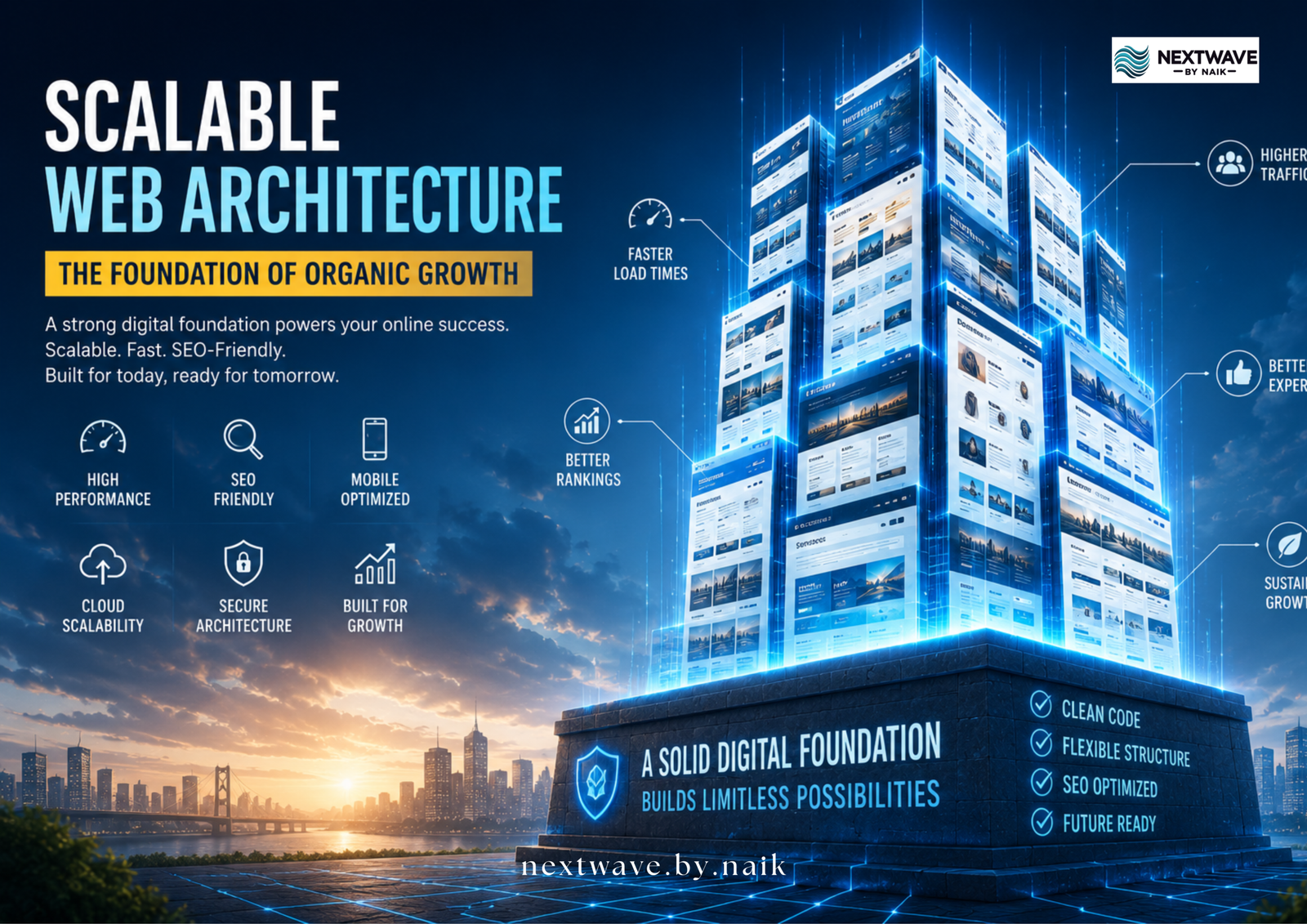
1. Optimized Site Structure Improves Crawl Efficiency
One of the biggest advantages of Scalable Web Architecture is improved crawlability. Search engine bots need clear pathways to discover and index website content effectively.
A scalable structure uses logical navigation hierarchies, internal linking systems, and optimized URLs to help search engines understand website relationships. This improves crawl efficiency and reduces indexing errors.
Well-structured websites also distribute authority more effectively across pages. Important pages receive stronger internal link signals, improving visibility in search engine results.
Key structural elements include:
- Flat website architecture
- Clean URL structures
- Strategic internal linking
- XML sitemaps
- Breadcrumb navigation
These elements help search engines process large websites more efficiently while improving user navigation.
2. Website Speed Directly Influences Organic Rankings
Page speed remains one of the most important ranking factors in modern SEO. High-traffic websites often struggle with slow loading times due to server overloads, inefficient code, or poor resource management.
Scalable Web Architecture addresses these challenges through optimized infrastructure and intelligent content delivery systems.
Fast-loading websites improve:
- User engagement
- Bounce rates
- Conversion rates
- Mobile usability
- Search engine rankings
Modern scalable development strategies include:
- Content Delivery Networks (CDNs)
- Server-side caching
- Image optimization
- Lazy loading
- Lightweight frameworks
These technologies ensure websites maintain strong performance even during traffic spikes.
3. Mobile-First Infrastructure Enhances User Experience
Google’s mobile-first indexing has made mobile optimization critical for SEO success. Websites that fail to perform well on mobile devices risk losing visibility and traffic.
A scalable architecture ensures consistent performance across desktops, tablets, and smartphones. Responsive design frameworks allow content to adapt dynamically to different screen sizes while maintaining fast loading speeds.
For businesses focused on High-Traffic Website Development, mobile scalability is especially important because mobile users often represent the majority of website visitors.
Mobile-friendly architecture improves:
- Core Web Vitals
- User retention
- Search visibility
- Conversion performance
- Engagement metrics
Strong mobile performance contributes significantly to long-term organic growth.
4. Scalable Databases Support Enterprise SEO Growth
As websites expand, managing content efficiently becomes increasingly complex. Large databases must handle thousands of products, articles, categories, and user interactions without slowing down website performance.
Enterprise SEO strategies depend heavily on scalable database management systems that can organize and retrieve content quickly.
Scalable database architecture supports:
- Faster page rendering
- Efficient indexing
- Dynamic content delivery
- Better search functionality
- Reduced server response times
Businesses that invest in scalable database solutions gain long-term flexibility for future growth initiatives.
5. Technical SEO Benefits from Scalable Infrastructure
Technical SEO forms the foundation of organic visibility. Without strong infrastructure, websites often encounter issues such as duplicate content, broken links, orphan pages, and crawl inefficiencies.
Scalable Web Architecture simplifies technical SEO management by creating systems that automatically support optimization best practices.
Benefits include:
- Better canonical management
- Structured schema implementation
- Improved site indexing
- Enhanced HTTPS security
- Automated redirects
Scalable systems also reduce maintenance complexity, allowing development teams to focus on innovation instead of constant troubleshooting.
6. Cloud-Based Scalability Prevents Traffic Bottlenecks
Traffic spikes can severely impact website performance if infrastructure is not designed for scalability. During major campaigns, product launches, or viral content surges, websites must maintain stability under heavy loads.
Cloud-based infrastructure plays a critical role in SEO-Friendly Web Development because uptime and speed directly influence rankings and user trust.
Cloud scalability provides:
- Automatic resource allocation
- Faster server response times
- Improved reliability
- Enhanced global performance
- Reduced downtime risks
Businesses using scalable cloud environments can handle traffic growth more effectively while maintaining strong SEO performance.
7. Future-Proof Architecture Supports Long-Term Organic Growth
Search engine algorithms constantly evolve. Websites built on outdated systems often struggle to adapt to new SEO requirements, causing long-term ranking declines.
Scalable Web Architecture provides flexibility for future updates, integrations, and optimization strategies. Whether implementing AI-driven personalization, advanced analytics, or new content formats, scalable systems allow businesses to evolve without rebuilding their platforms entirely.
Future-proof architecture supports:
- Continuous SEO improvements
- Faster feature deployment
- Better content scalability
- Improved security updates
- Enhanced integration capabilities
Organizations that invest in scalable development today position themselves for stronger long-term organic growth tomorrow.
Conclusion
Organic growth depends on much more than keywords and content creation. Website infrastructure plays a major role in determining search visibility, user experience, and long-term scalability. Businesses aiming to compete in modern search environments must prioritize Scalable Web Architecture as a core digital strategy.
From faster loading speeds and improved crawlability to mobile optimization and cloud scalability, a strong architectural foundation directly impacts SEO success. As businesses continue expanding their digital presence, scalable systems ensure websites remain stable, fast, and optimized for both users and search engines.
Companies investing in scalable infrastructure today gain a significant advantage in achieving sustainable organic growth, stronger rankings, and better overall digital performance.