
API Integration Services: The Smart Way to Build a High-Performance MarTech Stack
Introduction
Modern businesses rely on multiple digital tools to manage marketing campaigns, customer engagement, analytics, CRM operations, and sales activities. However, when these platforms operate separately, companies often face data silos, inconsistent reporting, delayed communication, and poor customer experiences. This is where API Integration Services become essential.
Today’s organizations need a connected ecosystem where every marketing platform communicates efficiently with one another. From CRM software and email automation tools to analytics dashboards and advertising platforms, a well-connected MarTech Stack ensures that every department works with accurate and real-time information.
By implementing professional API Integration Services, businesses can create a streamlined infrastructure that enables faster workflows, improved personalization, better customer targeting, and smarter decision-making. In a competitive digital environment, integration is no longer optional—it is the foundation of scalable marketing success.
Understanding API Integration Services
API Integration Services allow different software applications and platforms to communicate with each other automatically. APIs, or Application Programming Interfaces, act as bridges that transfer information securely and efficiently between systems.
For example, when a customer fills out a form on a website, APIs can instantly send the data to the CRM, trigger email automation, update analytics dashboards, and notify the sales team in real time. Without APIs, these tasks would require manual work, increasing delays and reducing operational efficiency.
Businesses today use hundreds of tools within their marketing ecosystems. A disconnected system can create confusion, duplicate records, and inconsistent reporting. With reliable API Integration Services, organizations can build a synchronized workflow that improves productivity and customer experience.
Why API Integration Services Matter in a Modern MarTech Stack
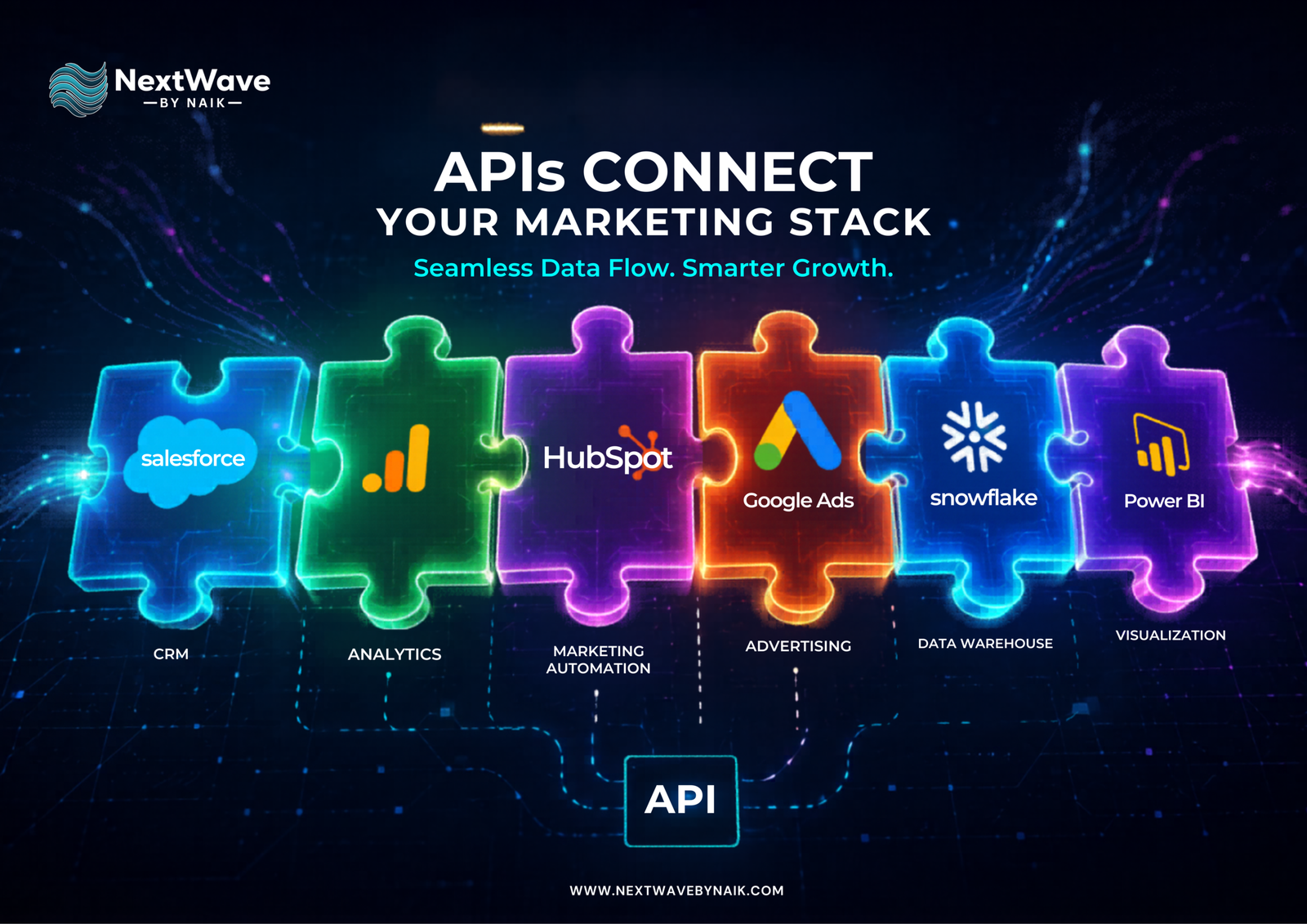
A modern MarTech Stack includes multiple technologies such as CRM systems, social media management tools, analytics platforms, advertising software, customer support solutions, and marketing automation systems. Managing these tools individually becomes complex as businesses grow.
Professional API Integration Services help organizations unify all these technologies into a single connected environment. This integration allows businesses to automate processes, improve collaboration, and eliminate manual errors.
Here are some major benefits of integrating your marketing systems:
1. Seamless Data Flow Across Platforms
One of the biggest advantages of API Integration Services is creating a Seamless Data Flow between applications. Customer information moves automatically between systems without requiring manual uploads or exports.
This ensures:
- Accurate customer records
- Faster campaign execution
- Real-time analytics updates
- Better personalization strategies
- Improved operational efficiency
A connected infrastructure allows marketing teams to access updated information instantly, enabling faster and smarter decisions.
2. Improved Marketing Automation
Automation becomes more effective when systems are interconnected. API Integration Services help marketing automation platforms exchange information with CRM tools, analytics software, and customer databases.
For example:
- Leads generated from ads can automatically enter email workflows
- CRM updates can trigger customer retention campaigns
- Website actions can initiate personalized notifications
- Analytics tools can track campaign performance instantly
This level of automation reduces repetitive tasks and allows teams to focus on strategy and growth.
3. Better Customer Experience
Customers expect consistent communication across every digital channel. A disconnected system often leads to repeated messages, delayed responses, and inaccurate targeting.
With efficient API Integration Services, businesses can create unified customer experiences. Data synchronization ensures that marketing, sales, and support teams all access the same customer information.
This helps businesses deliver:
- Personalized recommendations
- Faster customer support
- Consistent messaging
- Improved customer retention
- Higher engagement rates
A connected MarTech Stack directly contributes to stronger customer relationships.
4. Real-Time Reporting and Analytics
Data-driven marketing depends on accurate reporting. Without integration, teams often spend hours collecting data from multiple platforms manually.
Using advanced API Integration Services, businesses can centralize analytics and reporting dashboards. Real-time synchronization ensures that campaign performance metrics remain accurate and updated.
This allows companies to:
- Monitor ROI instantly
- Track customer journeys
- Measure campaign effectiveness
- Identify market trends faster
- Optimize marketing budgets efficiently
Reliable analytics improve decision-making and support long-term growth strategies.
Common Systems Connected Through API Integration Services
Businesses use API Integration Services to connect multiple digital platforms within their operations. Some commonly integrated systems include:
CRM Platforms
CRM tools like Salesforce and HubSpot require integration with marketing platforms, lead generation tools, and communication software.
Email Marketing Systems
Email automation tools benefit from real-time customer data synchronization for better personalization and segmentation.
E-Commerce Platforms
Online stores require seamless connectivity between payment gateways, inventory systems, analytics tools, and customer support software.
Social Media Platforms
Integrated social media systems help businesses manage campaigns, track engagement, and measure advertising performance efficiently.
Analytics and Reporting Tools
Connected analytics dashboards provide centralized reporting for accurate business intelligence.
A well-integrated MarTech Stack improves operational efficiency and supports scalable business growth.
API Integration Services and Business Scalability
As businesses expand, managing disconnected systems becomes increasingly difficult. Scaling operations requires automation, centralized data management, and connected workflows.
Professional API Integration Services allow organizations to add new technologies without disrupting existing systems. Businesses can expand their marketing capabilities while maintaining operational consistency.
This flexibility is especially important for:
- Growing e-commerce businesses
- SaaS companies
- Digital marketing agencies
- Enterprise organizations
- Multi-channel retailers
An integrated infrastructure supports long-term digital transformation and business scalability.
Security and Reliability in API Integration Services
Security is a critical factor in modern integrations. Businesses handle sensitive customer information, payment data, and operational records daily.
Reliable API Integration Services include secure authentication protocols, encrypted data transmission, and controlled system access. Professional integration solutions ensure compliance with industry standards and data privacy regulations.
A secure integration framework helps businesses:
- Protect customer information
- Reduce operational risks
- Improve system reliability
- Prevent unauthorized access
- Maintain regulatory compliance
Choosing experienced integration specialists ensures better performance and long-term stability.
Future Trends in API Integration Services
The future of digital marketing depends heavily on intelligent integrations and automation. Emerging technologies such as AI-driven marketing, predictive analytics, and real-time personalization require highly connected ecosystems.
Businesses are increasingly investing in API Integration Services to support:
- AI-powered automation
- Omnichannel customer experiences
- Cloud-based operations
- Advanced analytics
- Real-time personalization
As digital ecosystems continue to evolve, companies with connected marketing infrastructures will gain a significant competitive advantage.
Conclusion
In today’s competitive digital landscape, disconnected systems limit productivity, slow down workflows, and reduce marketing efficiency. Businesses need a unified ecosystem that enables communication between every platform within their operations.
Professional API Integration Services provide the foundation for a high-performing MarTech Stack by enabling Seamless Data Flow, automation, centralized reporting, and improved customer experiences.
From CRM systems and analytics tools to automation platforms and e-commerce solutions, integrations help businesses operate smarter and scale faster. Companies that invest in connected marketing systems gain better visibility, stronger operational efficiency, and improved customer engagement.
As technology continues to advance, organizations that prioritize integration will remain agile, data-driven, and prepared for future digital growth.