
AI SEO Strategies in 2026: Mastering Machine Learning for NextWave Organic Growth
Introduction: The Future of SEO is Intelligent
AI SEO Strategies are no longer optional—they are the backbone of every successful organic search strategy in 2026. Traditional SEO methods focused heavily on keywords and backlinks, but today’s search engines rely on advanced machine learning SEO systems that interpret user behavior, context, and intent in real time.
To achieve NextWave organic growth, businesses must adapt to how search intent algorithms analyze content. Ranking is no longer about stuffing keywords; it’s about delivering meaningful, user-centric experiences powered by AI-driven insights.
Understanding AI SEO Strategies in 2026
AI SEO Strategies combine data science, automation, and predictive analytics to optimize search performance. Search engines now use machine learning models to evaluate:
- User engagement signals
- Content relevance
- Behavioral patterns
- Semantic understanding
This means your content must align perfectly with what users are actually searching for, not just what they type.
In 2026, AI doesn’t just rank content—it understands it. That’s why businesses focusing on AI SEO Strategies are consistently outperforming competitors relying on outdated tactics.
The Role of Search Intent Algorithms
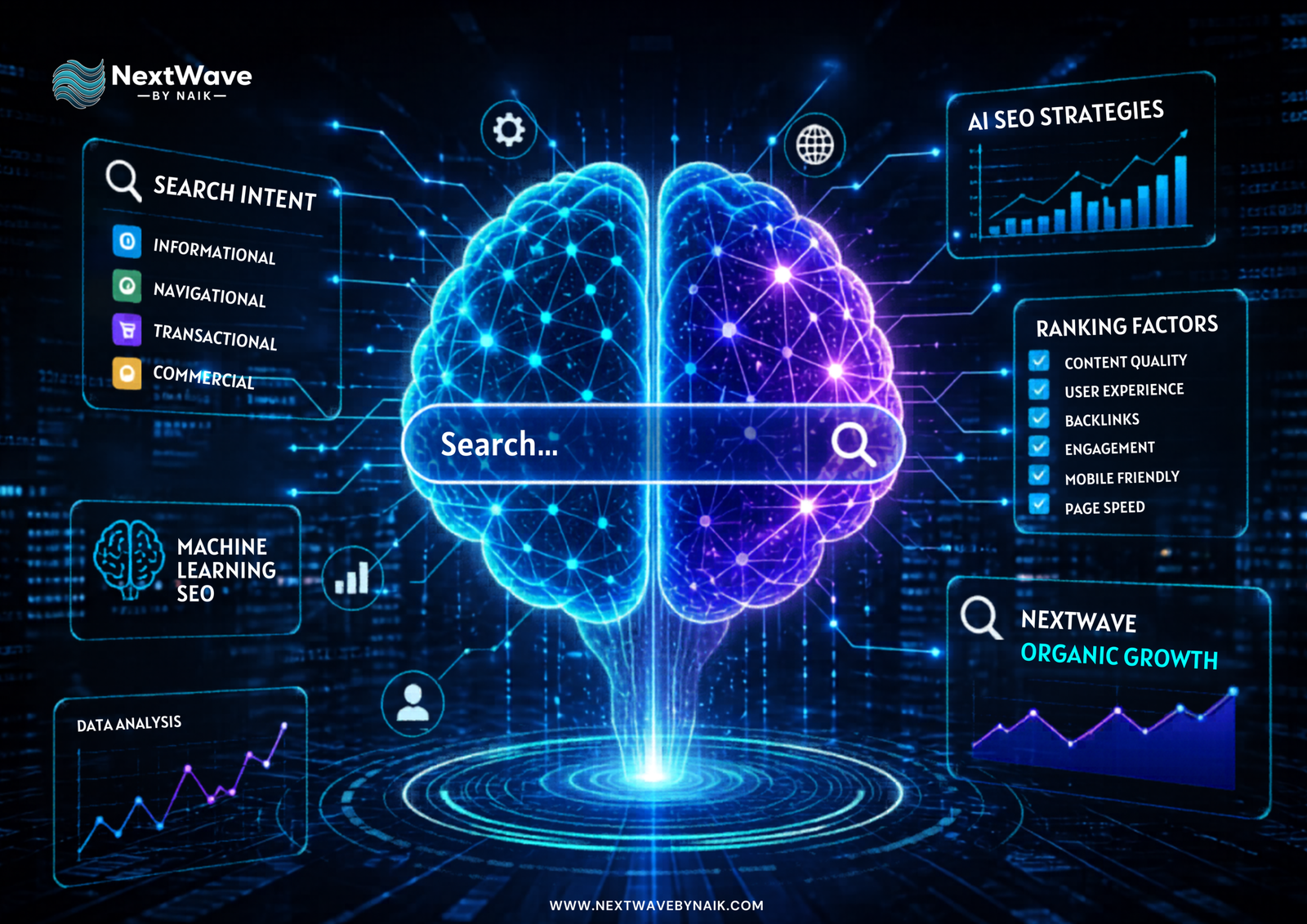
Search intent algorithms have become the core of ranking systems. These algorithms classify user intent into four key categories:
- Informational
- Navigational
- Transactional
- Commercial investigation
To succeed with AI SEO Strategies, your content must match the correct intent. For example:
- Blogs should target informational intent
- Product pages should target transactional intent
- Comparison articles should target commercial investigation
When your content aligns with search intent algorithms, search engines reward it with higher visibility and engagement.
Machine Learning SEO: How It Works
Machine learning SEO is the engine behind modern ranking systems. It continuously learns from user interactions and improves search results accordingly.
Key components include:
1. Natural Language Processing (NLP)
Search engines understand context, synonyms, and conversational queries. Content must be written naturally, not mechanically.
2. Predictive Analysis
AI predicts what users will search next. Optimizing for future trends gives you a competitive edge.
3. Behavioral Data Tracking
Metrics like click-through rate (CTR), bounce rate, and dwell time influence rankings more than ever.
By leveraging machine learning SEO, businesses can create smarter, more adaptive content strategies.
Building a Winning Organic Search Strategy in 2026
To achieve sustainable growth, your organic search strategy must evolve with AI technologies. Here’s how:
Focus on Topic Clusters
Instead of isolated keywords, build comprehensive content around core topics. This improves authority and helps search engines understand your expertise.
Optimize for User Experience
Page speed, mobile responsiveness, and intuitive navigation are critical ranking factors. AI prioritizes websites that deliver seamless user experiences.
Use Data-Driven Content Creation
Analyze search trends, user queries, and competitor strategies to create high-performing content.
Leverage AI Tools
AI-powered SEO tools can automate keyword research, content optimization, and performance tracking, making your strategy more efficient.
Content Optimization for AI SEO Strategies
Content remains king—but only when optimized correctly. In 2026, optimization goes beyond keywords.
Semantic SEO
Use related terms and phrases to provide context. This helps search intent algorithms understand your content better.
Content Depth and Quality
Long-form, in-depth content performs better because it satisfies user queries comprehensively.
Engagement Signals
Encourage interaction through compelling headlines, visuals, and clear structure.
Voice Search Optimization
With the rise of voice assistants, content must be conversational and question-based.
NextWave Organic Growth: The Competitive Advantage
NextWave organic growth is achieved by combining innovation with consistency. Businesses that adopt AI SEO Strategies gain:
- Higher search rankings
- Better user engagement
- Increased organic traffic
- Improved conversion rates
The key is to stay ahead of algorithm updates by continuously refining your strategy.
Common Mistakes to Avoid
Even in 2026, many businesses fail due to outdated practices. Avoid these pitfalls:
- Ignoring search intent
- Over-optimizing keywords
- Publishing low-quality content
- Neglecting user experience
- Failing to adapt to AI changes
AI SEO Strategies demand flexibility and continuous learning.
The Future of Machine Learning SEO
Looking ahead, machine learning SEO will become even more advanced. Search engines will:
- Understand emotions and sentiment
- Deliver hyper-personalized results
- Integrate visual and voice search seamlessly
Businesses that invest in AI SEO Strategies today will be better positioned for tomorrow’s digital landscape.
Conclusion: Adapt or Get Left Behind
AI SEO Strategies are redefining how websites rank in 2026. Success depends on understanding search intent algorithms, leveraging machine learning SEO, and building a robust organic search strategy.
For brands aiming at NextWave organic growth, the path is clear: focus on user intent, embrace AI-driven tools, and create high-quality, meaningful content.
The future of SEO isn’t coming—it’s already here. The question is, are you ready to rank in it?