
Micro-Interactions in 2026 Web Design Trends: Small Code, Big Marketing Impact
Introduction: Why Small Details Matter in 2026
In the fast-evolving digital landscape, Micro-Interactions in 2026 Web Design Trends are redefining how users experience websites. While large visuals and fast-loading pages remain essential, it’s the subtle, almost invisible interactions that truly capture user attention.
Micro-interactions are those tiny animations or responses—like a button changing color when clicked or a subtle vibration on mobile—that create a seamless and engaging experience. In 2026, brands focusing on UI excellence are leveraging these small design elements to drive higher engagement, better retention, and ultimately, more conversions.
What Are Micro-Interactions in Modern Web Design?
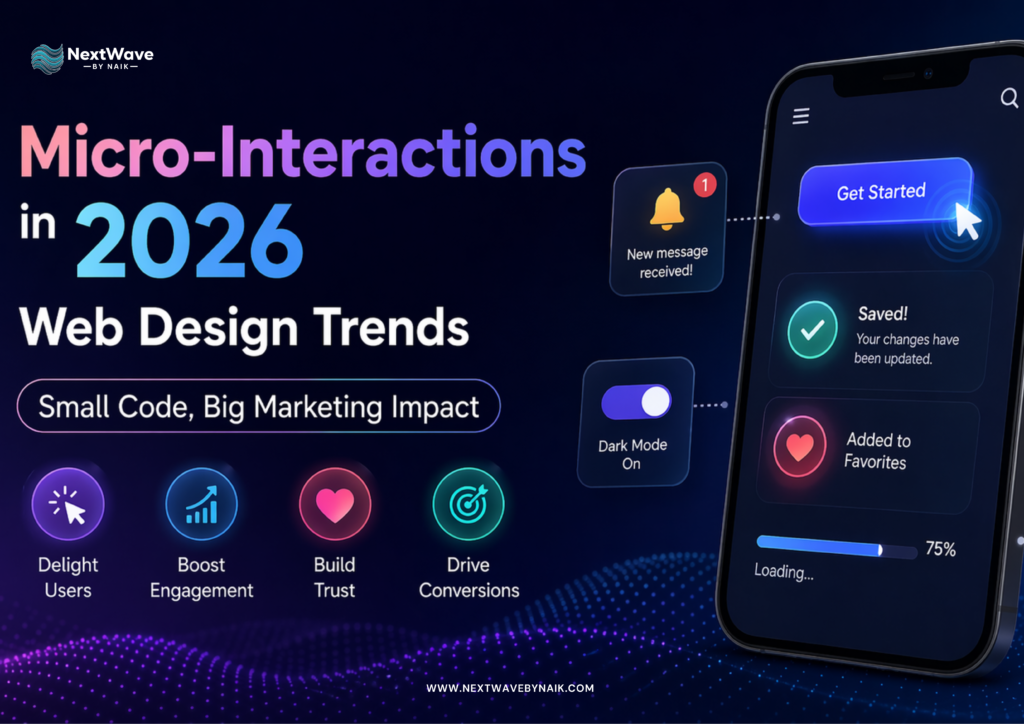
Micro-interactions are small moments where users interact with a website or app. These include hover effects, loading animations, swipe gestures, and notification alerts. Though they may seem minor, they play a powerful role in shaping user perception.
In the context of Micro-Interactions in 2026 Web Design Trends, these elements are no longer optional—they are expected. Users demand intuitive, responsive, and visually satisfying interactions across devices, especially in mobile UI/UX environments.
Why Micro-Interactions Matter for Marketing Impact
Micro-interactions directly influence how users feel about your brand. When designed correctly, they:
- Improve usability and navigation
- Increase time spent on site
- Enhance emotional connection
- Guide users toward conversion actions
For businesses investing in custom web development, integrating micro-interactions is a strategic move. They transform static pages into dynamic experiences that encourage users to explore further.
In 2026, marketing is no longer just about content—it’s about experience. And micro-interactions are at the heart of that experience.
Key Micro-Interaction Trends in 2026
1. Context-Aware Animations
Modern websites now use intelligent animations that respond to user behavior. These micro-interactions adapt based on scrolling patterns, clicks, and time spent on a page.
This trend aligns perfectly with Micro-Interactions in 2026 Web Design Trends, as personalization becomes a key factor in user engagement.
2. Mobile-First Interaction Design
With mobile users dominating web traffic, micro-interactions are being designed specifically for touch-based interfaces. Swipe gestures, haptic feedback, and smooth transitions enhance mobile UI/UX significantly.
Businesses that ignore mobile-first micro-interactions risk losing a large portion of their audience.
3. Minimalist Yet Functional UI
Simplicity is trending, but that doesn’t mean less functionality. Instead, micro-interactions are used to add depth without clutter.
This approach supports UI excellence, where every interaction has a purpose and improves usability without overwhelming the user.
4. Feedback-Driven User Experience
Users expect instant feedback. Whether it’s a form submission or a button click, micro-interactions confirm actions in real time.
This reduces confusion and builds trust—an essential factor in successful custom web development projects.
How Micro-Interactions Improve SEO Performance
You might not immediately associate micro-interactions with SEO, but they have a significant indirect impact. Here’s how:
- Lower Bounce Rate: Engaging interactions keep users on your site longer
- Higher Dwell Time: Interactive elements encourage exploration
- Improved User Experience: Google prioritizes websites with better UX signals
When implemented strategically, Micro-Interactions in 2026 Web Design Trends contribute to better search rankings by enhancing overall site performance and user satisfaction.
Best Practices for Implementing Micro-Interactions
To maximize the benefits, follow these proven strategies:
Keep It Subtle
Micro-interactions should enhance, not distract. Overuse can negatively impact user experience.
Focus on Functionality
Every interaction should serve a purpose—whether guiding users or providing feedback.
Optimize for Speed
Heavy animations can slow down your site. Ensure all interactions are lightweight and optimized.
Maintain Consistency
Consistent design patterns across your website improve usability and reinforce branding.
Real-World Examples of Effective Micro-Interactions
- A progress bar during checkout that reduces user anxiety
- Hover effects that highlight clickable elements
- Animated icons that guide navigation
- Subtle transitions that make browsing smooth and enjoyable
These examples show how small design elements can create a big marketing impact when aligned with Micro-Interactions in 2026 Web Design Trends.
The Role of Micro-Interactions in Custom Web Development
For businesses investing in custom web development, micro-interactions provide a competitive edge. Unlike template-based designs, custom solutions allow for tailored interactions that match brand identity and user expectations.
Developers and designers now collaborate closely to create experiences that are not only functional but also emotionally engaging. This synergy is what defines successful digital products in 2026.
Future Outlook: Where Micro-Interactions Are Heading
Looking ahead, micro-interactions will become even more intelligent and immersive. With advancements in AI and user behavior tracking, websites will offer hyper-personalized experiences.
Voice interactions, gesture-based navigation, and predictive animations will further enhance mobile UI/UX, making digital experiences more intuitive than ever before.
Conclusion: Small Details, Big Results
In today’s competitive digital environment, success lies in the details. Micro-Interactions in 2026 Web Design Trends prove that even the smallest design elements can have a massive impact on user engagement and marketing performance.
By focusing on UI excellence, optimizing for mobile UI/UX, and leveraging custom web development, businesses can create memorable digital experiences that not only attract users but convert them into loyal customers.
If you want your website to stand out in 2026, start small—because small interactions lead to big results.