
Ethical Digital Growth in 2026: Marketing Without Intrusiveness
Introduction: The Shift Toward Ethical Digital Growth
In 2026, the digital marketing landscape is undergoing a major transformation. Consumers are more aware than ever of how their data is collected, stored, and used. This shift has pushed businesses to adopt Ethical Digital Growth strategies that prioritize trust, transparency, and respect for user privacy.
Gone are the days of aggressive tracking and intrusive ads. Today, brands that succeed are those that align their marketing efforts with Data Privacy Compliance and user-centric values. This evolution is not just a trend—it’s the future of sustainable marketing.
Why Ethical Digital Growth Matters More Than Ever
The rise of global privacy regulations and increasing consumer awareness has made Ethical Digital Growth a necessity rather than an option. Users now demand control over their data and expect brands to be accountable.
Businesses that ignore these expectations risk losing customer trust and facing legal consequences. On the other hand, brands that embrace ethical practices benefit from stronger relationships, higher engagement, and long-term loyalty.
Key reasons why it matters:
- Builds trust and brand credibility
- Improves customer retention
- Ensures compliance with evolving regulations
- Enhances brand reputation in competitive markets
The Role of Data Privacy Compliance in Marketing
At the core of Ethical Digital Growth lies Data Privacy Compliance. Regulations like GDPR-inspired frameworks and region-specific laws have reshaped how marketers operate.
Instead of collecting excessive data, businesses are now focusing on:
- Consent-based data collection
- Transparent privacy policies
- Secure data storage practices
This shift has led to the rise of Privacy-First Marketing, where user consent and experience take priority over aggressive targeting.
Privacy-First Marketing: A New Standard
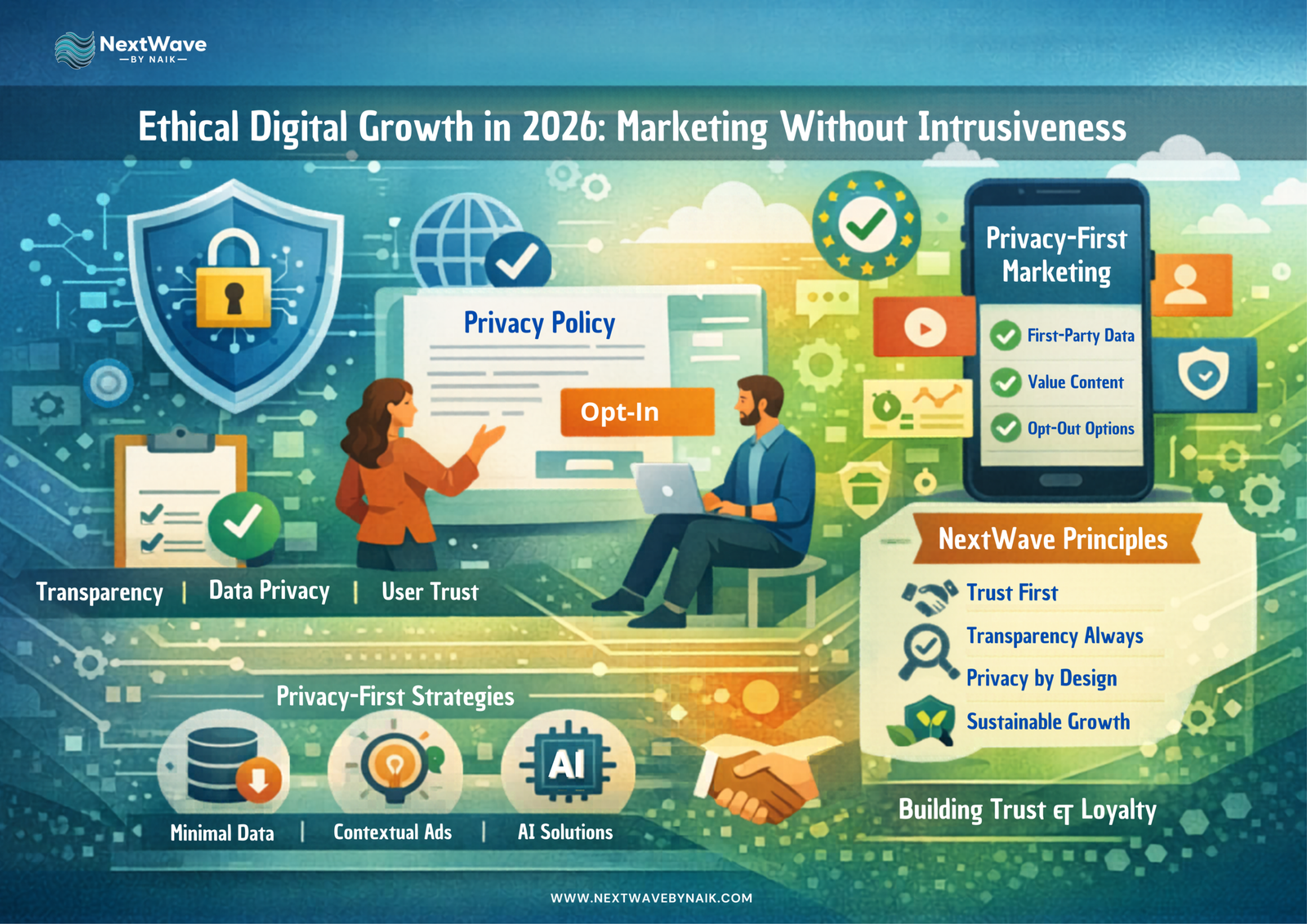
Privacy-First Marketing is no longer optional—it is the foundation of Ethical Digital Growth. This approach ensures that marketing strategies respect user boundaries while still delivering personalized experiences.
Some effective privacy-first strategies include:
- Using first-party data instead of third-party cookies
- Implementing clear opt-in and opt-out options
- Providing value-driven content instead of intrusive ads
By adopting these methods, businesses can maintain personalization without compromising user trust.
Ethical Marketing Strategies That Drive Growth
To achieve Ethical Digital Growth, businesses must rethink traditional marketing approaches. Ethical marketing is not about limiting growth—it’s about growing responsibly.
Here are some proven Ethical Marketing Strategies:
1. Transparency in Communication
Clearly inform users how their data is being used. Transparency builds confidence and reduces skepticism.
2. Value-Driven Content
Focus on providing useful, relevant content rather than pushing sales aggressively. This aligns with user expectations in 2026.
3. Minimal Data Collection
Collect only what is necessary. Over-collection can harm both compliance and user trust.
4. User Empowerment
Give users control over their data preferences. Empowered users are more likely to engage with your brand.
5. Trust-Based Personalization
Use ethical methods to personalize experiences without crossing privacy boundaries.
NextWave Principles: A Framework for Ethical Growth
The concept of NextWave Principles is centered around balancing innovation with responsibility. These principles guide businesses toward achieving Ethical Digital Growth without compromising performance.
Key pillars include:
- Trust First: Prioritize user trust over short-term gains
- Transparency Always: Maintain clear and honest communication
- Privacy by Design: Integrate privacy into every marketing strategy
- Sustainable Growth: Focus on long-term success rather than quick wins
By implementing these principles, brands can create a strong foundation for ethical and scalable growth.
Challenges in Adopting Ethical Digital Growth
While the benefits are clear, transitioning to Ethical Digital Growth comes with challenges:
- Limited access to third-party data
- Increased compliance requirements
- Need for new marketing tools and technologies
- Balancing personalization with privacy
However, these challenges also present opportunities for innovation. Businesses that adapt early gain a competitive advantage.
The Future of Marketing Without Intrusiveness
The future of marketing lies in non-intrusive, user-focused strategies. Ethical Digital Growth will continue to evolve as technology advances and regulations become stricter.
Emerging trends include:
- AI-driven privacy solutions
- Cookieless tracking technologies
- Contextual advertising
- Decentralized data ownership
These innovations will redefine how brands interact with consumers while maintaining ethical standards.
Conclusion: Building Trust Through Ethical Digital Growth
In 2026, success in digital marketing is no longer defined by how much data you collect, but by how responsibly you use it. Ethical Digital Growth is the key to building lasting relationships, ensuring compliance, and achieving sustainable success.
By embracing Data Privacy Compliance, adopting Privacy-First Marketing, and following NextWave Principles, businesses can thrive in a privacy-conscious world.
The brands that lead the future will not be the loudest—but the most trusted.
At NextWave By Naik, we specialize in creating data-driven blogging strategies that improve rankings, attract organic traffic, and build long-term authority. From keyword research to content creation and optimization, we handle everything—so you can focus on growing your business.
Let’s create content that ranks, converts, and builds authority.