
The Power of Custom: Why Choosing a Custom Website Over a Template Elevates Your Brand
Introduction
Custom Website vs Template is one of the most critical decisions businesses face in today’s digital-first world. Your website is often the first interaction customers have with your brand, and choosing the wrong approach can quietly damage your brand authority. While pre-built templates may seem convenient, they often limit growth, creativity, and performance.
Opting for a custom website ensures your online presence reflects your unique identity and resonates with your audience on a deeper level. In this article, we explore why Custom Website vs Template is not just a design choice—it’s a powerful strategic decision that can define your long-term success.
Templates: The Hidden Marketing Poison
Templates are designed for general use. They promise quick setup and lower costs, but they come with inherent limitations. A template-driven website often lacks uniqueness, making it hard for your brand to stand out. Furthermore, many competitors may use the same template, diluting your brand identity.
- Limited Creativity: Templates restrict your design choices, preventing the creation of a truly unique website experience.
- SEO Challenges: Many templates are not fully optimized, leading to slower load times and reduced search visibility.
- Scalability Issues: Templates often struggle to accommodate complex functionality or future growth.
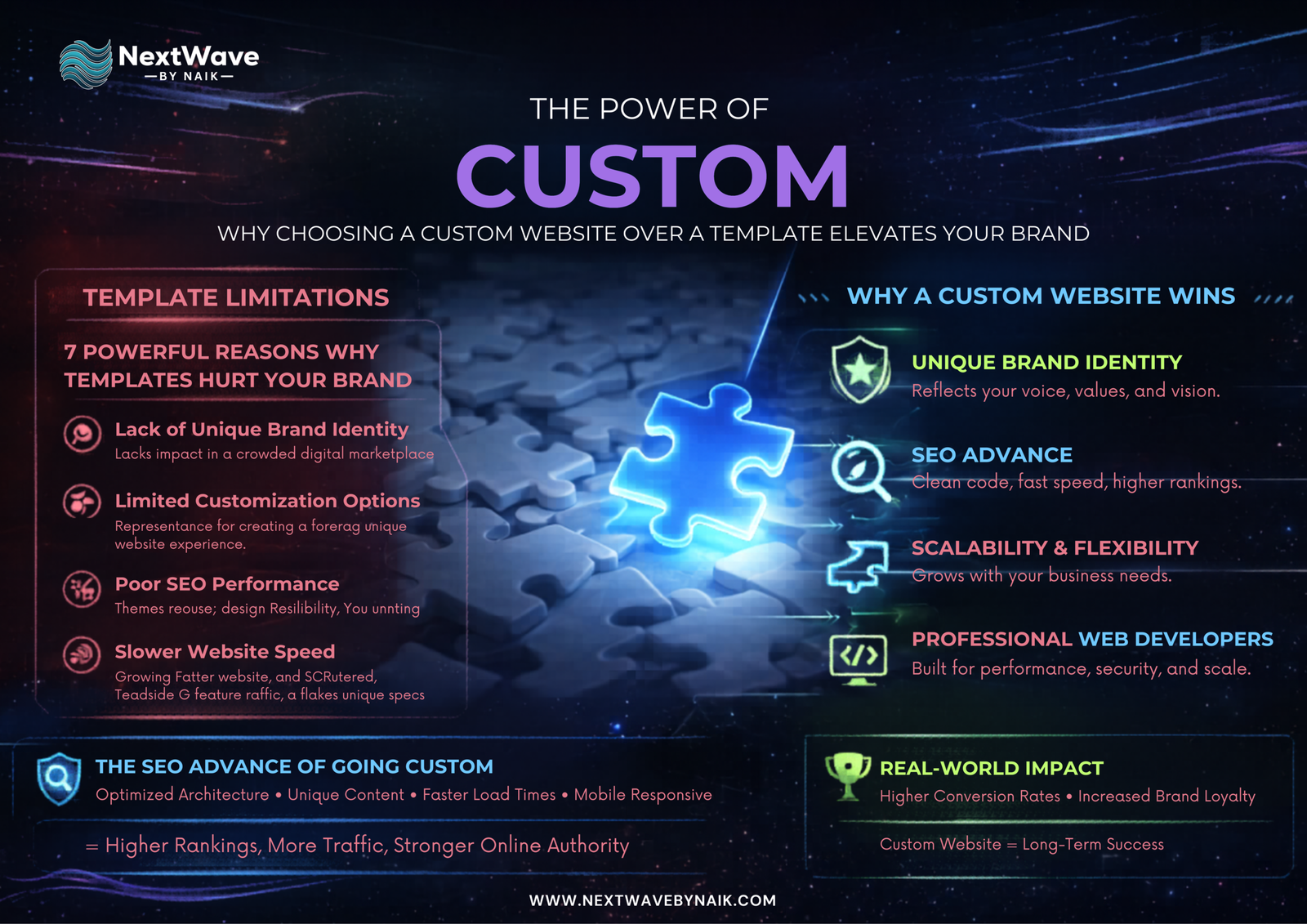
Why a Custom Website Wins
A custom-built website is tailored specifically for your business goals and brand voice. Unlike templates, a custom website offers flexibility, scalability, and innovation that templates simply cannot match. Here’s how:
- Unique Brand Identity
Custom websites reflect your brand’s personality, voice, and visual identity. Every element, from typography to layout, is designed to reinforce your brand authority. This helps your business stand out in a crowded marketplace and creates a memorable first impression. - SEO Optimization from Day One
Professional web developers can integrate advanced SEO strategies during the build process. Clean code, fast load times, and optimized meta structures give your site a competitive advantage on search engines. - Tailored User Experience
Custom websites allow for seamless user journeys designed to convert visitors into customers. Unlike templates, which are one-size-fits-all, custom solutions prioritize usability and engagement. - Scalability and Flexibility
A custom site grows with your business. Whether it’s adding new functionality, integrating third-party tools, or redesigning elements for seasonal campaigns, a custom solution provides unmatched adaptability. - Professional Web Developers at Your Service
Working with experienced developers ensures your website is not only visually appealing but also technically robust. Developers can implement security measures, mobile responsiveness, and advanced interactivity—features that templates often cannot support.
7 Powerful Reasons Why Templates Hurt Your Brand
1. Lack of Unique Brand Identity
Templates are built for mass use, which makes your website look similar to countless others. This weakens your ability to build a strong and recognizable brand.
2. Limited Customization Options
Templates restrict design flexibility. You can’t fully align the website with your brand vision, which limits creativity and differentiation.
3. Poor SEO Performance
Many templates come with bloated code and unnecessary features, slowing down your site and negatively impacting search engine rankings.
4. Slower Website Speed
Pre-built templates often include extra scripts and plugins that reduce loading speed—one of the most critical ranking factors.
5. Scalability Issues
As your business grows, templates struggle to handle advanced features or integrations, forcing costly redesigns later.
6. Generic User Experience
Templates follow standard layouts that don’t prioritize your specific audience, leading to lower engagement and conversions.
7. Weak Brand Authority
A template website can make your business appear less professional, reducing trust and credibility in the eyes of potential customers.
The SEO Advantage of Going Custom
Search engines prioritize websites that offer unique, high-quality content and fast, user-friendly experiences. A custom website allows:
- Optimized site architecture for search engines
- Unique content and media tailored to your audience
- Faster page speed due to clean code
- Better mobile responsiveness
All of these factors contribute to higher rankings, more organic traffic, and stronger online authority.
Real-World Implications
Businesses that invest in custom websites experience measurable results: higher conversion rates, increased brand loyalty, and stronger market positioning. By choosing Custom Website vs Template, companies signal professionalism, innovation, and attention to detail—qualities that resonate with customers and search engines alike.
Template Limitations: A Closer Look
Even advanced templates have restrictions. From limited design flexibility to generic user experience flows, templates can inadvertently undermine your brand authority. In contrast, a custom website offers:
- A distinctive design that differentiates your brand
- Advanced functionality aligned with your business needs
- SEO-friendly coding and architecture
- Scalable infrastructure to accommodate growth
How to Make the Switch
Transitioning from a template to a custom website requires strategic planning. Here are steps to consider:
- Audit Your Current Website: Identify limitations and areas for improvement.
- Define Your Brand Identity: Ensure the new design aligns with your messaging, values, and goals.
- Work With Professional Web Developers: Experts will translate your vision into a functional, optimized, and scalable website.
- Implement SEO Best Practices: Optimize for speed, mobile responsiveness, and structured data.
- Continuous Monitoring: Track performance metrics and adjust as needed to maximize ROI.
Conclusion
In the battle between templates and custom websites, the choice is clear. A custom website empowers your brand, enhances user experience, and improves search engine performance. It is not merely a design decision—it is a strategic investment in your company’s growth and online authority.
For businesses seeking a Unique Brand Identity, increased Brand Authority, and expert execution from Professional Web Developers, opting for a custom website is the only way forward. Templates may save time, but when it comes to long-term success, Custom Website vs Template is a fight your brand cannot afford to lose.
Let’s create content that ranks, converts, and builds authority.