
🚀 Website Speed Optimization as a Service: How Core Web Vitals Impact Your Ads Performance
🚀 Introduction
In today’s competitive digital landscape, speed is no longer optional—it’s a growth driver. Businesses investing heavily in paid campaigns often overlook one critical factor: Website Speed Optimization.
Even with perfectly targeted ads, a slow-loading website can silently destroy your conversions and drain your ad budget. This is where Core Web Vitals Optimization becomes essential.
Google doesn’t just evaluate your ads—it evaluates the experience users have after they click. If your site underperforms, your Google Ads ROI suffers.
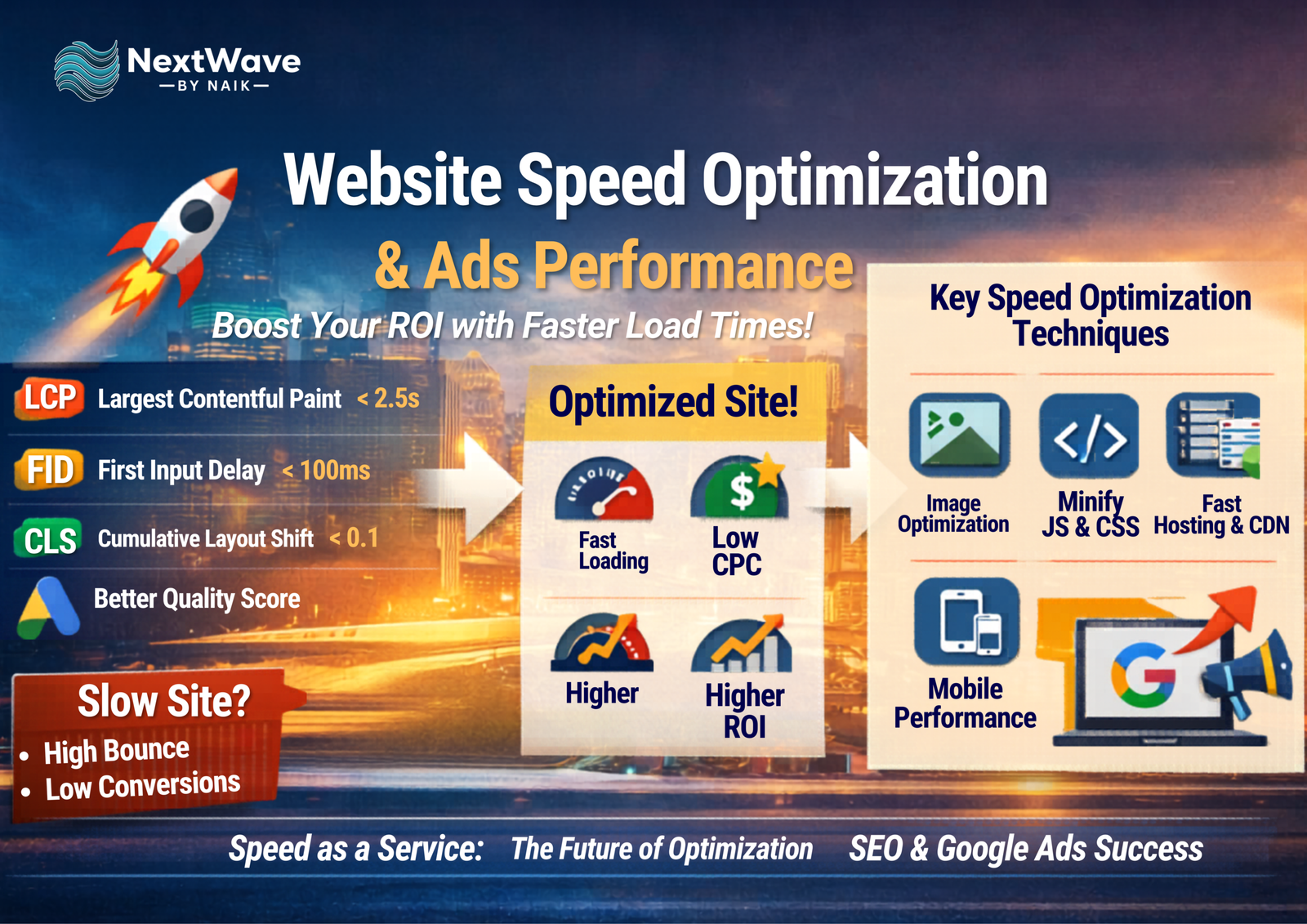
⚡ What is Website Speed Optimization?
Website Speed Optimization refers to improving how quickly your website loads and becomes interactive for users. It includes:
- Reducing page load time
- Optimizing images and scripts
- Improving server response time
- Enhancing mobile performance
A high-performance web experience ensures that users don’t bounce before your page even loads.
📊 Understanding Core Web Vitals
Core Web Vitals are Google’s key metrics to measure user experience. These directly impact both SEO rankings and ad performance.
1. Largest Contentful Paint (LCP)
Measures how fast the main content loads.
👉 Ideal: Under 2.5 seconds
2. First Input Delay (FID)
Measures responsiveness when users interact.
👉 Ideal: Under 100 milliseconds
3. Cumulative Layout Shift (CLS)
Measures visual stability.
👉 Ideal: Less than 0.1
If your website fails these metrics, your Website Speed Optimization strategy needs immediate attention.
🎯 How Website Speed Impacts Google Ads ROI
1. Higher Bounce Rates Kill Conversions
Users expect pages to load within 2–3 seconds. If your site is slow:
- Visitors leave instantly
- Ad spend is wasted
- Conversion rates drop
Even a 1-second delay can reduce conversions significantly.
2. Quality Score Gets Affected
Google Ads considers landing page experience when calculating Quality Score. A slow website:
- Lowers your Quality Score
- Increases cost-per-click (CPC)
- Reduces ad visibility
Better Website Speed Optimization = Better ad rankings at lower costs.
3. Mobile Performance is Critical
Most paid traffic comes from mobile devices. Without a high-performance web experience:
- Pages load slower on mobile networks
- Users abandon quickly
- Campaign performance declines
Optimizing mobile speed is no longer optional—it’s essential.
4. Conversion Rate Optimization Depends on Speed
A fast-loading website:
- Builds trust instantly
- Improves user experience
- Encourages users to take action
Speed directly influences how users perceive your brand.
⚙️ Key Techniques for Website Speed Optimization
To truly unlock better Google Ads ROI, implement these proven strategies:
🔧 1. Optimize Images
- Use next-gen formats like WebP
- Compress images without quality loss
- Implement lazy loading
🔧 2. Minimize JavaScript & CSS
- Remove unused code
- Use minification tools
- Load scripts asynchronously
🔧 3. Improve Server Response Time
- Use fast hosting solutions
- Implement caching
- Use a Content Delivery Network (CDN)
🔧 4. Enable Browser Caching
This reduces repeat load times for returning visitors and improves overall performance.
🔧 5. Prioritize Mobile Optimization
- Use responsive design
- Optimize touch interactions
- Reduce mobile load time
📈 Real Impact: Speed vs Ads Performance
| Factor | Slow Website | Optimized Website |
|---|---|---|
| Bounce Rate | High | Low |
| Conversion Rate | Low | High |
| CPC | Expensive | Cost-efficient |
| ROI | Poor | Strong |
💡 Why “Speed as a Service” is the Future
Businesses are now adopting Speed as a Service—a continuous optimization approach instead of a one-time fix.
This includes:
- Regular performance audits
- Continuous Core Web Vitals monitoring
- Real-time improvements
A high-performance web is not built once—it’s maintained continuously.
🔍 SEO Benefits Beyond Ads
While speed improves ad performance, it also boosts organic rankings:
- Google prioritizes fast websites
- Improved crawl efficiency
- Better user engagement metrics
This makes Website Speed Optimization a dual-benefit strategy—SEO + paid ads.
🚀 Final Thoughts
If your ads aren’t converting, the problem may not be your targeting—it could be your website speed.
Website Speed Optimization is no longer just a technical task—it’s a revenue strategy. By improving Core Web Vitals, you:
- Lower ad costs
- Increase conversions
- Maximize ROI
In a world where every second counts, speed is your competitive advantage.
Let’s create content that ranks, converts, and builds authority.